WSB1/2 target chromatin-bound lysine-methylated RelA for proteasomal degradation and NF-κB termination
Jie Zhang, Yuanyuan Yu, Xiuqun Zou, Yaning Du, Qiankun Liang, Mengyao Gong, Yurong He, Junqi Luo, Dandan Wu, Xiaoli Jiang, Matt Sinclair, Emad Tajkhorshid, Hong-Zhuan Chen, Zhaoyuan Hou, Yuejuan Zheng, Lin-Feng Chen, Xiao-Dong Yang

TL;DR
This study identifies WSB1/2 as E3 ligases that target methylated RelA for degradation, helping to terminate NF-κB signaling and reduce inflammation.
Contribution
WSB1/2 are newly identified E3 ligases that specifically recognize and ubiquitinate methylated RelA at chromatin.
Findings
WSB1/2 bind to methylated lysines K314 and K315 of RelA via their WDR domains.
Mutation of a conserved aspartic acid in WSB2 disrupts its interaction with methylated RelA.
WSB1/2 promote ubiquitination and degradation of methylated RelA, terminating NF-κB activity.
Abstract
Proteasome-mediated degradation of chromatin-bound NF-κB is critical in terminating the transcription of pro-inflammatory genes and can be triggered by Set9-mediated lysine methylation of the RelA subunit. However, the E3 ligase targeting methylated RelA remains unknown. Here, we find that two structurally similar substrate-recognizing components of Cullin-RING E3 ligases, WSB1 and WSB2, can recognize chromatin-bound methylated RelA for polyubiquitination and proteasomal degradation. We showed that WSB1/2 negatively regulated a subset of NF-κB target genes via associating with chromatin where they targeted methylated RelA for ubiquitination, facilitating the termination of NF-κB-dependent transcription. WSB1/2 specifically interacted with methylated lysines (K) 314 and 315 of RelA via their N-terminal WD-40 repeat (WDR) domains, thereby promoting ubiquitination of RelA. Computational…
Genes, proteins, chemicals, diseases, species, mutations and cell lines named across the full text — each resolved to its canonical identifier and authoritative record.
Click any figure to enlarge with its caption.
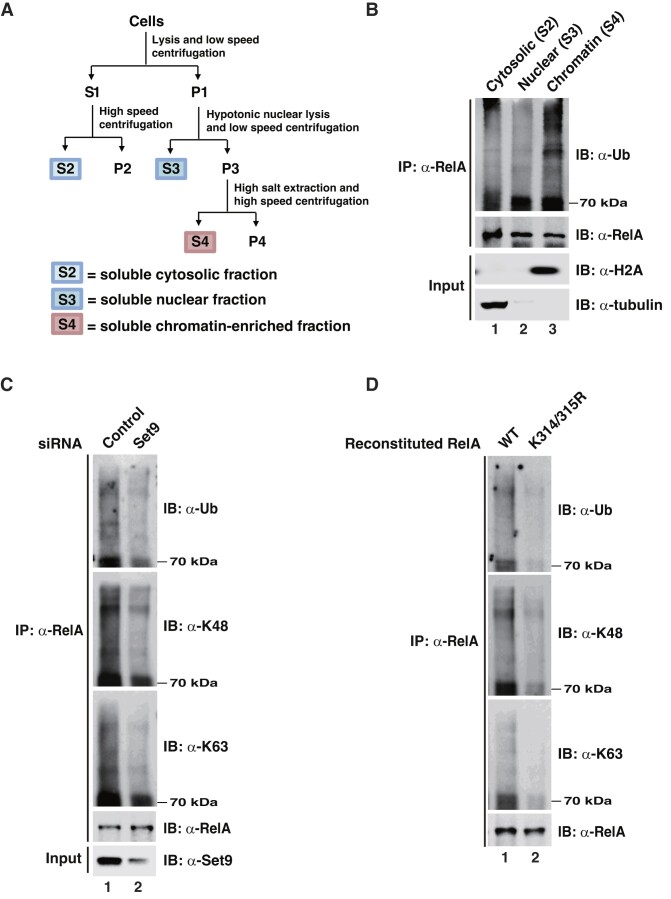 Figure 1
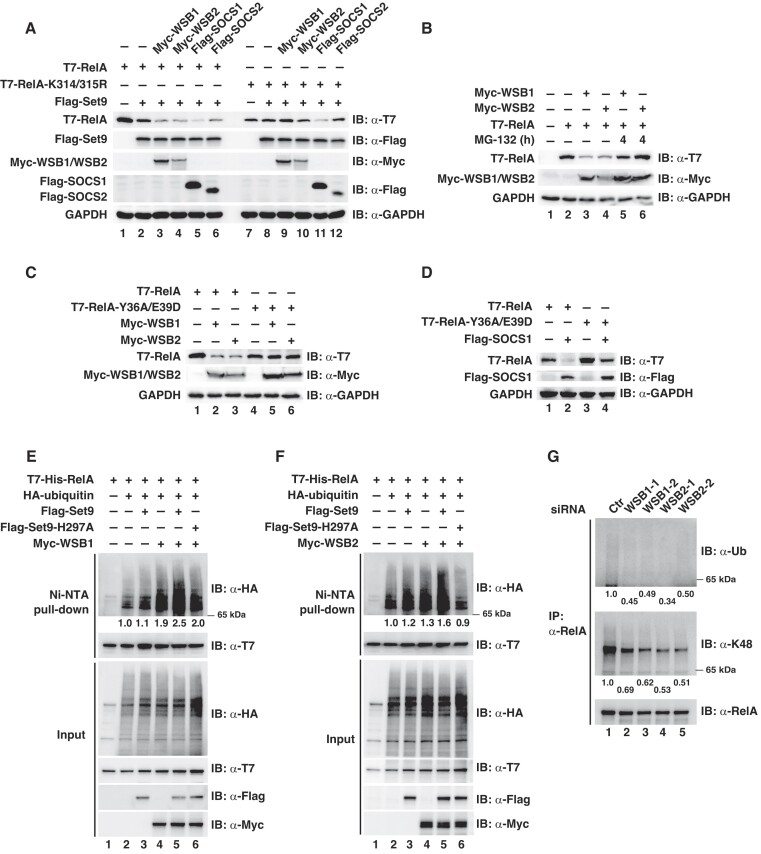 Figure 2
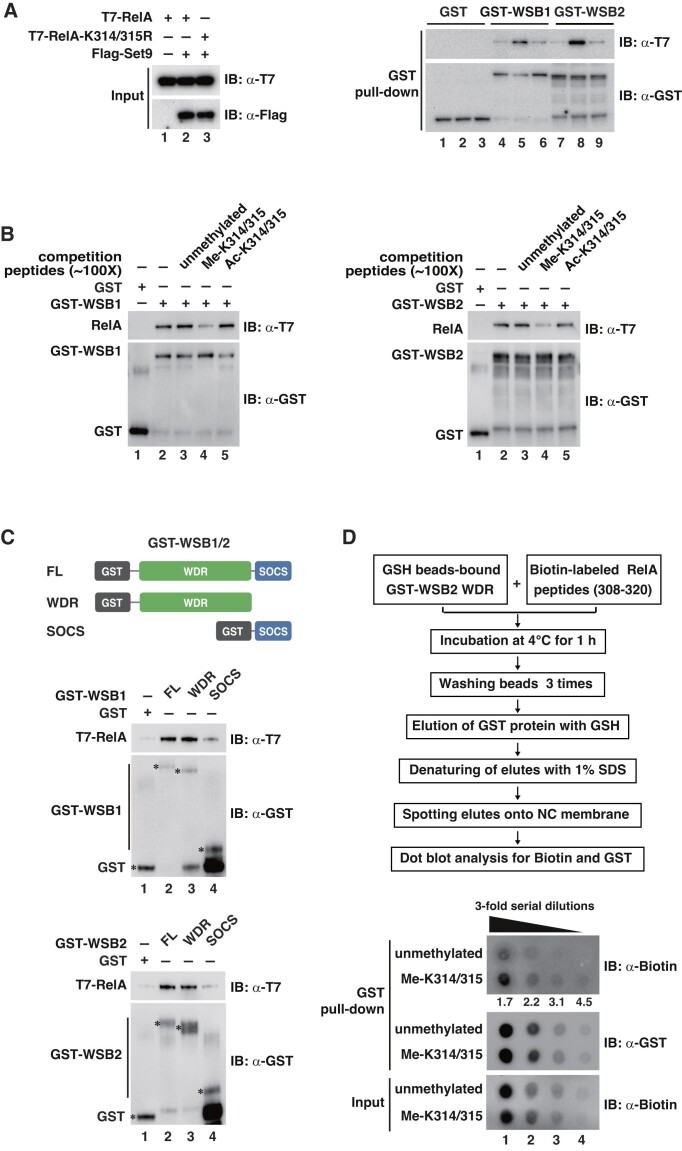 Figure 3
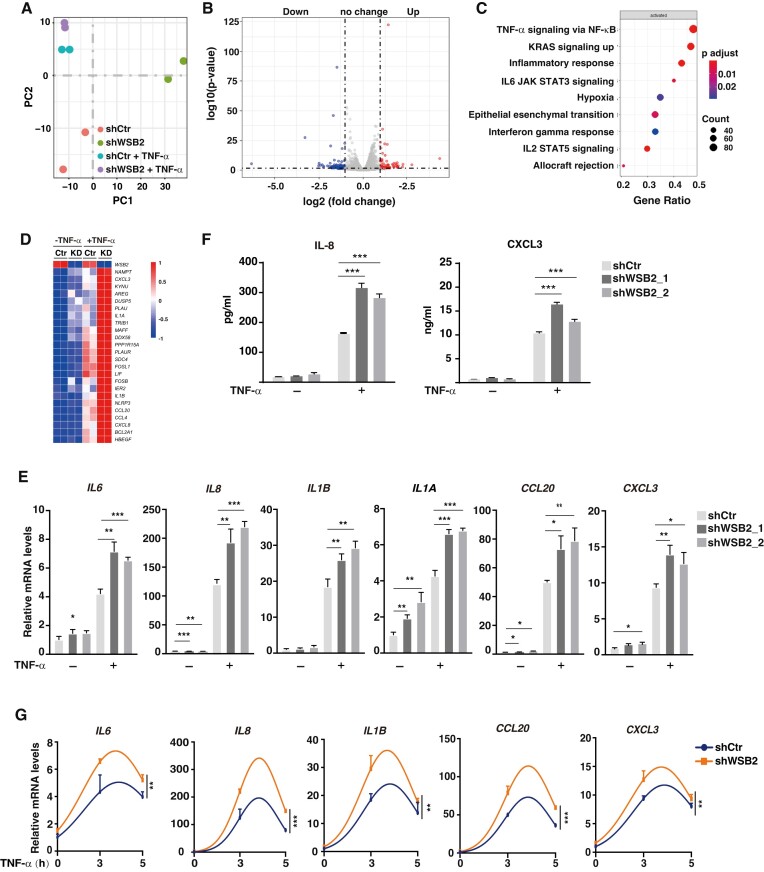 Figure 4
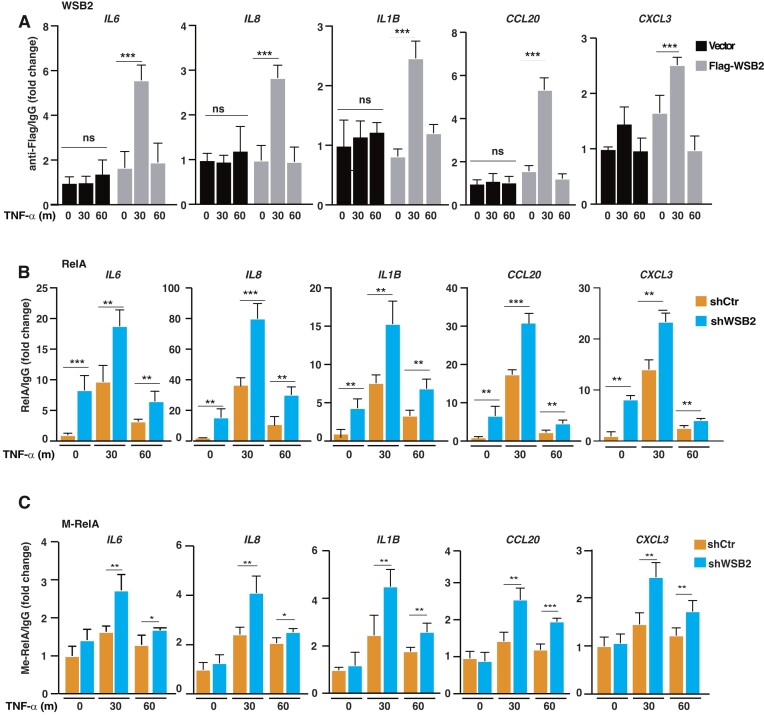 Figure 5
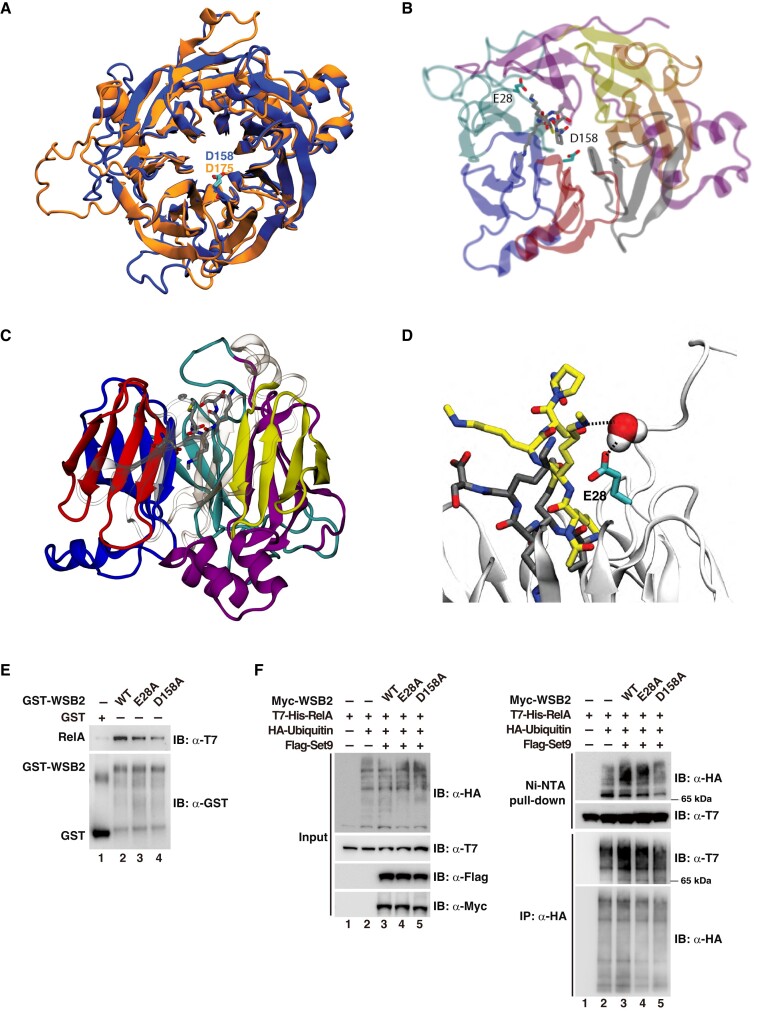 Figure 6
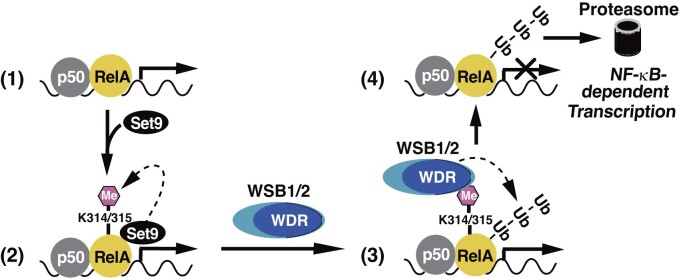 Figure 7
Peer Reviews
No public reviews on file for this paper yet. If you reviewed it on a platform where reviews are public (OpenReview, ICLR, NeurIPS, ICML), you can paste yours below so the community can read it here.
Videos
No videos yet. Explain this paper in a talk, walkthrough, or lecture? Add one.
Taxonomy
TopicsSleep and related disorders