In silico comparison between the mutated and wild type androgen receptors and their influence on the selection of optimum androgenic receptor blocker for treatment of prostate cancer
Hany Akeel Al-Hussaniy, Zahraa S. Al-tameemi, Mohammed J. AL-Zobaidy

TL;DR
This study compares mutated and normal androgen receptors in prostate cancer to find better drug blockers using computational methods.
Contribution
The study identifies key binding sites and evaluates drug affinities for mutated and wild-type androgen receptors in prostate cancer treatment.
Findings
Mutated androgen receptor (T877A) shows reduced affinity for testosterone and dihydrotestosterone compared to the wild type.
Second-generation antagonists like Enzalutamide and Apalutamide show minimal affinity changes between wild and mutated receptors.
Flutamide and Nilutamide show increased affinity for the mutated receptor compared to Bicalutamide.
Abstract
Background: Prostate cancer is a disease that occurs in men aged more than 50 years. In Iraq, 8.89 men per 100,000 population suffer from prostate cancer, with the incidence being 14,016 cases and mortality being 6,367 cases. Despite advances in treatment against prostate cancer, it can become resistant to drugs. Therefore, the aim of current study was to search and identify binding sites for the repositioning of drugs by computational methods (docking). Methods: Based on the protein structure of the wild androgen receptor, the analysis parameters (22x22x22 on the X, Y, and Z axes) were established. Results: The interactions of the natural ligands with androgen receptor were 10.0 (testosterone) and 10.8 (dihydrotestosterone) while mutated androgen receptor (T877A) had a low affinity with testosterone and dihydrotestosterone (-5.3 and -6.7, respectively). In the interactions of both…
Genes, proteins, chemicals, diseases, species, mutations and cell lines named across the full text — each resolved to its canonical identifier and authoritative record.
Click any figure to enlarge with its caption.
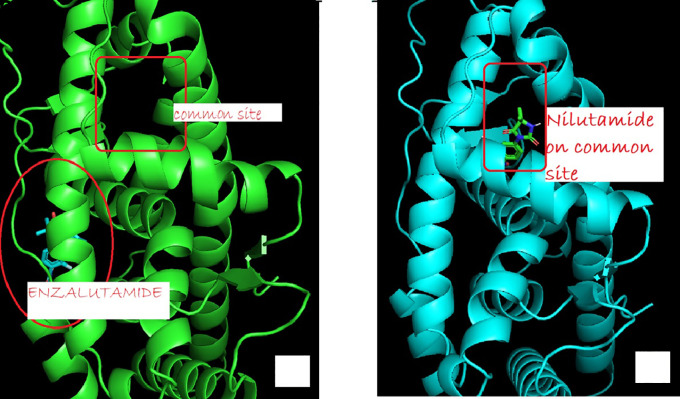 Figure 1
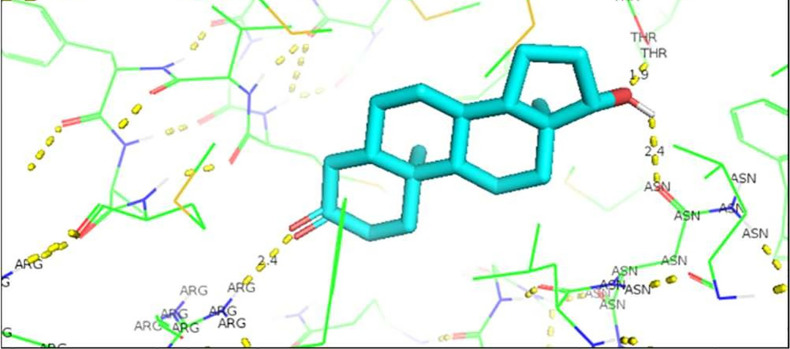 Figure 2
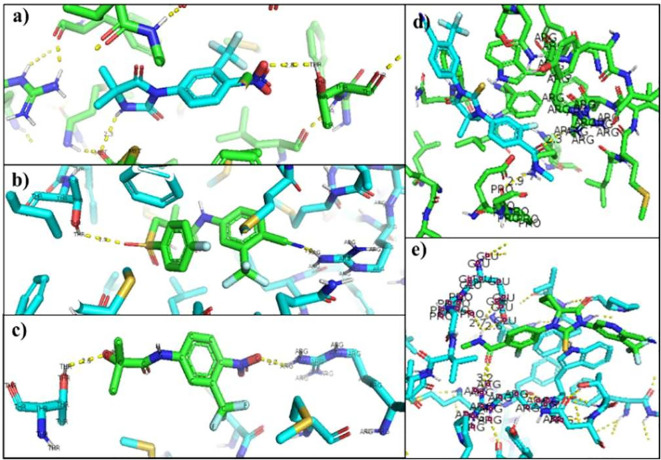 Figure 3
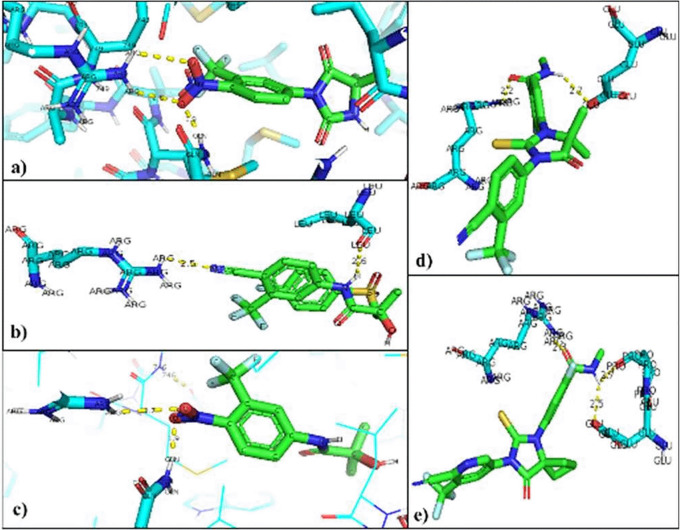 Figure 4
Peer Reviews
No public reviews on file for this paper yet. If you reviewed it on a platform where reviews are public (OpenReview, ICLR, NeurIPS, ICML), you can paste yours below so the community can read it here.
Videos
No videos yet. Explain this paper in a talk, walkthrough, or lecture? Add one.
Taxonomy
TopicsProstate Cancer Treatment and Research · Hormonal and reproductive studies · Estrogen and related hormone effects