Kinetics of BCR::ABL1 transcript levels and molecular relapse after tyrosine kinase inhibitors discontinuation in chronic myeloid leukemia patients: preliminary results from the DES-CML study
Bruna Murbach, Gislaine Duarte, Leonardo Carvalho Palma, Eliana Miranda, Guilherme Duffles, Graziele Pavan Furlin, Isabella Toni, Carmino De Souza, Larissa Binelli, Vitor Leonardo Bassan, Fabiola Attie de Castro, Lorena Lobo de Figueiredo-Pontes, Katia Borgia Barbosa Pagnano

TL;DR
This study examines how BCR::ABL1 transcript levels change in CML patients after stopping tyrosine kinase inhibitors and how this affects relapse rates.
Contribution
The study presents preliminary findings on the relationship between BCR::ABL1 transcript kinetics and molecular relapse after discontinuation of TKI therapy in CML patients.
Findings
24-month treatment-free survival was 66% with a median follow-up of 7 months.
Fluctuating BCR::ABL1 levels after discontinuation were associated with higher molecular relapse rates.
Longer TKI treatment duration and MMR were linked to lower relapse rates.
Abstract
Tyrosine kinase inhibitors (TKI) have revolutionized the treatment of patients with chronic myeloid leukemia. Patients who achieve sustained deep molecular response are eligible for treatment discontinuation. DES-CML is an ongoing, phase 2 multicentric discontinuation trial. Adult patients with CML in chronic phase with typical BCR::ABL1 transcripts, stable deep molecular response (MR4.5 IS) for two years, and no previous resistance were eligible. Patients underwent a phase of TKI dose de-escalation for six months before discontinuation. TKI was reintroduced at the previous dose if the patient lost major molecular response (MMR) at any time. This study aimed to assess the impact of BCR-ABL transcript kinetics during TKI de-escalation and discontinuation phases on treatment-free survival. So far, the study recruited 41 patients, and 38 patients discontinued therapy (4 were in the second…
Genes, proteins, chemicals, diseases, species, mutations and cell lines named across the full text — each resolved to its canonical identifier and authoritative record.
Click any figure to enlarge with its caption.
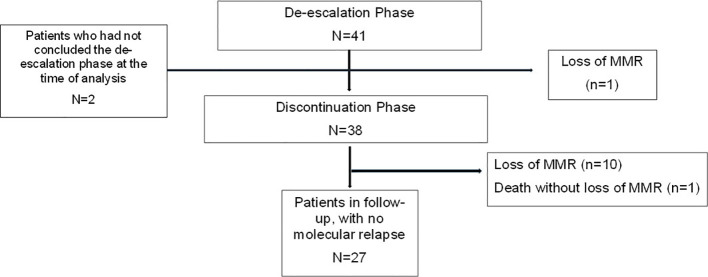 Figure 1
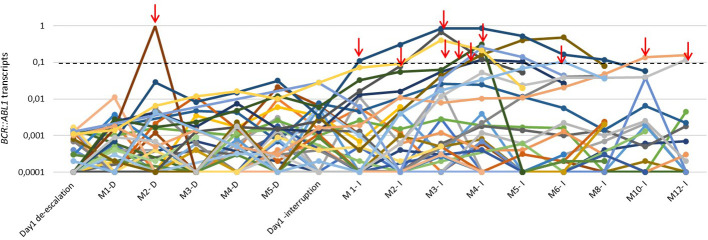 Figure 2
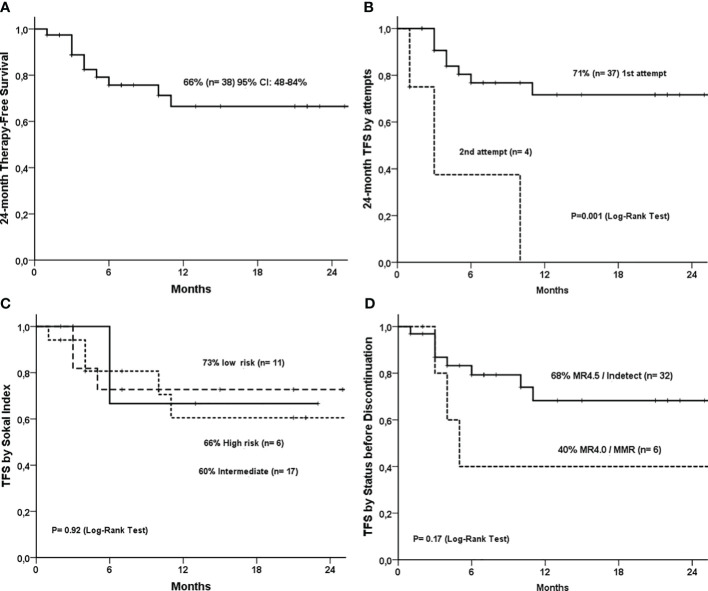 Figure 3
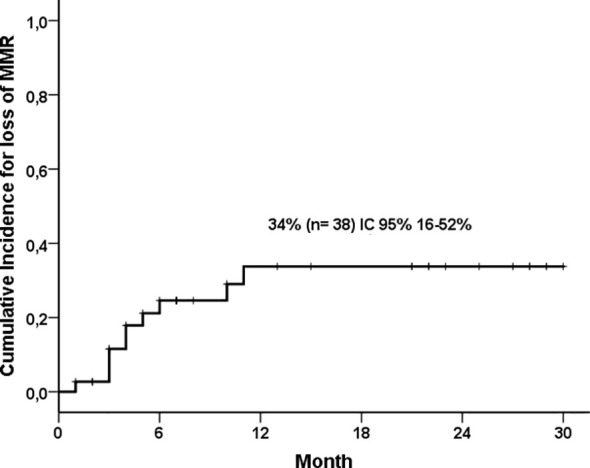 Figure 4
Peer Reviews
No public reviews on file for this paper yet. If you reviewed it on a platform where reviews are public (OpenReview, ICLR, NeurIPS, ICML), you can paste yours below so the community can read it here.
Videos
No videos yet. Explain this paper in a talk, walkthrough, or lecture? Add one.
Taxonomy
TopicsChronic Myeloid Leukemia Treatments · Chronic Lymphocytic Leukemia Research · Eosinophilic Disorders and Syndromes