Use of stepwise lung recruitment maneuver to predict fluid responsiveness under lung protective ventilation in the operating room
Eun Hee Chun, Mi Hwa Chung, Jung Eun Kim, Hye Sun Lee, Youngbum Jo, Joo Hyun Jun

TL;DR
This study shows that stepwise lung recruitment maneuvers can help predict which patients will benefit from fluids during surgery when using lung protective ventilation.
Contribution
The study introduces a stepwise lung recruitment method to predict fluid responsiveness under lung protective ventilation.
Findings
Seventeen out of forty-one patients were identified as fluid responders.
Augmented PPV and SVV values showed good predictive ability for fluid responsiveness.
Optimal cut-offs for PPV and SVV were found to be >18% and >13%, respectively.
Abstract
Recent research has revealed that hemodynamic changes caused by lung recruitment maneuvers (LRM) with continuous positive airway pressure can be used to identify fluid responders. We investigated the usefulness of stepwise LRM with increasing positive end-expiratory pressure and constant driving pressure for predicting fluid responsiveness in patients under lung protective ventilation (LPV). Forty-one patients under LPV were enrolled when PPV values were in a priori considered gray zone (4% to 17%). The FloTrac-Vigileo device measured stroke volume variation (SVV) and stroke volume (SV), while the patient monitor measured pulse pressure variation (PPV) before and at the end of stepwise LRM and before and 5 min after fluid challenge (6 ml/kg). Fluid responsiveness was defined as a ≥ 15% increase in the SV or SV index. Seventeen were fluid responders. The areas under the curve for the…
Genes, proteins, chemicals, diseases, species, mutations and cell lines named across the full text — each resolved to its canonical identifier and authoritative record.
Click any figure to enlarge with its caption.
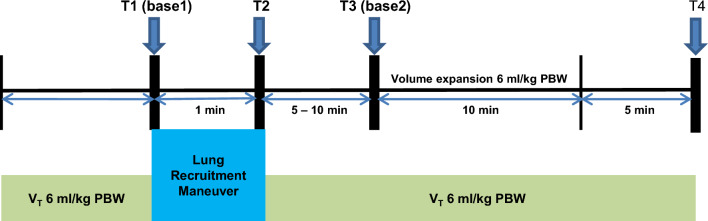 Figure 1
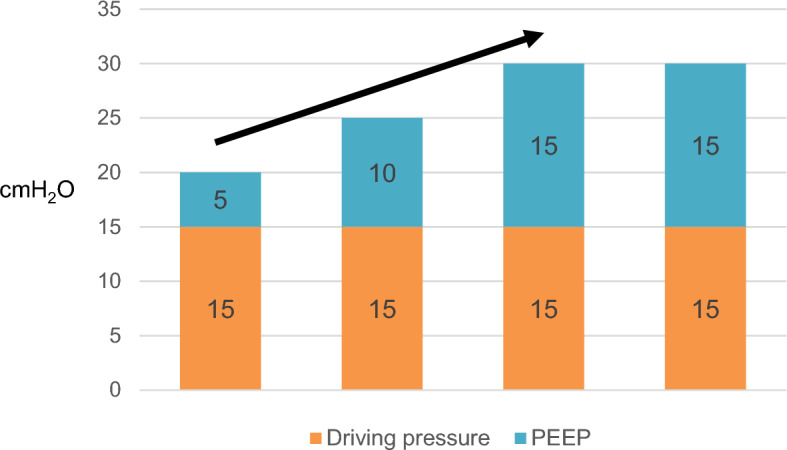 Figure 2
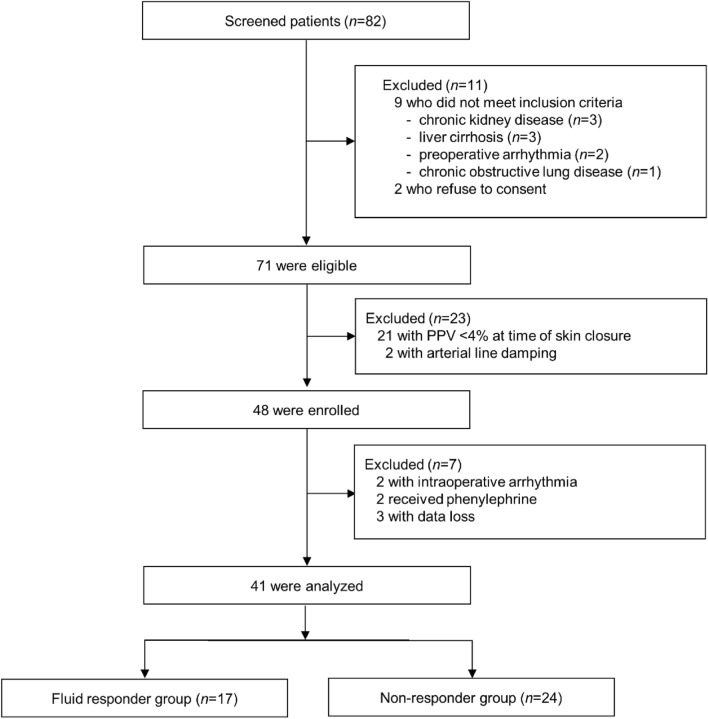 Figure 3
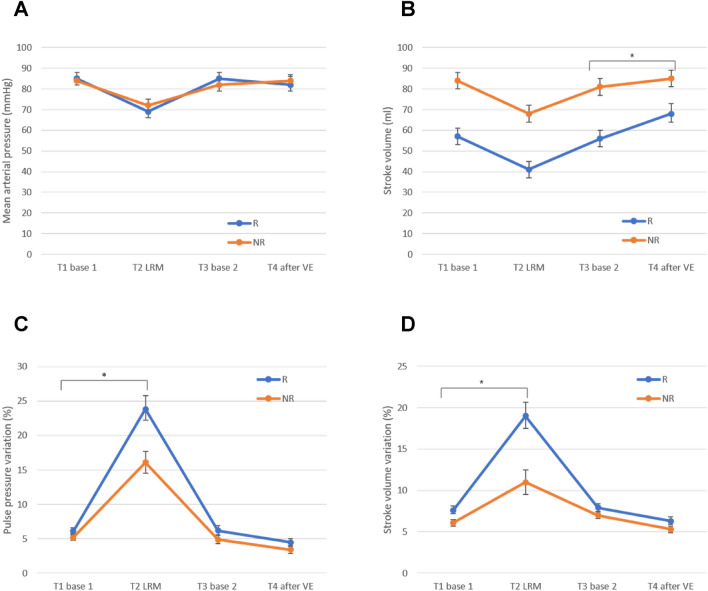 Figure 4
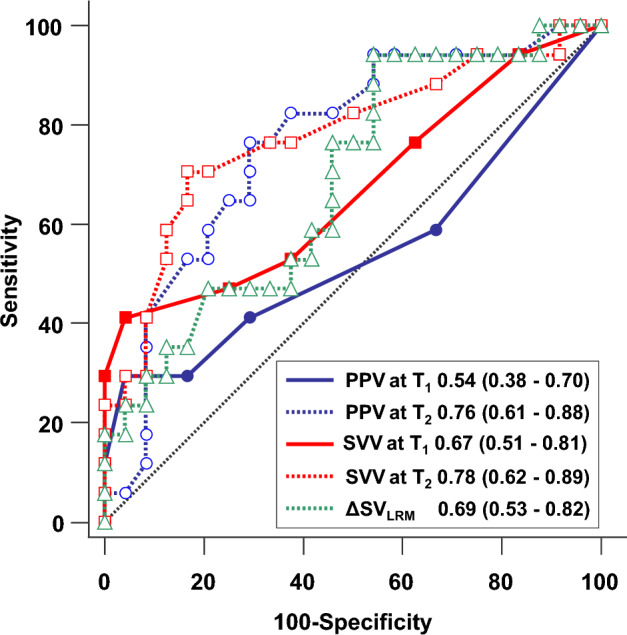 Figure 5
Peer Reviews
No public reviews on file for this paper yet. If you reviewed it on a platform where reviews are public (OpenReview, ICLR, NeurIPS, ICML), you can paste yours below so the community can read it here.
Videos
No videos yet. Explain this paper in a talk, walkthrough, or lecture? Add one.
Taxonomy
TopicsHemodynamic Monitoring and Therapy · Cardiac, Anesthesia and Surgical Outcomes · Non-Invasive Vital Sign Monitoring