Assessment of American Bullfrog (Lithobates catesbeianus) spreading in the Republic of Korea using rule learning of elementary cellular automata
Gyujin Oh, Yunju Wi, Hee-Jin Kang, Seung-ju Cheon, Ha-Cheol Sung, Yena Kim, Hong-Sung Jin

TL;DR
This study uses cellular automata and machine learning to assess the spread of American Bullfrogs in South Korea and predict their invasion risk.
Contribution
A novel approach combining ECA and CNN to model and predict bullfrog spreading intensity and invasion risk.
Findings
Bullfrog spreading was categorized into four risk levels across 25 clusters.
Environmental factors were integrated to improve invasion risk assessment.
CNN predictions showed varying spreading intensities over 400 simulated generations.
Abstract
The spread of American Bullfrog has a significant impact on the surrounding ecosystem. It is important to study the mechanisms of their spreading so that proper mitigation can be applied when needed. This study analyzes data from national surveys on bullfrog distribution. We divided the data into 25 regional clusters. To assess the spread within each cluster, we constructed temporal sequences of spatial distribution using the agglomerative clustering method. We employed Elementary Cellular Automata (ECA) to identify rules governing the changes in spatial patterns. Each cell in the ECA grid represents either the presence or absence of bullfrogs based on observations. For each cluster, we counted the number of presence location in the sequence to quantify spreading intensity. We used a Convolutional Neural Network (CNN) to learn the ECA rules and predict future spreading intensity by…
Genes, proteins, chemicals, diseases, species, mutations and cell lines named across the full text — each resolved to its canonical identifier and authoritative record.
Click any figure to enlarge with its caption.
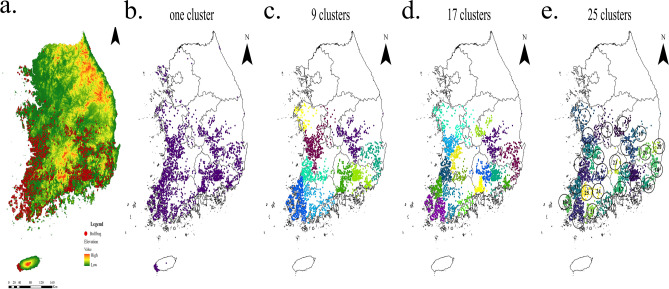 Figure 1
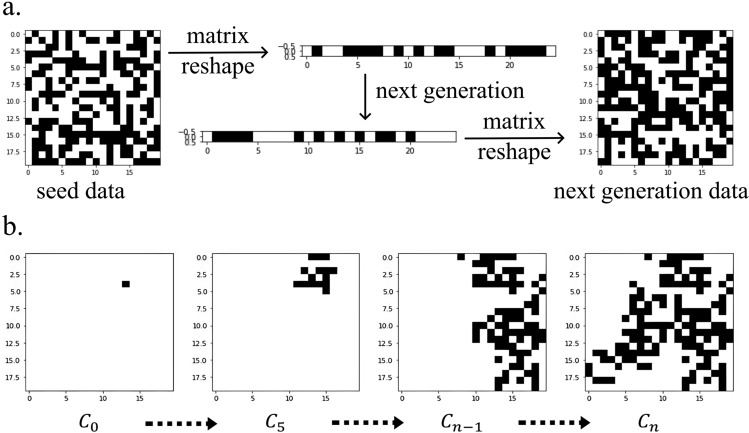 Figure 2
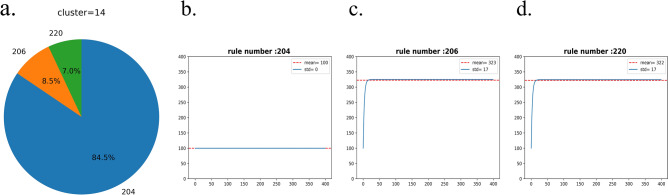 Figure 3
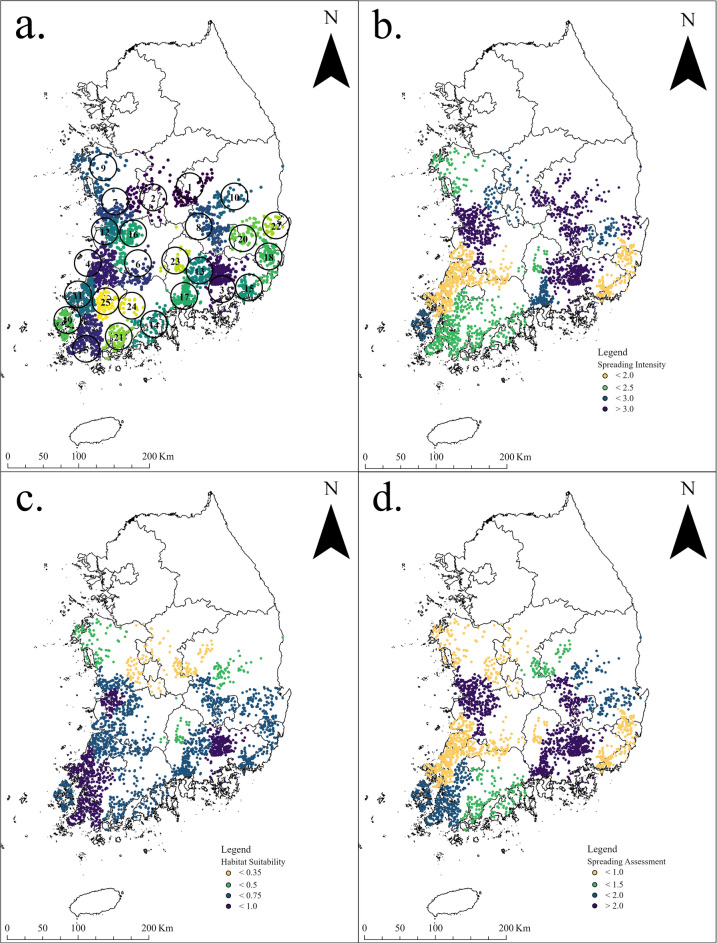 Figure 4
Peer Reviews
No public reviews on file for this paper yet. If you reviewed it on a platform where reviews are public (OpenReview, ICLR, NeurIPS, ICML), you can paste yours below so the community can read it here.
Videos
No videos yet. Explain this paper in a talk, walkthrough, or lecture? Add one.
Taxonomy
TopicsAmphibian and Reptile Biology · Species Distribution and Climate Change