Derivation and validation of a nomogram incorporating modifiable lifestyle factors to predict development of colorectal adenomas after negative index colonoscopy
Mingqian Yu, Yiben Ouyang, Zhen Yuan, Shuyuan Wang, Wenwen Pang, Suying Yan, Xinyu Liu, Wanting Wang, Ben Yi, Qiurong Han, Yao Yao, Yanfei Liu, Jiachun Song, Tianhao Chu, Zhiqiang Feng, Qinghuai Zhang, Xipeng Zhang, Chunze Zhang

TL;DR
A new nomogram model was developed to predict colorectal adenoma risk based on lifestyle factors and personal history after a negative colonoscopy.
Contribution
A novel nomogram incorporating modifiable lifestyle factors was developed and validated for predicting colorectal adenoma development.
Findings
The nomogram model with four covariates (age, BMI, physical activity, family history) showed better predictive performance.
The model demonstrated good accuracy, discrimination, and clinical utility in risk stratification.
It can help high-risk individuals prevent colorectal adenomas and CRC with improved cost-effectiveness.
Abstract
This retrospective cohort study aimed to identify baseline patient characteristics involving modifiable lifestyle factors that are associated with the development of colorectal adenomas, and establish and validate a nomogram for risk predictions among high-risk populations with negative index colonoscopy. A total of 83,076 participants who underwent an index colonoscopy at the Tianjin Union Medical Center between 2004 and 2019 were collected. According to meticulous inclusion and exclusion criteria, 249 subjects were enrolled and categorized into the primary and validation cohorts. Based on the primary cohort, we utilized the LASSO-Cox regression and the univariate/multivariate Cox proportional hazards (Cox-PH) regression parallelly to select variables, and incorporated selected variables into two nomogram models established using the multivariate Cox-PH regression. Comparison of the…
Genes, proteins, chemicals, diseases, species, mutations and cell lines named across the full text — each resolved to its canonical identifier and authoritative record.
Click any figure to enlarge with its caption.
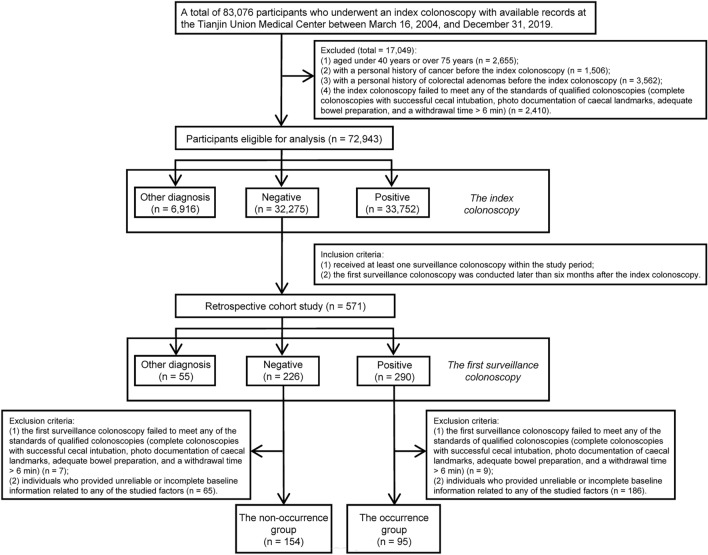 Figure 1
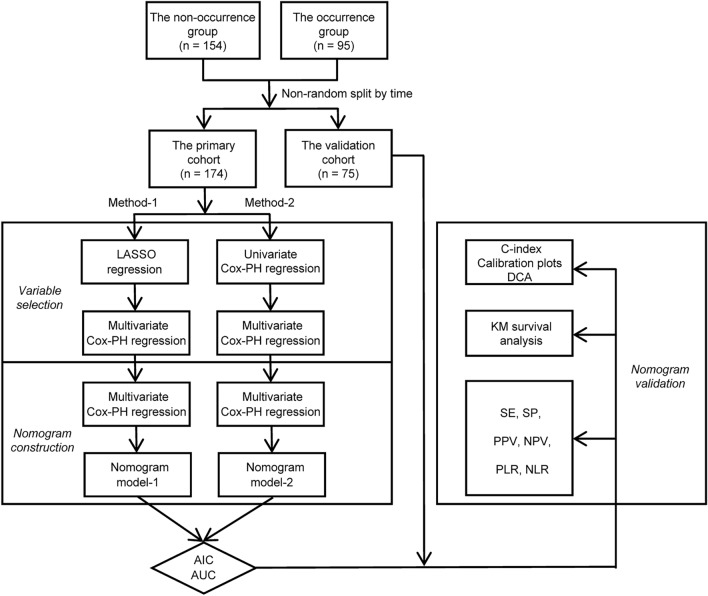 Figure 2
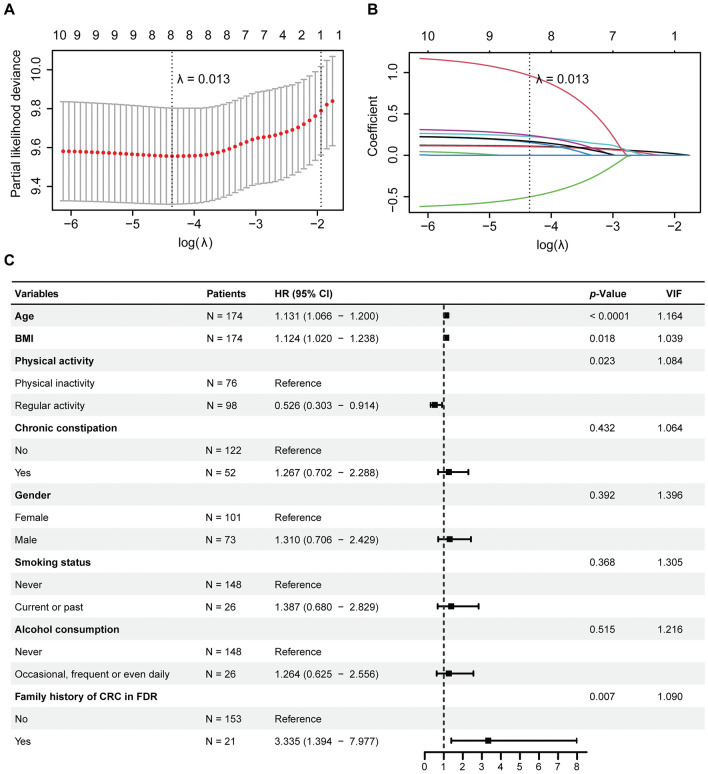 Figure 3
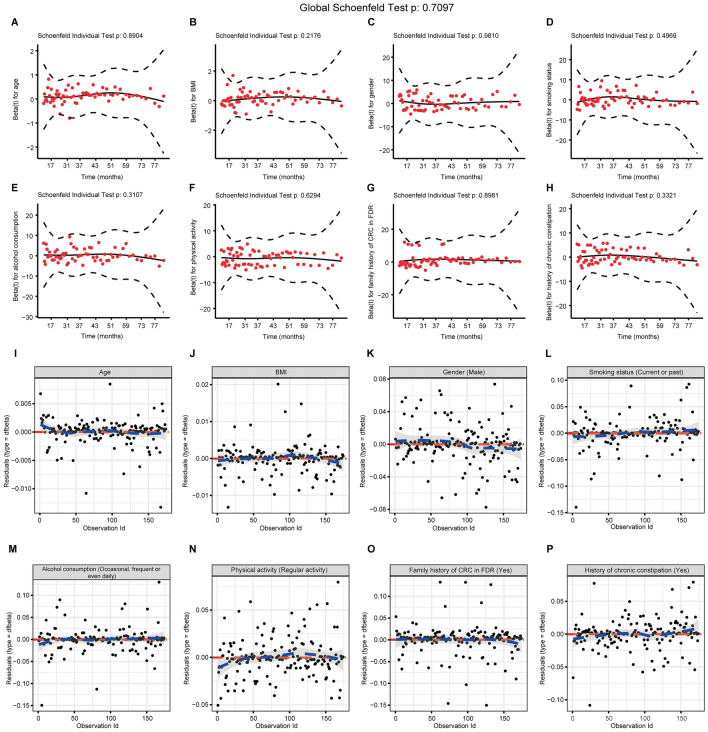 Figure 4
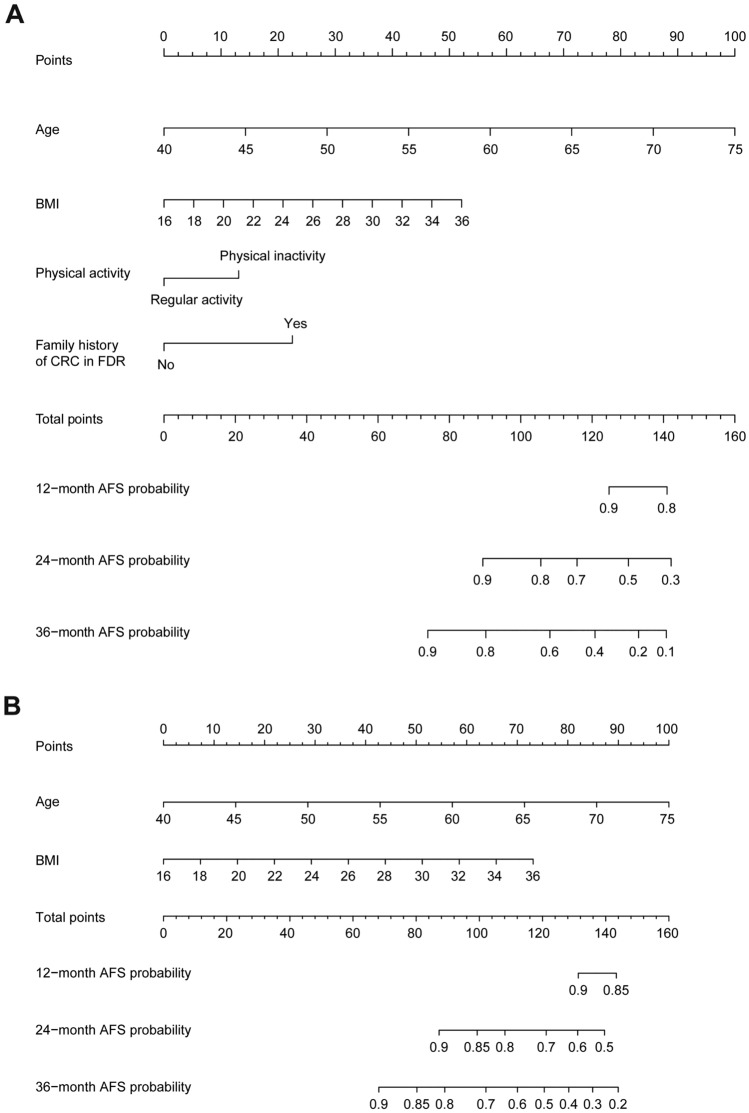 Figure 5
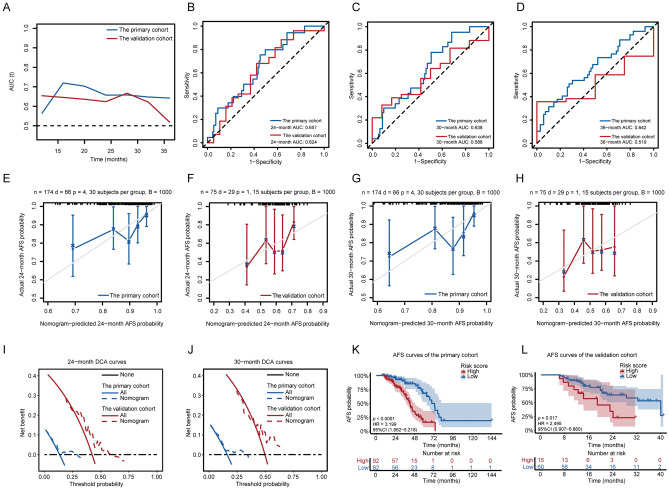 Figure 6
Peer Reviews
No public reviews on file for this paper yet. If you reviewed it on a platform where reviews are public (OpenReview, ICLR, NeurIPS, ICML), you can paste yours below so the community can read it here.
Videos
No videos yet. Explain this paper in a talk, walkthrough, or lecture? Add one.
Taxonomy
TopicsColorectal Cancer Screening and Detection · Gastric Cancer Management and Outcomes · Esophageal Cancer Research and Treatment