A review of the leaf-beetle genus Sinoluperus Gressitt & Kimoto, 1963 (Coleoptera, Chrysomelidae, Galerucinae) from China, with the description of a new species

Abstract
Genes, proteins, chemicals, diseases, species, mutations and cell lines named across the full text — each resolved to its canonical identifier and authoritative record.
Click any figure to enlarge with its caption.
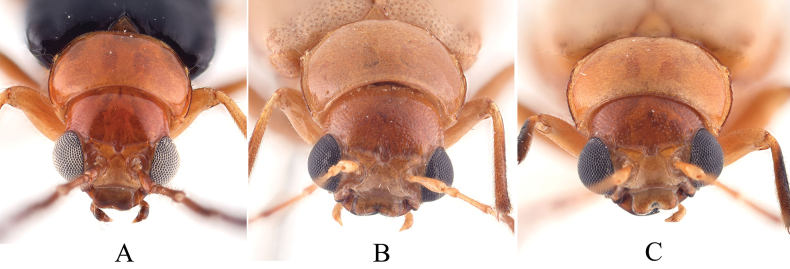 Figure 1
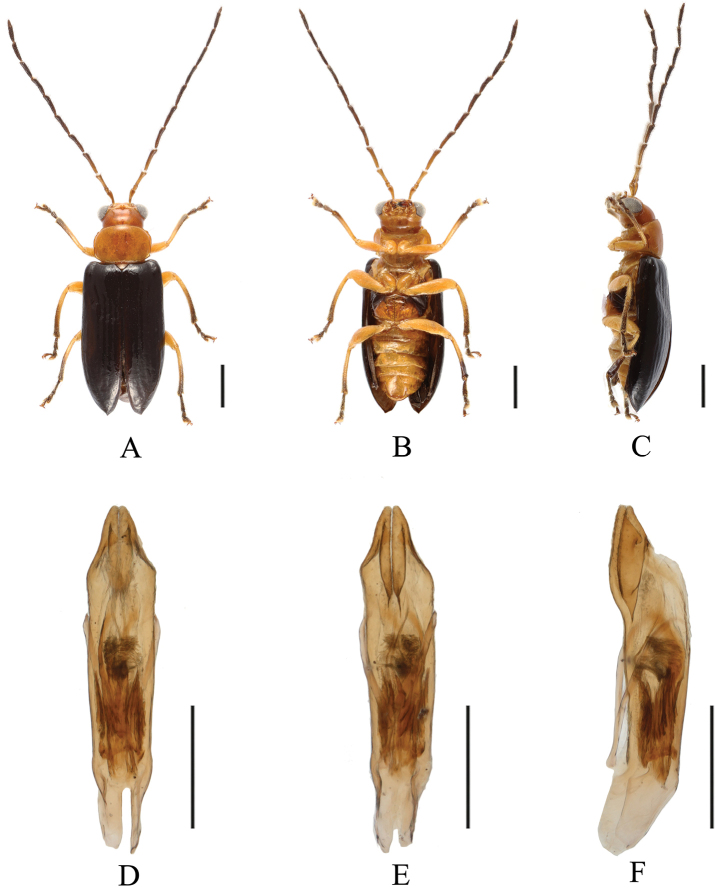 Figure 2
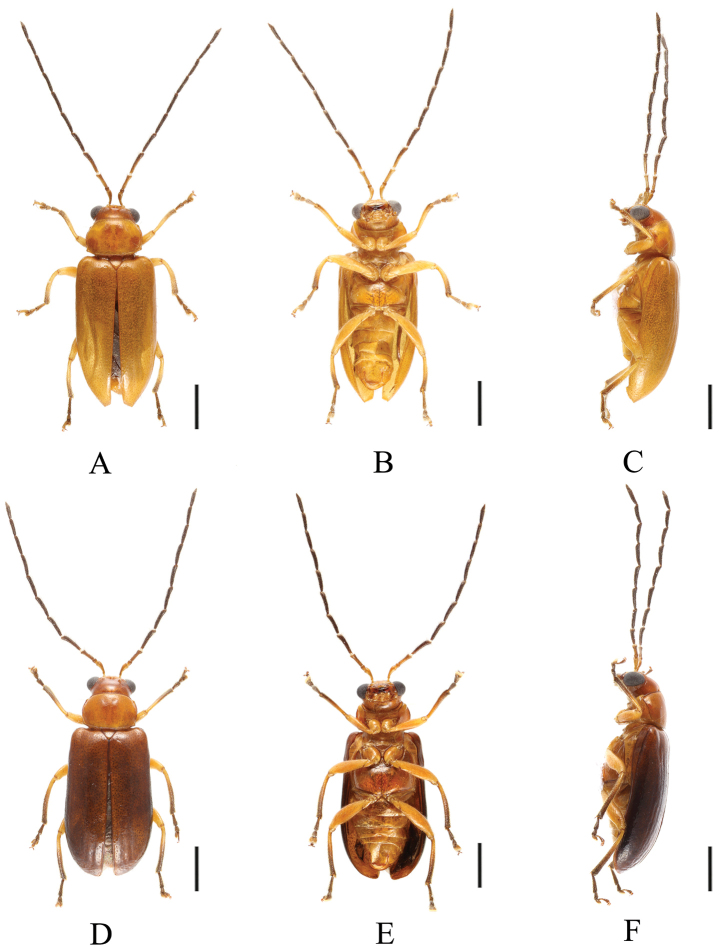 Figure 3
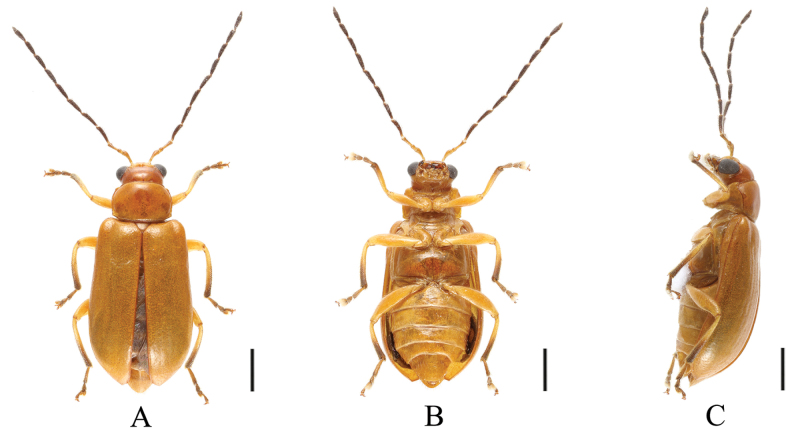 Figure 4
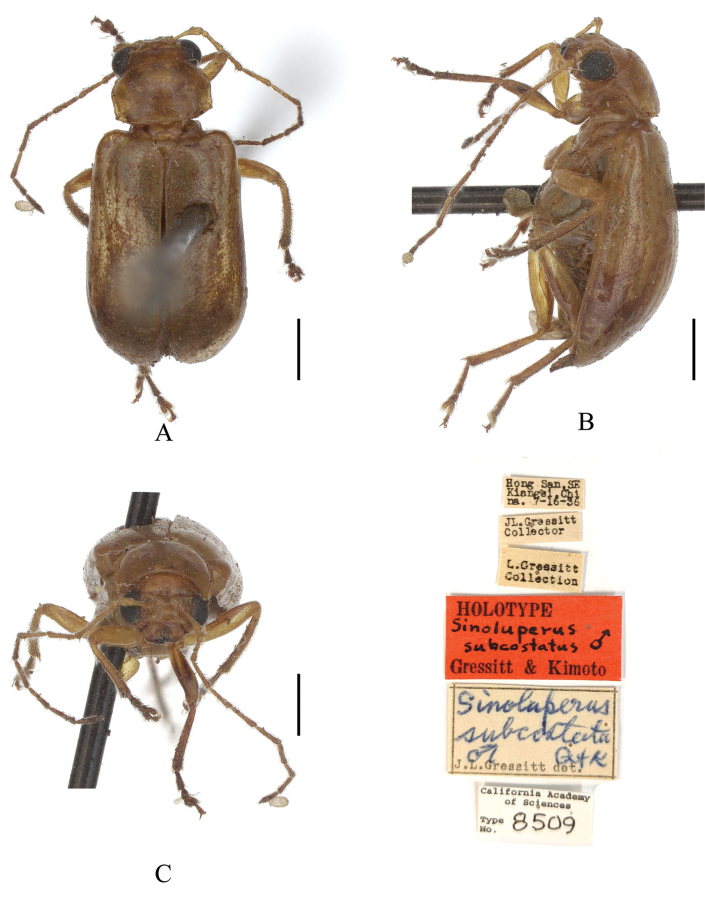 Figure 5
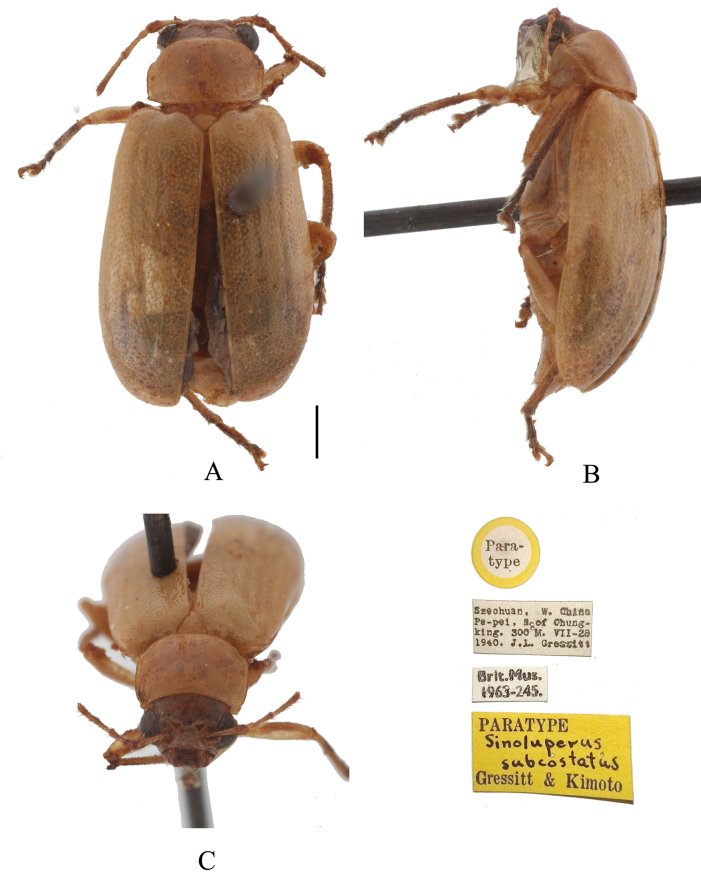 Figure 6
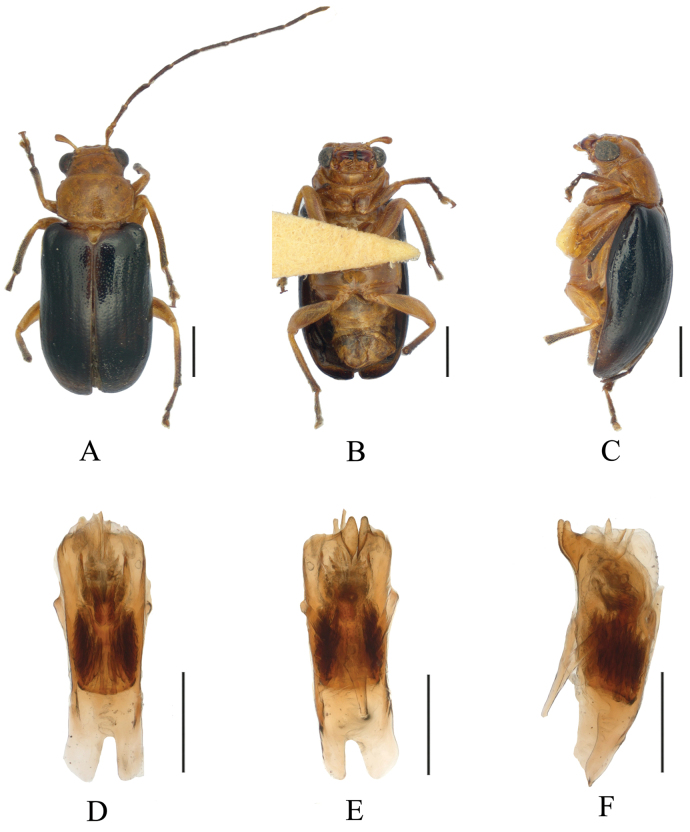 Figure 7
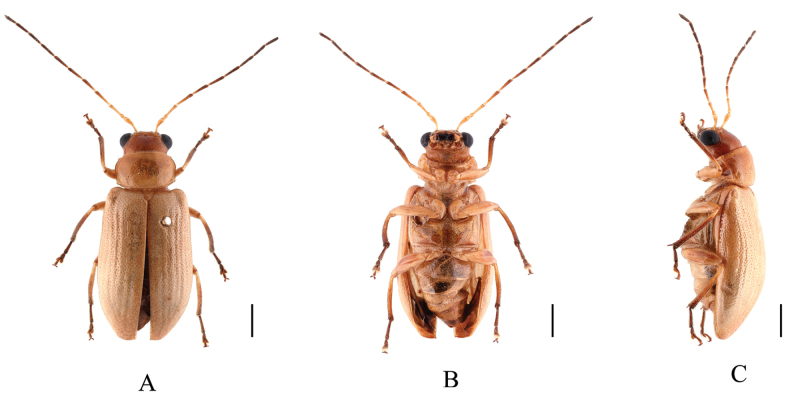 Figure 8
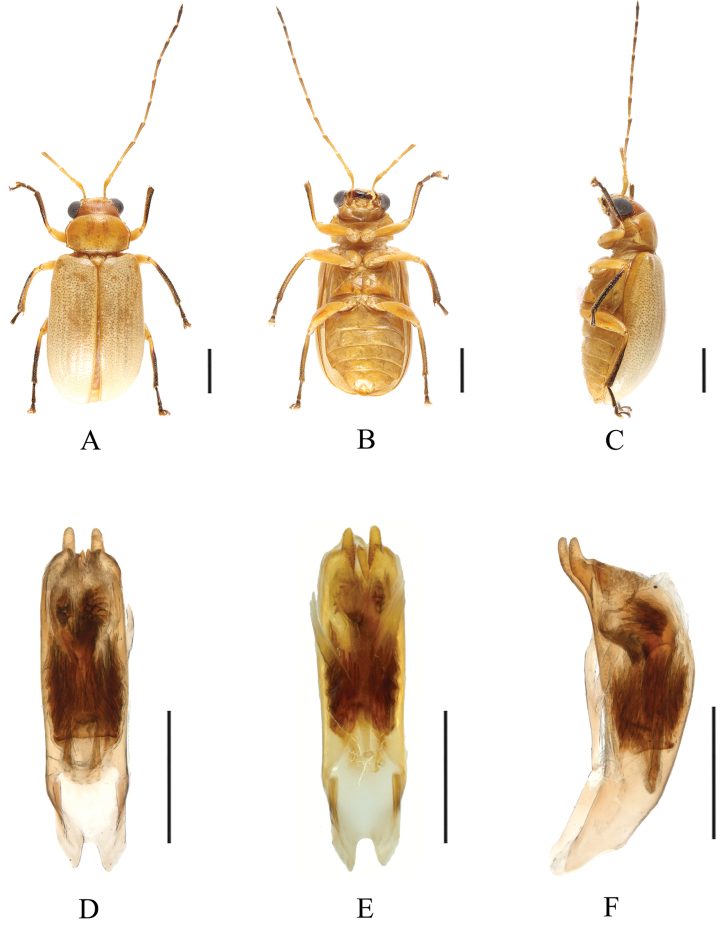 Figure 9
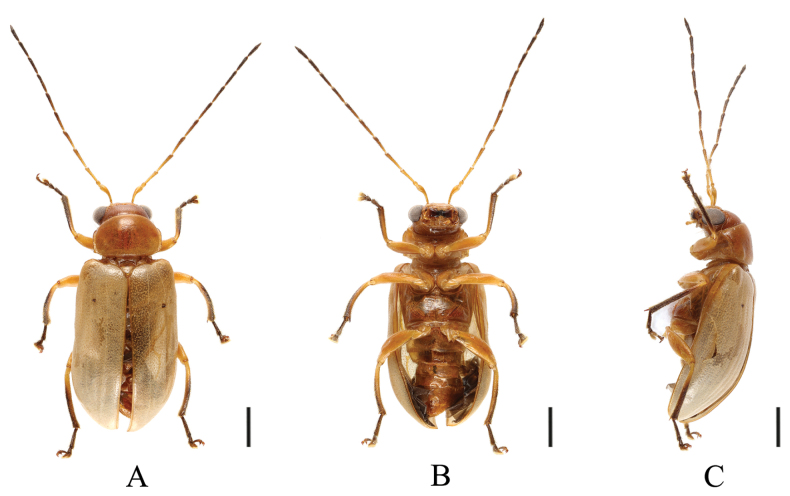 Figure 10
| 1 | Vertex covered with sparsed punctures (Fig. |
|
| – | Vertex covered with dense punctures (Fig. |
|
| 2 | Pronotum ~1.4× as wide as long; elytra black-brown or yellowish brown |
|
| – | Pronotum twice as wide as long, elytra yellowish-brown |
|
Peer Reviews
No public reviews on file for this paper yet. If you reviewed it on a platform where reviews are public (OpenReview, ICLR, NeurIPS, ICML), you can paste yours below so the community can read it here.
Videos
No videos yet. Explain this paper in a talk, walkthrough, or lecture? Add one.
Taxonomy
TopicsColeoptera Taxonomy and Distribution · Botany and Plant Ecology Studies · Coleoptera: Cerambycidae studies
Introduction
The genus Sinoluperus was established by Gressitt and Kimoto (1963) based on Sinoluperussubcostatus Gressitt & Kimoto, 1963 from southern China (Zhejiang, Jiangxi, Sichuan, Guangdong, and Hainan). Not until 1998 was a second species, Sinoluperuswuyiensis Yang & Wu, 1998 described from Wuyishan Mountains, China (Fujian) (Yang et al. 1998). Mohamedsaid (1999) described the third species, Sinoluperusbeta Mohamedsaid, 1999, from Maxwell’s Hill in Perak, Malaysia. In 2008, Lopatin reported the fourth species, Sinoluperusvietnamicus Lopatin, 2008 from Vietnam. Prior to the present study, only four species of Sinoluperus have been known, all distributed in the Oriental Region and with three species recorded from China.
Sinoluperus species can be identified by following characters: body elongate, medium-sized, dorsal surface of body hairless and mostly yellowish brown or black-brown; head and pronotum about with same width, vertex covered with punctures; frontal tubercles transverse; antennae extendng to apex of elytra or longer than body, antennomere 2 shortest, antennomere 3 approximately 3.5× as long as antennomere 2, antennomere 4 nearly equal in length to antennomere 3 or slightly longer than 3, antennomeres 5–11 decreasing slightly in length; pronotum slightly wider than long, all margins bordered, disc slightly convex, without impression, finely and sparsely covered with punctures; scutellum triangular, with punctures or impunctate; lateral margins of elytra straight and parallel, humeri strongly convex, elytron with longitudinal impressions and punctures along impressions; elytral epipleuron broad at base, narrowed from middle to apex, disappeared before apex; procoxal cavity open behind; tibia with apical spur; first metatrsomere equal to combined remaining tarsomeres; aedeagus ventrally with a flat middle part, base with a large orifice, apex strongly sclerotized and with protrusions; in lateral view, apical protrusions, with flat middle part, and slightly curved basal part; and last visible sternite three-lobed in male and complete in female.
Recently, when we studied leaf beetles from the Nanling Mountains, southern China, two species of Sinoluperus were identified: S.wuyiensis Yang & Wu, 1998 and S.variegatus sp. nov.
Materials and methods
The specimens of new species were collected in the Nanling Mountains by net sweeping. Specimens were preserved in 100% ethanol. Morphological characters were examined with an Olympus SZ61 microscope. Male genitalia from each species were dissected using the following procedure: for dried or ethanol preserved specimens, the abdomen was removed from each specimen, boiled in water for 5–10 min, then transferred to a vial containing 10% KOH solution. The abdomen with the aedeagus was washed in distilled water 3 or 4 times, transferred to a cavity slide using fine forceps. There aedeagus was separated from the abdomen using a hooked, fine dissecting needle. Habitus images were taken using a Canon 5DSR/Nikon SMZ25 digital camera. Aedeagus images were taken using a Nikon D610 digital camera, attached to a Zeiss V/A1 microscope (with 5× objective lens). A cable shutter release was used to prevent the camera from vibration. To obtain the full depth of focus, all images were stacked using Helicon Focus 7 and the resulting output was edited with Adobe Photoshop CC.
The type specimens of new species are deposited in the following two instititions: the Institute of Zoology, Guangdong Academy of Sciences, Guangzhou, China (IZGAS); Institute of Zoology, Chinese Academy of Sciences, Beijing, China (IZAS).
Abbreviations and depositories used in the paper:
TL type locality
TD type deposition
CASCalifornia Academy of Sciences, San Francisco, California, USA
IZAS Institute of Zoology, Chinese Academy of Sciences, Beijing, China
IZGAS Institute of Zoology, Guangdong Academy of Sciences, Guangzhou, China
Taxonomic account
Key to Chinese species of Sinoluperus
**: **
Sinoluperus
variegatus
sp. nov.
Taxon classificationAnimaliaColeopteraChrysomelidae
E6BB099D-EBE7-5652-87FB-A1A8D04095EF
https://zoobank.org/63019284-6F92-46C7-8FA9-AEDFB2B2E8B8
Type material.
Holotype: ♂ (Fig. 2), China, Hunan Province, Yizhang, Mangshan National Nature Reserve, zeziping, 22 May 2021, Nanling investigation team leg., IZGAS. Paratypes: 6♂♂1♀, same data as for preceding. 1♀, China, Guangdong Province, Ruyuan, Nanling National Nature Reserve, 20 May 2021, Nanling investigation team leg., IZGAS. 1♂, same data as for preceding, 29 May 2021, Chuan Feng leg., IZGAS. 1♂1♀, same data as for preceding, 11 Jun. 2021, Chuan Feng et al. leg., IZGAS. 3♀♀, same data as for preceding, 19 Jun. 2021, Chuan Feng et al. leg., IZGAS.
Head of Sinoluperus species AS.variegatus sp. nov. BS.subcostatus Gressitt & Kimoto, 1963 CS.wuyiensis Yang & Wu, 1998.
Sinoluperusvariegatus sp. nov. (holotype, male) A–C habitus (male) D–F aedeagus A, D dorsal view B, E ventral view C, F lateral view. Scale bars: 1 mm (A–C); 0.5 mm (D–F).
Sinoluperusvariegatus sp. nov. (paratype male) A–F habitus A, D dorsal view B, E ventral view C, F lateral view. Scale bars: 1 mm.
Sinoluperusvariegatus sp. nov. (paratype, female) A–C habitus A dorsal views B ventral views C lateral views. Scale bars: 1 mm.
Diagnosis.
The new species closely resembles S.subcostatus Gressitt & Kimoto, 1963, but it differs from the latter by its slender aedeagus with a gradually narrowed apical part in ventral view. In S.subcostatus, the aedeagus is robust, and its apical part is abruptly narrowed in ventral view. Light-colored specimens of new species closely resemble S.wuyiensis Yang & Wu, 1998. However, the vertex of S.variegatus sp. nov. almost impunctate, vertex of S.wuyiensis strongly and closely punctate.
Description.
Male. Length: 4.5–5.0 mm. Head, pronotum, scutellum, ventral side of body, femur, and basal half of tibia yellow or orange. Antennae black-brown, with antennomeres 1–3 yellow-brown, most of metepimeron brown. Elytra black-brown or pale in some specimens. Apical half of tibia, tarsus, and claw black-brown.
Vertex with sparse punctures, with fine reticulation. Frontal tubercles transverse, extending downward between antennal bases. Antennae longer than body; antennomeres 1 bare, rod-shaped, antennomeres 2–11 with short hairs, antennomere 2 shortest, antennomere 3 ~3.5× as long as antennomere 2; antennomere 4 ~1.3× as long as antennomere 3, thick and curved at apex, antennomere 5 equal to antennomere 4 in length, antennomeres 6–11 gradually shortened.
Pronotum ~1.5× as wide as long, lateral margins straight at base and slightly rounded at apex; three setae present on each side of lateral margins, basal margin slightly convex, anterior margin slightly concave, anterior and posterior angles thickened and rounded; disc strongly convex, with sparse and fine punctures, shiny.
Scutellum triangular, smooth, impunctate.
Elytra wider than pronotum at base, humeri strongly convex, lateral sides subparallel and gradually widened posteriorly. Disc with 10 shallow longitudinal grooves, covered with small punctures in grooves, interstices of punctures wider than diameter of individual puncture. Elytral epipleuron broad at base, narrowed at middle, gradually narrowed from middle to apex.
Legs strong, each tibia with distinct spur at apex, tarsomere 1 of hind tarsi equal to combined remaining tarsomeres.
Aedeagus slender; in ventral view, sides abruptly narrowed near apex, with apical protrusions forming two cones close to each other.
Female. Length 6.5 mm. Head, pronotum, scutellum, ventral surface of body, femur, and base of tibia yellowish brown; apical half of tibia, tarsus, claw black brown. Antennae black-brown, with antennomeres 1–3 yellow-brown. Antenna ~2/3 of body length, antennomere 3 ~3× as long as antennomere 2; antennomere 4 ~1.5× as long as antennomere 3, antennomere 5 equal in length to antennomere 4, antennomere 6 slightly shorter than antennomere 5, antennomeres 7–11 gradually widened. Punctures Barely visible on pronotum and elytra.
Distribution.
China: Zhejiang, Hunan, Guangdong.
Etymology.
The species name (Latin, meaning “variegated”) refers to the variable color of elytra.
Sinoluperus
subcostatus
Taxon classificationAnimaliaColeopteraChrysomelidae
Gressitt & Kimoto, 1963
199420FE-92F5-517C-9148-83C7E5A5856D
Sinoluperus subcostatus
Gressitt and Kimoto 1963: 584. TL: China, Jiangxi. TD: CAS.
Type specimens examined.
Holotype: ♂. Hong San, SE Kiangsi Prov, China, 16. Jul. 1936, Gressitt leg., CAS8509. Paratypes: ♀. Szechuan, W. China, Pe-pei,, 28. Jul. 1940, Gressitt; 300 m a. s. l. Brit. Mus. 1963-245. ♂. China, Hainan Province, Tai-pin (Dwa-bi), 325 m a. s. l., 22 Jul. 1935, Gressitt leg., IZAS.
Sinoluperussubcostatus (male) (holotype) A–C habitus A dorsal view B lateral view C head view. Scale bars: 1 mm.
Sinoluperussubcostatus (female) (paratype) A–C habitus A dorsal view B lateral view C head view. Scale bars: 1 mm.
Sinoluperussubcostatus (male) (paratype) A–C habitus D–F aedeagus A, D dorsal view B, E ventral view C, F lateral view. Scale bars: 1 mm (A–C); 0.5 mm (D–F).
Sinoluperussubcostatus (female) A–C habitus A dorsal view B ventral view C lateral view. Scale bars: 1 mm.
Additional specimens examined.
1♀, China, Hunan Province, Yizhang, Mangshan National Nature Reserve, chawanggu, 25 Aug 2020, Siyuan Xu leg., IZGAS.
Description.
Male. Length 4.8–5.2 mm. Body ochraceous, apical half of tibia, tarsus, and claw reddish brown. In the paratype in IZCAS, head, pronotum, scutellum, ventral surface of body, femur, and base of tibia yellow; antennae black-brown with antennomeres 1 and 2 yellow, elytra black-brown with reddish brown at apex. Apical half of tibia, tarsus, and claw brown.
Vertex covered with closed punctures. Frontal tubercles transverse. Antennae longer than body. Antennomeres 1 bare, rod-shaped, antennomeres 2–11 with short hairs, antennomere 2 shortest, antennomere 3 ~3.7× as long as antennomere 2; antennomere 4 ~1.4× as long as antennomere 3, antennomeres 5–11 equal in length, and slightly shorter than antennomere 4.
Pronotum ~1.4× as wide as long, anterior margin straight; basal margin slightly convex, lateral margins straight at base and slightly rounded at apex, anterior angle projecting, basal angle obtuse, disc convex, with sparse punctures.
Scutellum triangular, with several small punctures.
Elytra wider than pronotum basally, humeri strongly convex, lateral margins of elytra gradually widened posteriorly. Elytra disc with 10 shallow longitudinal grooves and covered with small punctures, the interstices of punctures equal with diameter of individual puncture. Epipleuron broad basally, strongly narrowed at middle, gradually narrowed from middle to apex. Leg strong, each tibia with a distinct spur at apex.
Aedeagus robust, in ventral view, with sides slightly dilating near apex; apical protrusions short-cone-shaped, close to each other.
Female. Length 5.2–5.5 mm. Head reddish brown; Antennae reddish brown with antennomeres 1–3 yellow, pronotum, scutellum, ventral surface of body, femur, and base of tibia brown or yellowish brown; apical half of tibia, tarsus, claw reddish brown.
Distribution.
China: Zhejiang, Jiangxi, Hongkong, Guangdong, Hainan, Sichuan; Laos.
Sinoluperus
wuyiensis
Taxon classificationAnimaliaColeopteraChrysomelidae
Yang & Wu, 1998
8EF46B76-F58B-56A5-A2E6-16D7F8AD620D
Sinoluperus wuyiensis Yang & Wu, 1998: 262. TL: China, Fujian. TD: IZAS.
Type specimens examined.
Holotype: ♂, China, Fujian province, Mount Wuyi, Maopai, 1 Aug. 1997, Yanyu Wu leg., IZAS. Paratypes: 1♂, China, Fujian Province, Mount Wuyi, Pikeng, 520 m a. s. l., 31 Jul. 1997, Yanyu Wu leg., IZAS. 2♂♂, Fujian Province, Mount Wuyi, Huangxizhou, 650 m a. s. l., 6 Aug. 1997, Jiashe Wang leg., IZAS. 1♂, China, Fujian Province, Mount Wuyi, Diaoqiao, 540 m a. s. l., 11 Aug. 1997, Youwei Zhang leg., IZAS.
Sinoluperuswuyiensis (male) A–C habitus D–F aedeagus A, D dorsal view B, E ventral view C, F lateral view. Scale bars 1 mm (A–C); 0.5 mm (D–F).
Sinoluperuswuyiensis (female) A–C habitus A dorsal view B ventral view C lateral view. Scale bars: 1 mm.
Additional specimens examined.
1♀, China, Guangdong Province, Ruyuan, Nanling National Nature Reserve, xiaohuangshan, 18 Jul. 2022, Meiying Lin et al. leg., IZGAS. 1♂, China, Guangdong Province, Chebaling National National Nature Reserve, Shixing County, 24 Jun. 2022, Meiying Lin et al. leg., IZGAS.
Description.
(♂) Length 4.5–6.0 mm. Head, pronotum, scutellum, ventral surface of body, femur, and base of tibia reddish brown or yellowish brown; antennae ranged from black to brown with antennomeres 1–3 yellow; in some specimens antennae yellow with antennomeres 7–11 black-brown. Elytra yellow; apical half of tibia, tarsus, and claw brown.
Vertex covered with closed punctures. Frontal tubercles small, antennae longer than body. Antennomere 1 bare, rod-shaped, antennomeres 2–11 with short hairs, antennomere 2 shortest, antennomere 3 ~3× as long as antennomere 2; antennomere 4 ~1.2× as long as antennomere 3, antennomeres 4–11 equal in length.
Pronotum ~2× as wide as long, basal and apical margins slightly convex, disc strongly convex with dense punctures.
Scutellum triangular, smooth, impunctate.
Elytra wider than pronotum basally, humeri strongly convex, subparallel-sided but gradually widened posteriorly. Disc with 8–10 longitudinal grooves, covered with dense punctures, interstices of punctures narrower than diameter of individual puncture. Elytral epipleuron broad at base, strongly narrowed at middle, gradually narrowed from middle to apex.
Legs strong, each tibia with distinct spur at apex, segment 1 of hind tarsi equal to combined remaining segments.
Aedeagus robust, with parallel sides and rounded apex in ventral view. Apical protrusions nipple nipple-shaped, small, well separated from each other.
Female. Length 5.5 mm. Antennomere 3 ~3.5× as long as antennomere 2; apical ventrite with longitudinal concave in the middle.
Distribution.
China: Hunan, Fujian, Guangdong.
Supplementary Material
XML Treatment for Sinoluperus variegatus
XML Treatment for Sinoluperus subcostatus
XML Treatment for Sinoluperus wuyiensis
The reference list from the paper itself. Each links out to its DOI / PubMed record.
- 1Gressitt JL Kimoto S (1963) The Chrysomelidae (Coleopt.) of China and Korea. Part II. Pacific Insects Monograph 1B: 301–1026.
- 2Lopatin IK (2008) Sinoluperusvietnamicus sp. n.– the first representative of the Chinese genera in Vietnam (Coleoptera: Chrysomelidae: Galerucinae).Zoosystematica Rossica 17(1): 150. 10.31610/zsr/2008.17.1.150 · doi ↗
- 3Mohamedsaid MS (1999) Sinoluperusbeta, n. sp., a second species for the genus (Coleoptera: Chrysomelidae: Galerucinae).Serangga 4: 17–20.
- 4Yang XK Wang JS Wu YY (1998) Three new species of Galerucinae (Coleoptera: Chrysomelidae) from Wuyi Mountain.Entomotaxonomia 20: 261–264.