Giant Borderline Phyllodes Tumor of the Breast: A Case Report
George Mpourazanis, Haralambos V Harissis, Konstantinos Seretis, Petros Papalexis, Ioannis Korkontzelos, Romanos Vogiatzis, Ioannis Kosmas, Anastasia Zagaliki, Panagiotis Tsirkas

TL;DR
This case report describes a rare giant borderline phyllodes tumor in a 47-year-old woman, treated with surgery and reconstruction without additional therapy.
Contribution
The novelty lies in the detailed presentation of a rare, large borderline phyllodes tumor case with long-term development and surgical management.
Findings
The tumor was unusually large, measuring over 16 cm in its largest dimension.
Histological analysis confirmed the diagnosis of borderline phyllodes tumor.
The patient did not require adjuvant treatment following surgery.
Abstract
Borderline phyllodes tumor is a rare and benign form of breast cancer with malignant potential. According to the World Health Organization (WHO), phyllodes tumor is classified into three categories: benign, borderline, and malignant. The treatment of phyllodes tumor is wide focal excision combined with radiotherapy and chemotherapy in certain cases. Herein, we report a 47-year-old female who presented with a giant borderline mass approximately 19.5 x 16.9 x 9.3 cm in size. From medical history, we noticed that the mass begun to develop during puberty. Wide focal excision of the tumor and immediate implant-based reconstruction with free nipple graft was performed, with the tumor specimen measuring 16.5 x 14.2 x 8.7 cm. Histological examination reported a borderline phyllodes tumor, and in this case, the patient did not undergo adjuvant treatment.
Genes, proteins, chemicals, diseases, species, mutations and cell lines named across the full text — each resolved to its canonical identifier and authoritative record.
Click any figure to enlarge with its caption.
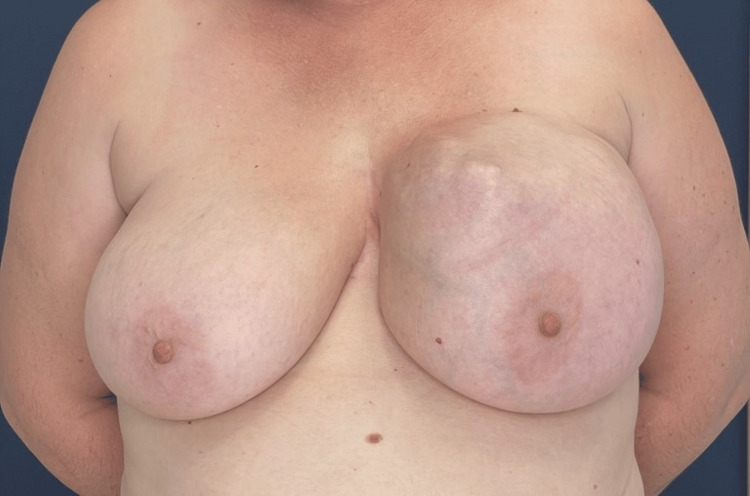 Figure 1
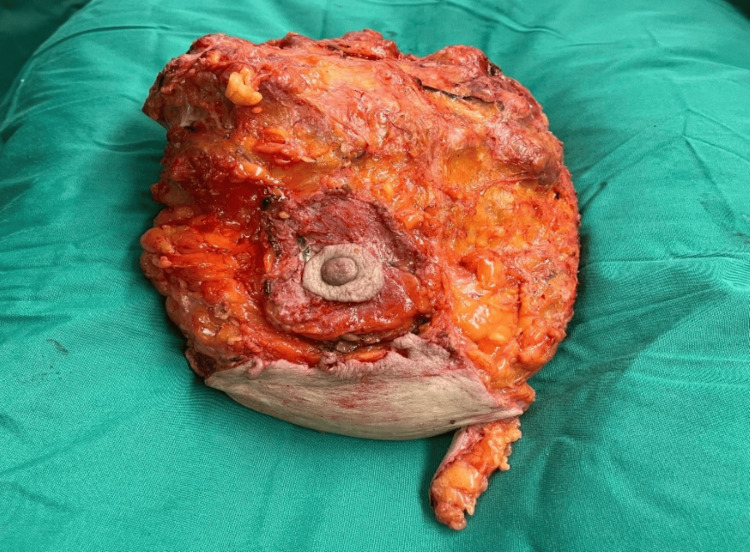 Figure 2
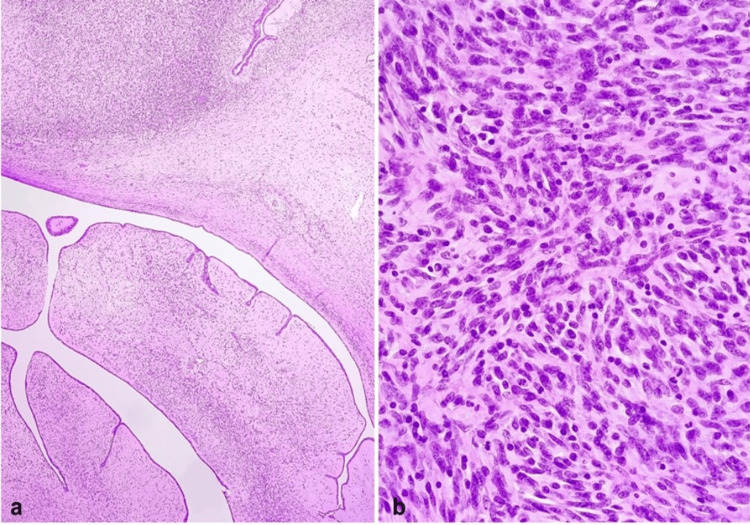 Figure 3
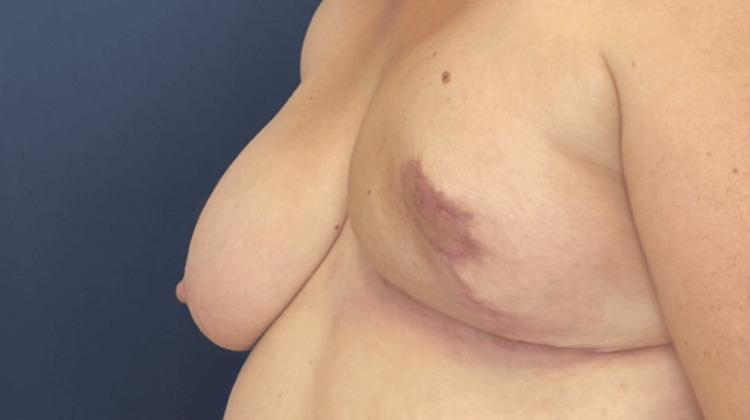 Figure 4
Peer Reviews
No public reviews on file for this paper yet. If you reviewed it on a platform where reviews are public (OpenReview, ICLR, NeurIPS, ICML), you can paste yours below so the community can read it here.
Videos
No videos yet. Explain this paper in a talk, walkthrough, or lecture? Add one.
Taxonomy
TopicsBreast Lesions and Carcinomas · Cancer and Skin Lesions · Salivary Gland Tumors Diagnosis and Treatment