Rescue Cervical Cerclage After 24 Weeks and Subsequent Childbirth After 34 Weeks of Gestation
Dionysios G Galatis, Christos Benekos, Panagiotis-Konstantinos Karachalios, Konstantina Kalaitzi, Vasileios Batsakoutsas, Ioannis Chatzipanagiotis, Ippokratis Diamantakis, Argyrios Monastiriotis, Nikolaos Kiriakopoulos

TL;DR
A woman underwent a late cervical cerclage at 24 weeks and successfully gave birth to a healthy baby at 34 weeks.
Contribution
This case demonstrates the effectiveness of rescue cervical cerclage after 24 weeks of gestation.
Findings
Rescue cervical cerclage at 24 weeks prolonged gestation without complications.
The baby was born healthy at 34 weeks following the procedure.
Abstract
A defect in the structure or function of the cervix that causes it to fail to contain the fetus intrauterine creates the condition called cervical insufficiency. Typical symptoms are pressure in the area of the pelvis, premature membrane rupture, and cervical dilation without uterine contractions. Surgical treatment includes the technique of cervical cerclage. It is usually performed from week 12 to week 16 of pregnancy. This article presents a case of rescue cervical cerclage after 24 weeks gestation and the observance of the pregnancy that followed. The cerclage was successful in prolonging the gestation of the fetus and no post-operative complications occurred due to the operation. The outcome of the pregnancy was a live and healthy baby born at 34 weeks gestation.
Genes, proteins, chemicals, diseases, species, mutations and cell lines named across the full text — each resolved to its canonical identifier and authoritative record.
Click any figure to enlarge with its caption.
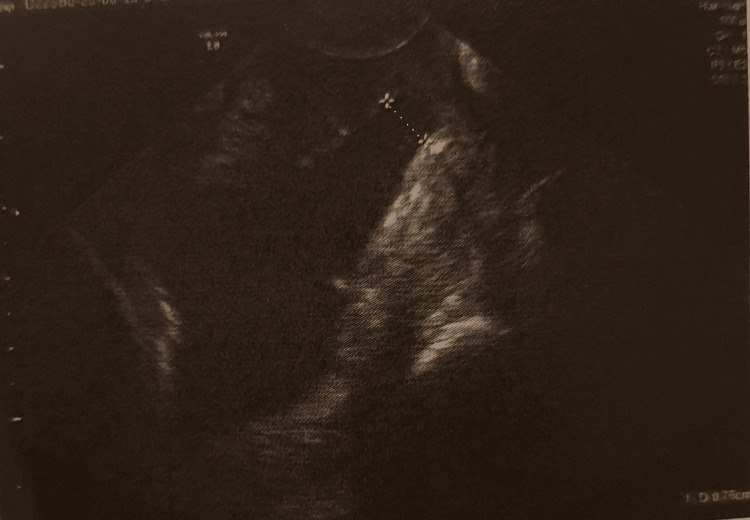 Figure 1
Peer Reviews
No public reviews on file for this paper yet. If you reviewed it on a platform where reviews are public (OpenReview, ICLR, NeurIPS, ICML), you can paste yours below so the community can read it here.
Videos
No videos yet. Explain this paper in a talk, walkthrough, or lecture? Add one.
Taxonomy
TopicsPreterm Birth and Chorioamnionitis · Pregnancy-related medical research · Pelvic floor disorders treatments