Deep learning-based classification of the capillary ultrastructure in human skeletal muscles
Marius Reto Bigler, Oliver Baum

TL;DR
This study uses deep learning to classify capillary structures in muscle biopsies, showing better accuracy than traditional methods in distinguishing healthy individuals from those with systemic diseases.
Contribution
A deep learning model (ResNet101) outperforms manual morphometric analysis in classifying capillary ultrastructure in human skeletal muscle biopsies.
Findings
The CNN achieved 79% diagnostic accuracy, significantly higher than manual BM thickness analysis (AUC 0.657).
The CNN's predictions were primarily based on pericyte debridement patterns.
The model's performance suggests it can generate hypotheses about capillary changes in systemic diseases.
Abstract
Capillary ultrastructure in human skeletal muscles is dynamic and prone to alterations in response to many stimuli, e.g., systemic pathologies such as diabetes mellitus and arterial hypertension. Using transmission electron microscopy (TEM) images, several studies have been conducted to quantify the capillary ultrastructure by means of morphometry. Deep learning techniques like convolutional neural networks (CNNs) are utilized to extract data-driven characteristics and to recognize patterns. Hence, the aim of this study was to train a CNN to identify morphometric patterns that differ between capillaries in muscle biopsies of healthy participants and patients with systemic pathologies for the purpose of hypothesis generation. In this retrospective study we used 1810 electron micrographs from human skeletal muscle capillaries derived from 70 study participants which were classified as…
Genes, proteins, chemicals, diseases, species, mutations and cell lines named across the full text — each resolved to its canonical identifier and authoritative record.
Click any figure to enlarge with its caption.
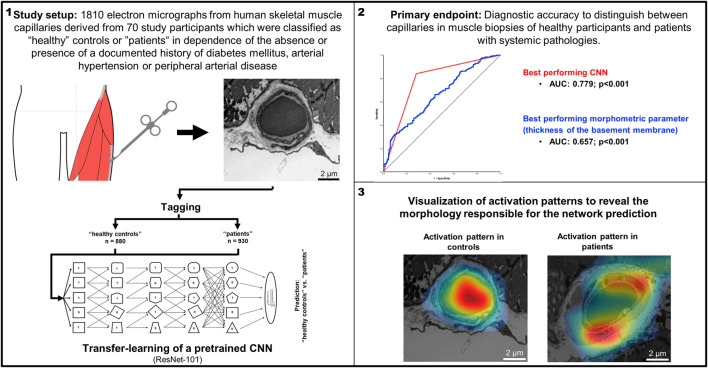 Figure 1
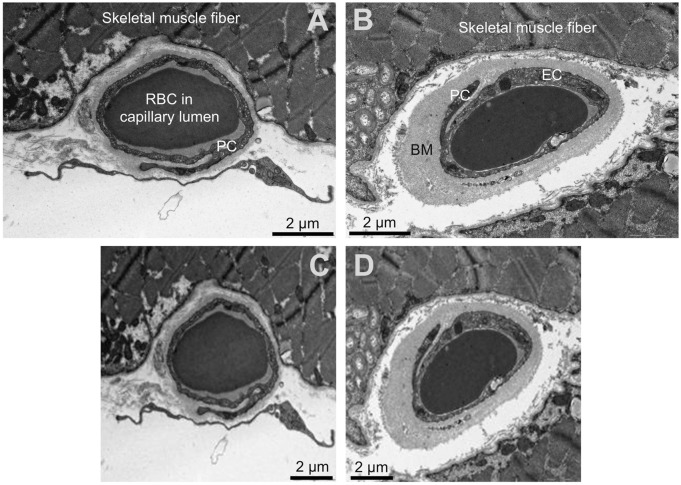 Figure 2
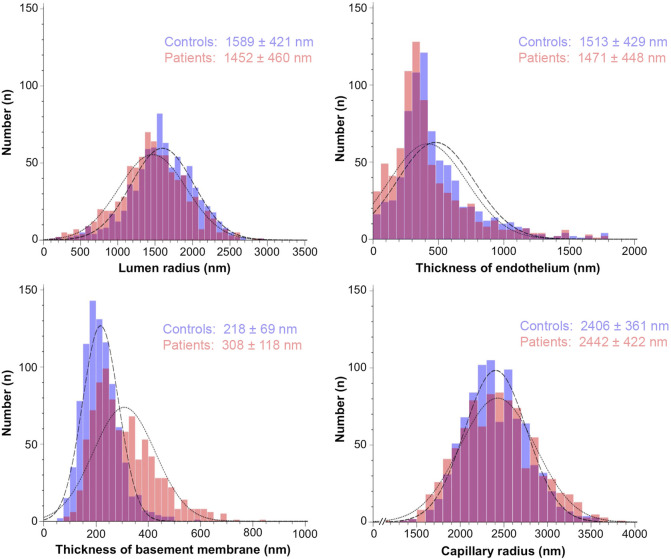 Figure 3
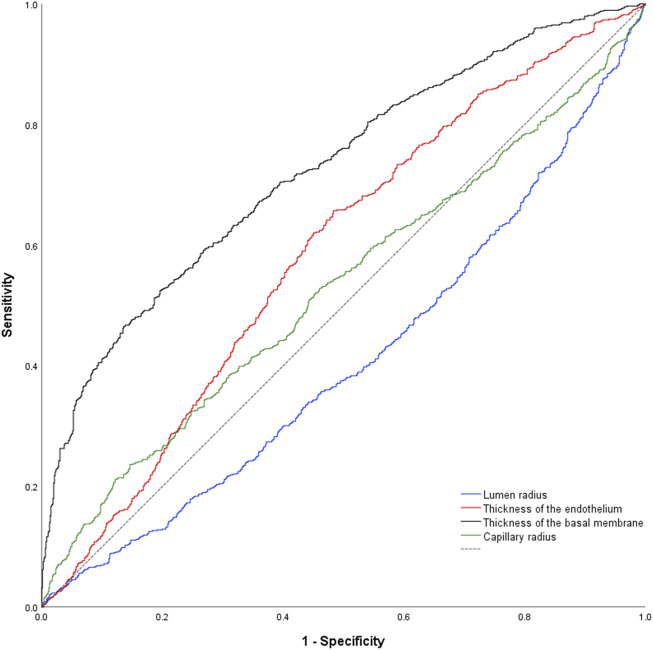 Figure 4
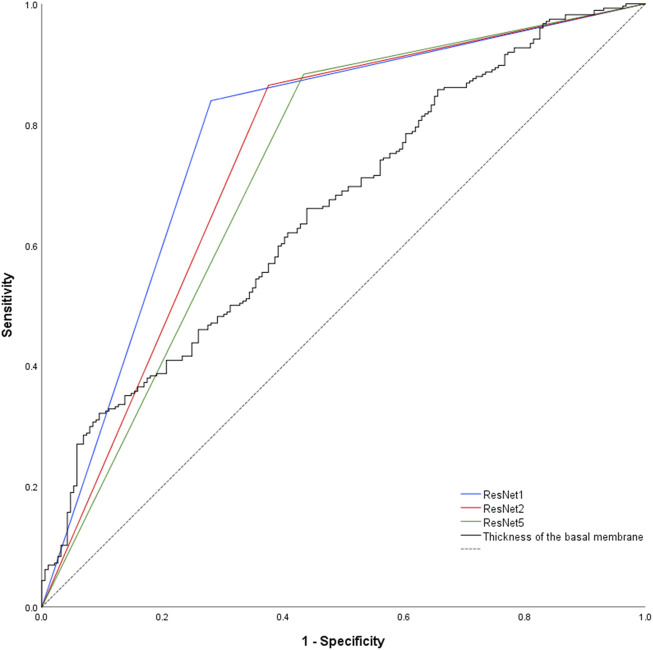 Figure 5
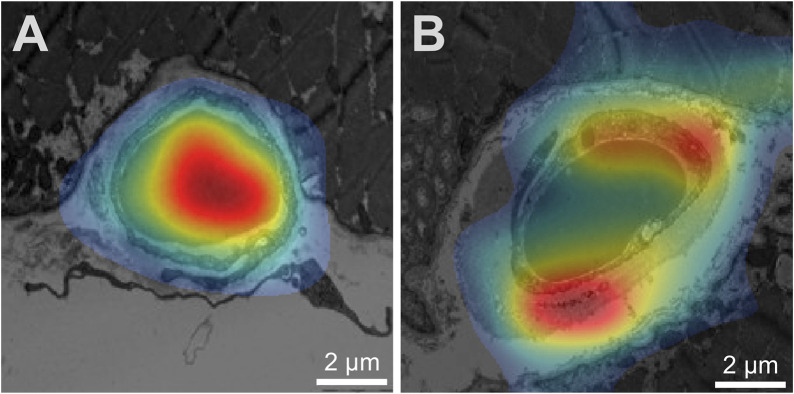 Figure 6
Peer Reviews
No public reviews on file for this paper yet. If you reviewed it on a platform where reviews are public (OpenReview, ICLR, NeurIPS, ICML), you can paste yours below so the community can read it here.
Videos
No videos yet. Explain this paper in a talk, walkthrough, or lecture? Add one.
Taxonomy
TopicsThermoregulation and physiological responses · Body Composition Measurement Techniques · Lymphatic System and Diseases