A nomogram for predicting cerebral white matter lesions in elderly men
Yi-Feng Pei, Xian-Dong Li, Quan-Ying Liu, Chu-Wei Zhang, Yi-Han Wang, Ming-Rui Chen, Hui-Sheng Chen

TL;DR
This paper introduces a new tool to predict brain lesions in elderly men, using factors like age and blood markers.
Contribution
A novel nomogram was developed and validated for predicting cerebral white matter lesions in elderly men.
Findings
Age, cystatin C, uric acid, total cholesterol, platelet count, and antiplatelet drug use were identified as significant predictors of WMLs.
The nomogram showed excellent predictive power with an AUC of 0.951 in the training cohort and 0.915 in the validation cohort.
Calibration was confirmed with p-values of 0.594 and 0.178 in the training and validation cohorts, respectively.
Abstract
This study aimed to develop a nomogram tool to predict cerebral white matter lesions (WMLs) in elderly men. Based on a retrospective cohort from January 2017 to December 2019, a multivariate logistic analysis was performed to construct a nomogram for predicting WMLs. The nomogram was further validated using a follow-up cohort between January 2020 and December 2022. The calibration curve, receiver operating characteristics (ROC) curves, and the decision curves analysis (DCA) were used to evaluate discrimination and calibration of this nomogram. A total of 436 male patients were enrolled in this study, and all 436 patients were used as the training cohort and 163 follow-up patients as the validation cohort. A multivariate logistic analysis showed that age, cystatin C, uric acid, total cholesterol, platelet, and the use of antiplatelet drugs were independently associated with WMLs. Based…
Genes, proteins, chemicals, diseases, species, mutations and cell lines named across the full text — each resolved to its canonical identifier and authoritative record.
Click any figure to enlarge with its caption.
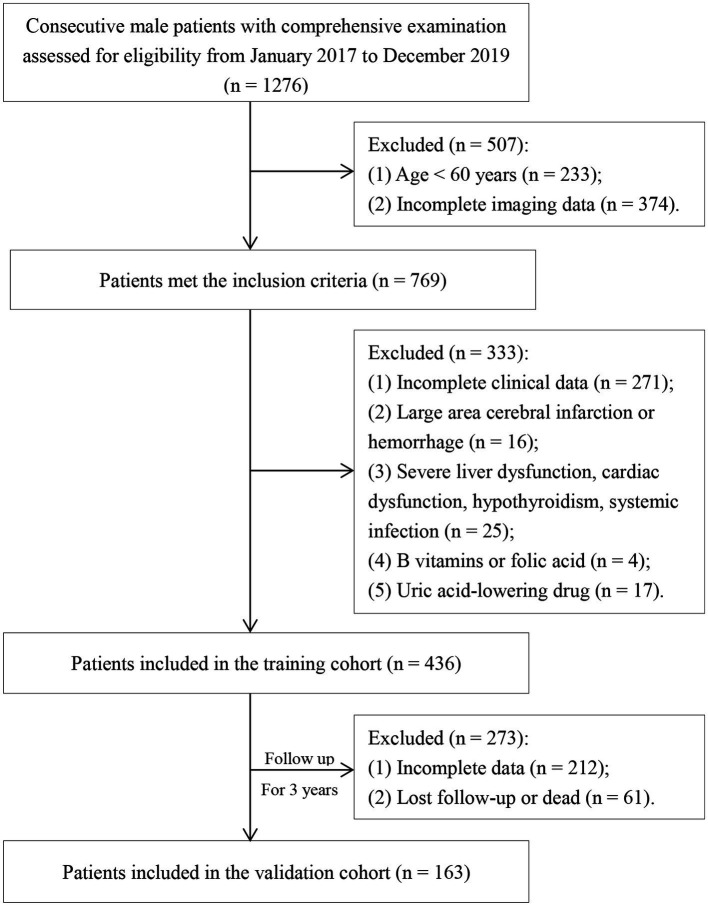 Figure 1
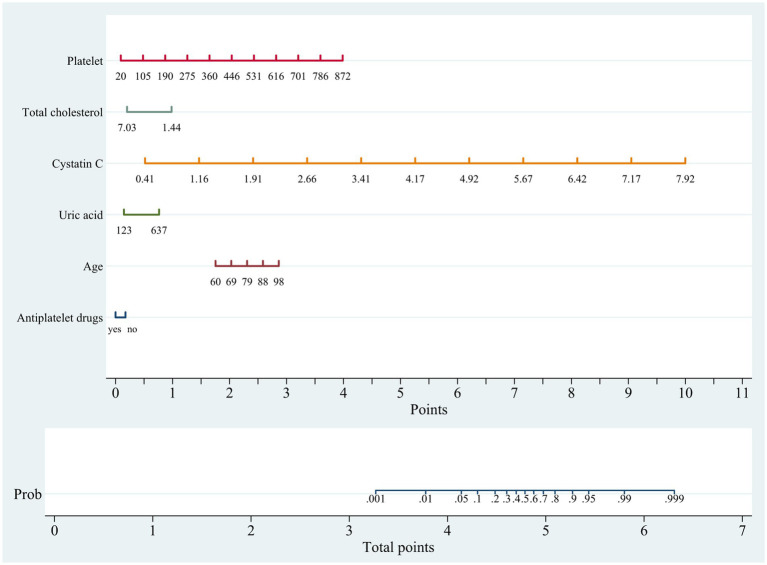 Figure 2
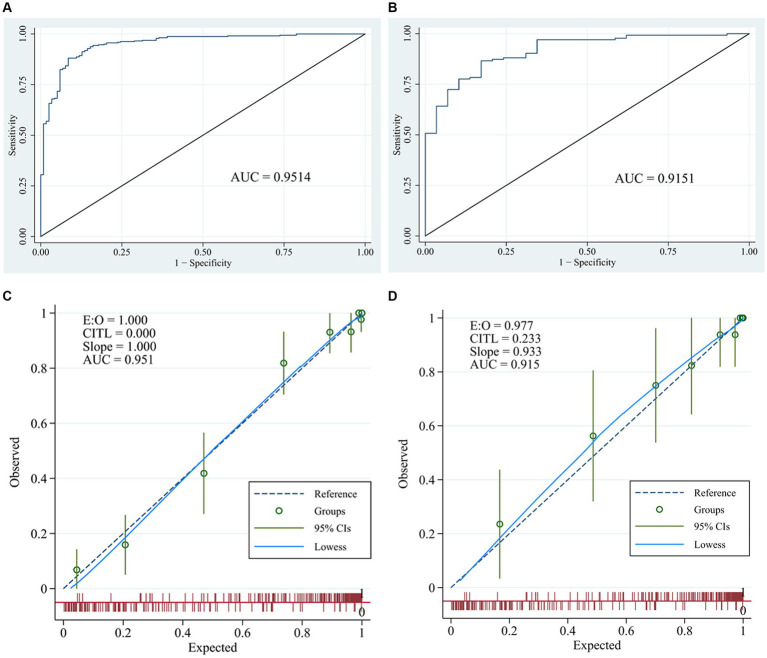 Figure 3
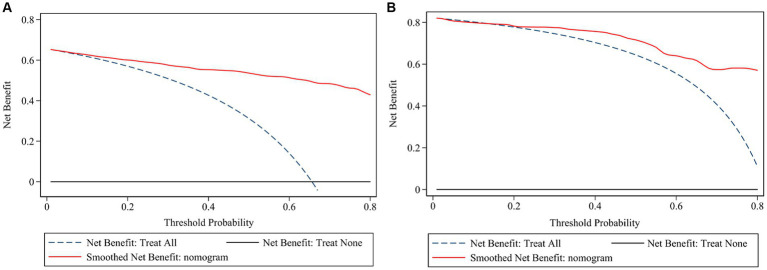 Figure 4
Peer Reviews
No public reviews on file for this paper yet. If you reviewed it on a platform where reviews are public (OpenReview, ICLR, NeurIPS, ICML), you can paste yours below so the community can read it here.
Videos
No videos yet. Explain this paper in a talk, walkthrough, or lecture? Add one.
Taxonomy
TopicsNeurological Disease Mechanisms and Treatments · Cerebrovascular and Carotid Artery Diseases · Dementia and Cognitive Impairment Research