A novel model incorporating quantitative contrast-enhanced ultrasound into PI-RADSv2-based nomogram detecting clinically significant prostate cancer
Kaifeng Huang, Li Luo, Ruixia Hong, Huai Zhao, Ying Li, Yaohuang Jiang, Yujie Feng, Qihuan Fu, Hang Zhou, Fang Li

TL;DR
This study improves the detection of significant prostate cancer by combining ultrasound data with existing imaging scores and clinical factors.
Contribution
A new predictive model integrating quantitative contrast-enhanced ultrasound with PI-RADSv2 and clinical parameters for better prostate cancer detection.
Findings
The new model achieved higher AUCs (0.910 and 0.879) compared to the PI-RADSv2-based model (0.865 and 0.821).
Quantitative ultrasound parameters like rush time and wash-out AUC were independent predictors of clinically significant prostate cancer.
The model improved classification accuracy and clinical utility as shown by Net Reclassification Index and Decision Curve Analysis.
Abstract
The diagnostic accuracy of clinically significant prostate cancer (csPCa) of Prostate Imaging Reporting and Data System version 2 (PI-RADSv2) is limited by subjectivity in result interpretation and the false positive results from certain similar anatomic structures. We aimed to establish a new model combining quantitative contrast-enhanced ultrasound, PI-RADSv2, clinical parameters to optimize the PI-RADSv2-based model. The analysis was conducted based on a data set of 151 patients from 2019 to 2022, multiple regression analysis showed that prostate specific antigen density, age, PI-RADSv2, quantitative parameters (rush time, wash-out area under the curve) were independent predictors. Based on these predictors, we established a new predictive model, the AUCs of the model were 0.910 and 0.879 in training and validation cohort, which were higher than those of PI-RADSv2-based model (0.865…
Genes, proteins, chemicals, diseases, species, mutations and cell lines named across the full text — each resolved to its canonical identifier and authoritative record.
Click any figure to enlarge with its caption.
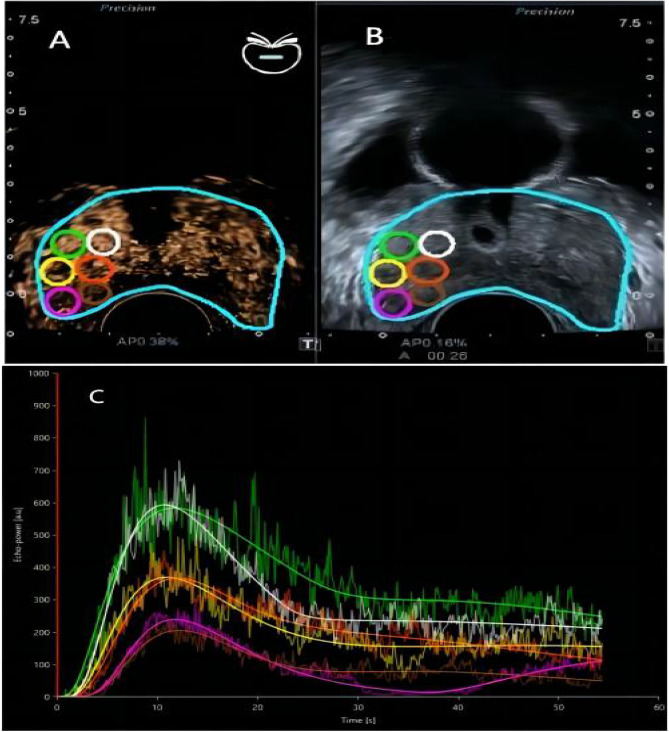 Figure 1
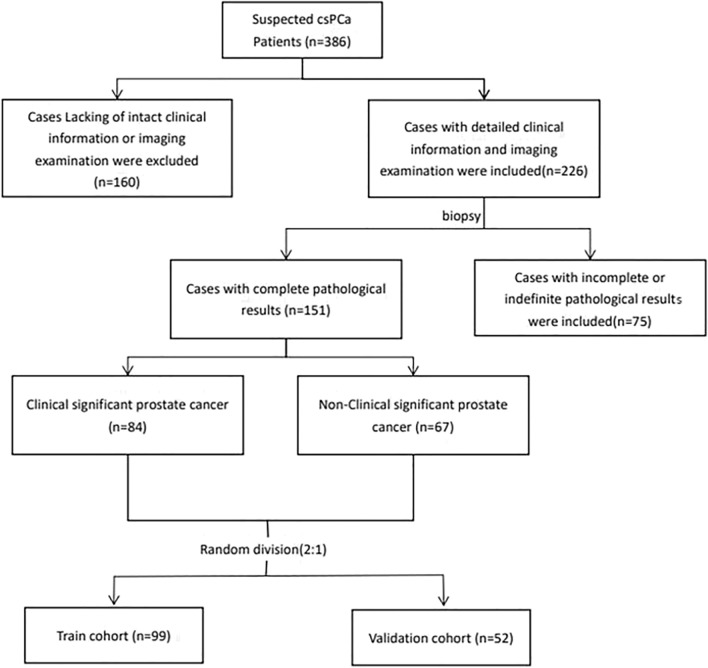 Figure 2
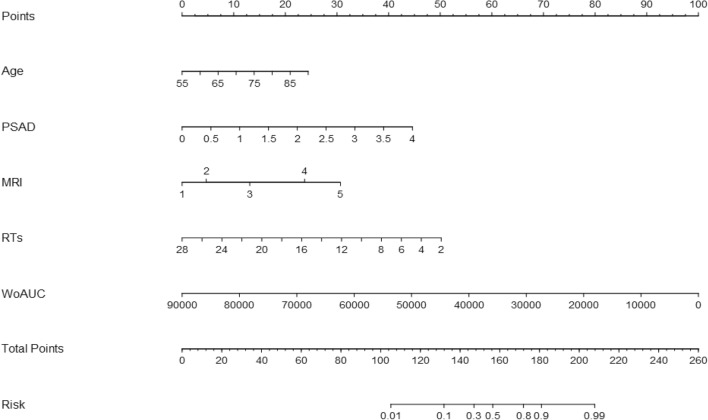 Figure 3
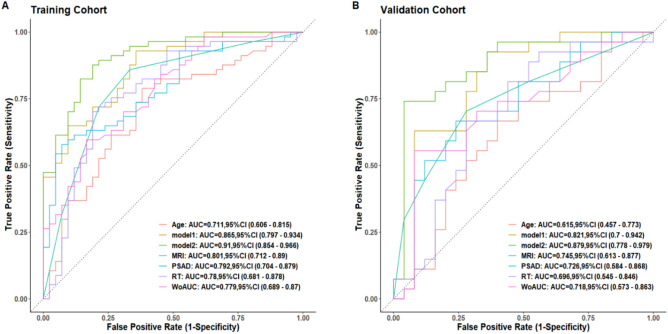 Figure 4
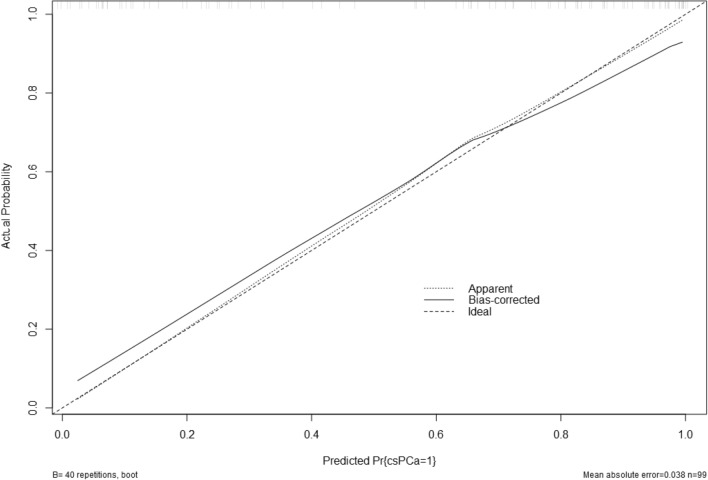 Figure 5
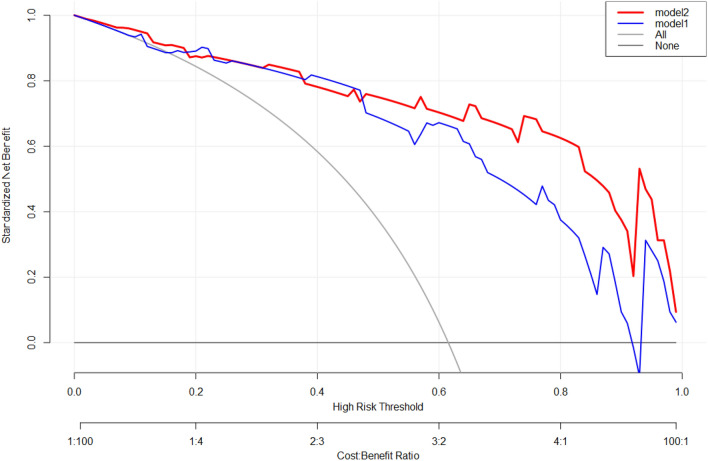 Figure 6
Peer Reviews
No public reviews on file for this paper yet. If you reviewed it on a platform where reviews are public (OpenReview, ICLR, NeurIPS, ICML), you can paste yours below so the community can read it here.
Videos
No videos yet. Explain this paper in a talk, walkthrough, or lecture? Add one.
Taxonomy
TopicsProstate Cancer Diagnosis and Treatment · Prostate Cancer Treatment and Research · Bladder and Urothelial Cancer Treatments