Genomic Characterization of Methicillin-Susceptible Staphylococcus aureus Carriage in Patients on Home Parenteral Nutrition and Their Caregivers
Michelle Gompelman, Ingrid J M van Weerdenburg, Guus T J Wezendonk, Jordy P M Coolen, Reinier P Akkermans, Chantal P Rovers, Heiman F L Wertheim, Geert J A Wanten

TL;DR
Patients receiving home nutrition are more likely to carry Staphylococcus aureus if their caregivers do, and related strains often reappear after treatment.
Contribution
The study reveals high transmission rates and genetic similarity of S. aureus strains between patients and caregivers.
Findings
Patients with carrier caregivers were twice as likely to be colonized with S. aureus.
68% of S. aureus strains from patients and caregivers were genetically related.
Genetically related strains reappeared in 70% of patients after decolonization.
Abstract
In this prospective study, patients on home parenteral nutrition were twice as likely to be colonized with Staphylococcus aureus if their caregivers were carriers. Among S. aureus-positive patients and their caregivers, molecular analysis showed 68% genetically related strains. Despite decolonization, genetically related strains reappeared in 70% of patients.
Genes, proteins, chemicals, diseases, species, mutations and cell lines named across the full text — each resolved to its canonical identifier and authoritative record.
Click any figure to enlarge with its caption.
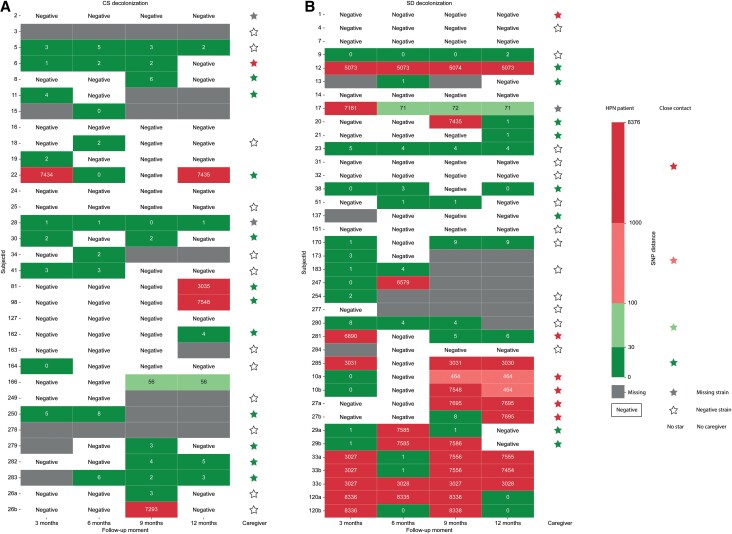 Figure 1
Peer Reviews
No public reviews on file for this paper yet. If you reviewed it on a platform where reviews are public (OpenReview, ICLR, NeurIPS, ICML), you can paste yours below so the community can read it here.
Videos
No videos yet. Explain this paper in a talk, walkthrough, or lecture? Add one.
Taxonomy
TopicsAntimicrobial Resistance in Staphylococcus · Clostridium difficile and Clostridium perfringens research · Mycobacterium research and diagnosis