Cryoablation Catheter Used in the Surgical Treatment of Atrial Fibrillation May Treat Chest Tube Pain: Engin Technique
Mesut Engin, Ufuk Aydın, Ahmet Kağan AS, Yusuf Ata, Şenol Yavuz

TL;DR
This paper describes using a cryoablation catheter to manage chest tube pain after heart surgery.
Contribution
A novel method of using cryoablation catheters for intercostal nerve blockade is introduced.
Findings
Cryoablation catheters are used for intercostal nerve blockade in cardiac surgery.
The method is applied in patients with atrial fibrillation preoperatively.
This approach may help reduce postoperative chest tube pain.
Abstract
Postoperative pain after cardiac surgery plays an important role in the patient’s recovery process. In particular, pain at the chest tube site can negatively affect the comfort and recovery of these patients. Effective pain control minimizes the risk of many complications. Oral and intravenous analgesics, epidural anesthesia, paravertebral block, and intercostal nerve blockade are used in chest tube pain control. We routinely use the surgical cryoablation method in the presence of atrial fibrillation in the preoperative period of cardiac surgery in our clinic. Here we aimed to describe our method of using the cryoablation catheter for intercostal nerve blockade.
Genes, proteins, chemicals, diseases, species, mutations and cell lines named across the full text — each resolved to its canonical identifier and authoritative record.
Click any figure to enlarge with its caption.
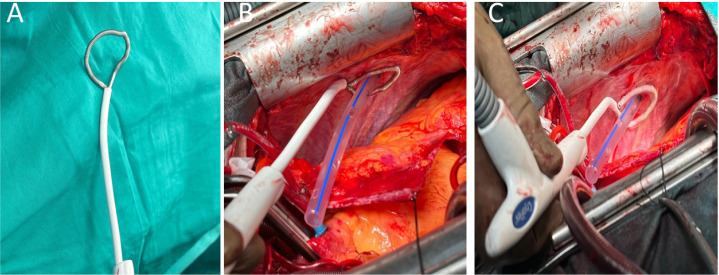 Figure 1
Peer Reviews
No public reviews on file for this paper yet. If you reviewed it on a platform where reviews are public (OpenReview, ICLR, NeurIPS, ICML), you can paste yours below so the community can read it here.
Videos
No videos yet. Explain this paper in a talk, walkthrough, or lecture? Add one.
Taxonomy
TopicsAnesthesia and Pain Management · Cardiac, Anesthesia and Surgical Outcomes · Pain Management and Treatment