Safety, Efficacy, and Pharmacokinetics of Combination SARS-CoV-2 Neutralizing Monoclonal Antibodies BMS-986414 (C135-LS) and BMS-986413 (C144-LS) Administered Subcutaneously in Non-Hospitalized Persons with COVID-19 in a Phase 2 Trial
Katya C. Corado, Kara W. Chew, Mark J. Giganti, Ying Mu, Courtney V. Fletcher, Judith S. Currier, Eric S. Daar, David A. Wohl, Jonathan Z. Li, Carlee B. Moser, Justin Ritz, Arzhang Cyrus Javan, Gene Neytman, Marina Caskey, Michael D. Hughes, Davey M. Smith, Joseph J. Eron

TL;DR
A subcutaneous treatment using two monoclonal antibodies for mild COVID-19 was found to be safe but not effective in reducing symptoms or virus levels.
Contribution
This study evaluates the safety and efficacy of subcutaneously administered SARS-CoV-2 neutralizing monoclonal antibodies in non-hospitalized COVID-19 patients.
Findings
The monoclonal antibody treatment was safe with fewer severe adverse events compared to placebo.
The treatment did not significantly improve symptom recovery time or reduce SARS-CoV-2 RNA levels in participants.
Higher early plasma antibody concentrations were linked to better outcomes, suggesting pharmacokinetic limitations.
Abstract
Outpatient COVID-19 monoclonal antibody (mAb) treatment via subcutaneous delivery, if effective, overcomes the logistical burdens of intravenous administration. ACTIV-2/A5401 was a randomized, masked placebo-controlled platform trial where participants with COVID-19 at low risk for progression were randomized 1:1 to subcutaneously administered BMS-986414 (C135-LS) 200 mg, plus BMS-986413 (C144-LS) 200 mg, (BMS mAbs), or placebo. Coprimary outcomes were time to symptom improvement through 28 days; nasopharyngeal SARS-CoV-2 RNA below the lower limit of quantification (LLoQ) on days 3, 7, or 14; and treatment-emergent grade 3 or higher adverse events (TEAEs) through 28 days. A total of 211 participants (105 BMS mAbs and 106 placebo) initiated study product. Time to symptom improvement favored the active therapy but was not significant (median 8 vs 10 days, P=0.19). There was no…
Genes, proteins, chemicals, diseases, species, mutations and cell lines named across the full text — each resolved to its canonical identifier and authoritative record.
Click any figure to enlarge with its caption.
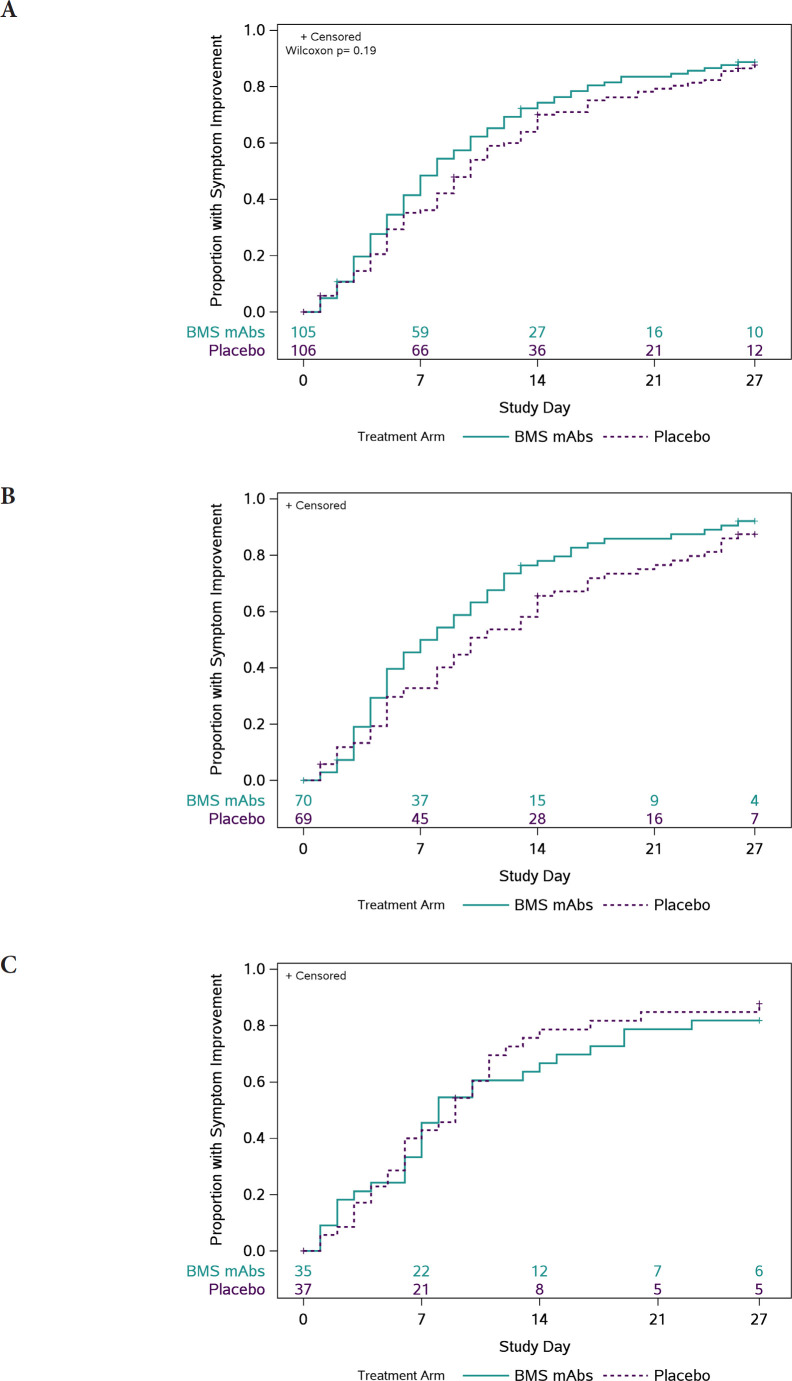 Figure 1
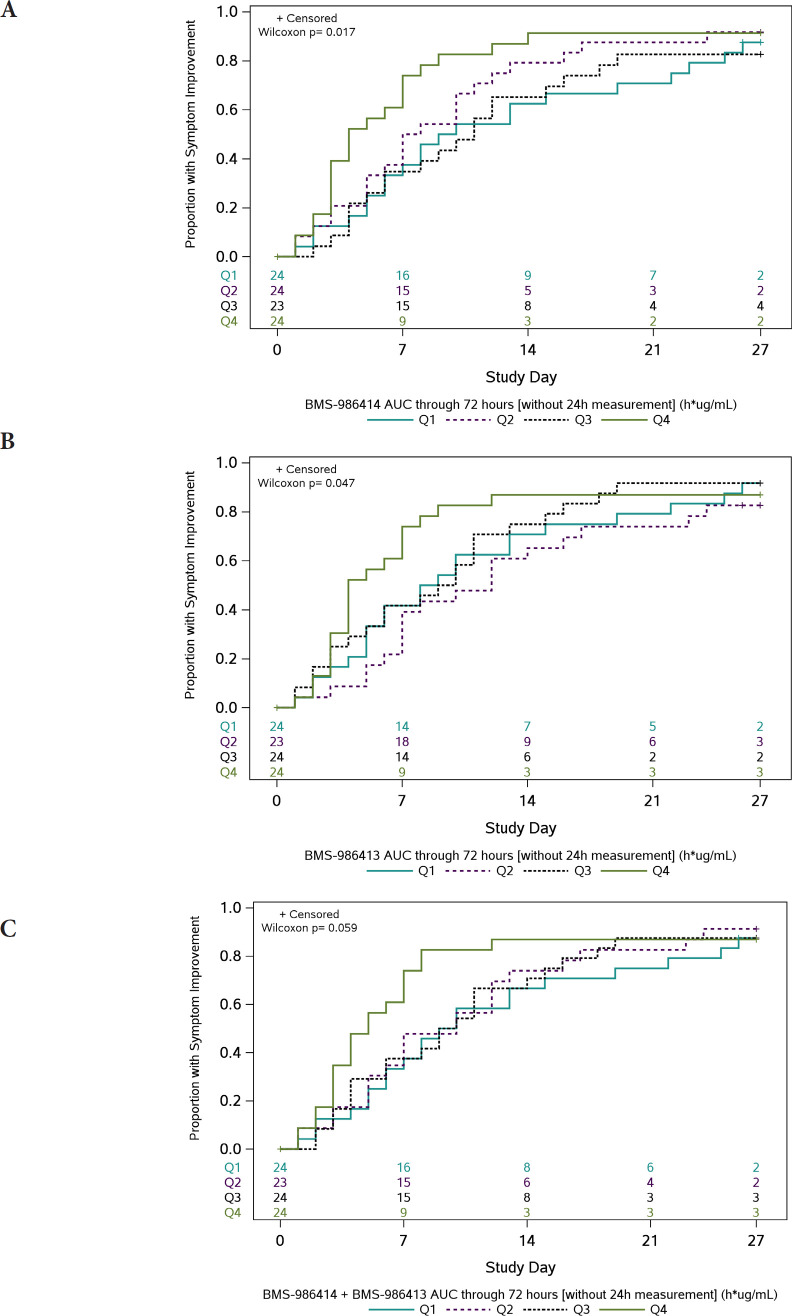 Figure 2
Peer Reviews
No public reviews on file for this paper yet. If you reviewed it on a platform where reviews are public (OpenReview, ICLR, NeurIPS, ICML), you can paste yours below so the community can read it here.
Videos
No videos yet. Explain this paper in a talk, walkthrough, or lecture? Add one.
Taxonomy
TopicsSARS-CoV-2 and COVID-19 Research · COVID-19 Clinical Research Studies · SARS-CoV-2 detection and testing