Beyond clinical trials: real-world impact of immunotherapy on NSCLC in Jordan
Taher Abu Hejleh, Karim AlSawalha, Sufian Abdel Hafiz, Tamer Al-Batsh, Roaa Abu Hejleh, Sameer Yaser, Husam Abu Jazar, Jamal Khader, Anoud Alnsour, Issa Mohamad, Riad Abdel Jalil, Ahmad Abu-Shanab, Azza Gharaibeh, Mohammad Abu Shattal, Akram Alibraheem, Hussam Haddad

TL;DR
This study examines how immunotherapy affects non-small cell lung cancer patients in Jordan, finding real-world outcomes worse than clinical trial results.
Contribution
The study provides real-world evidence of immunotherapy effectiveness in Jordanian NSCLC patients, highlighting ethnic representation gaps in clinical trials.
Findings
Median PFS and OS for first-line immunotherapy were 7 and 11.8 months, respectively.
Patients surviving beyond 3 months on first-line immunotherapy had improved PFS and OS.
ECOG PS 2 was a significant predictor of worse OS in first-line immunotherapy patients.
Abstract
This study aims to evaluate real-world (rw) outcomes of immunotherapy (IO) for advanced stage NSCLC at King Hussein Cancer Center (KHCC) in Jordan. Advanced stage NSCLC patients who received IO at KHCC between 2017 and 2022 were included. The data were retrospectively collected. PFS and OS were estimated for patients with ECOG performance status (ECOG PS) 0-1. Cox regression analyzed predictors of OS in first-line (1L) IO, regardless of performance status. The total number of patients included was 244. Out of those, 160 (65%), 67 (28%), and 17 (7%) patients received IO as 1L, second-line (2L), or third-line or beyond (3L or beyond), respectively. The median age for all patients was 59 years. Male were 88%, and 77% were smokers. The median follow-up time was 12.5 months. The median PFS and OS for 1L IO were 7 [95% CI 5.8 – 10.3] and 11.8 [95% CI 8.8 – 14.4], months, respectively. In…
Genes, proteins, chemicals, diseases, species, mutations and cell lines named across the full text — each resolved to its canonical identifier and authoritative record.
Click any figure to enlarge with its caption.
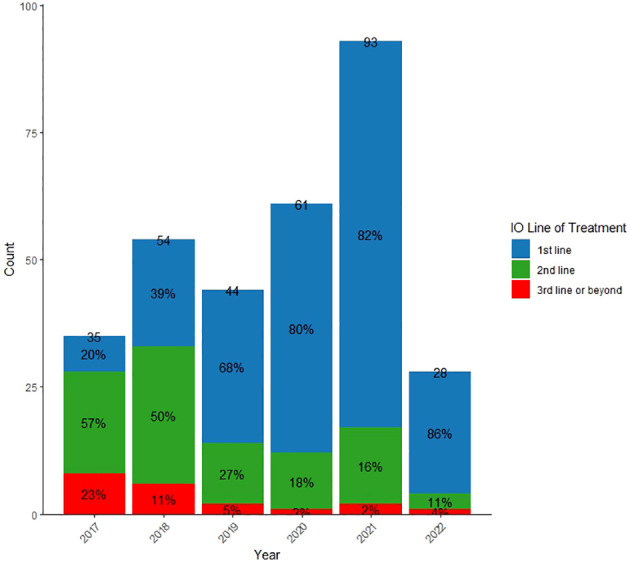 Figure 1
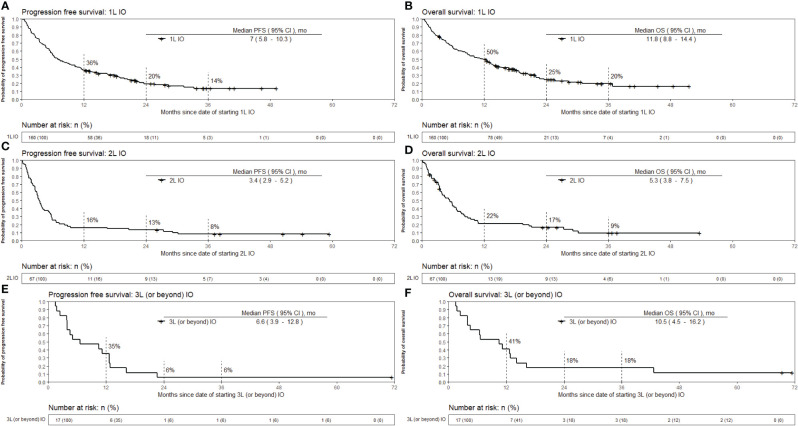 Figure 2
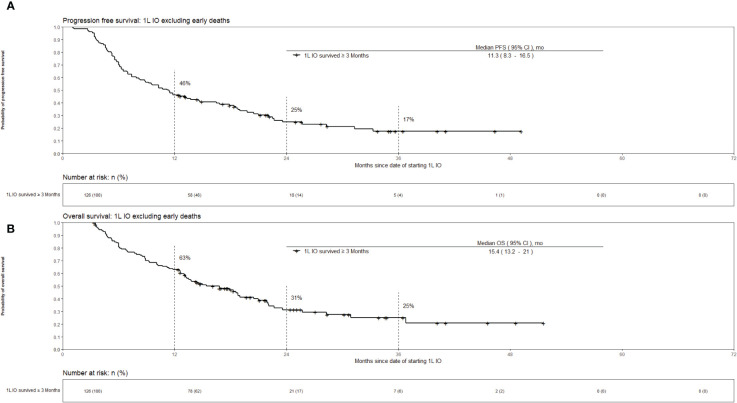 Figure 3
| Demographics and clinical | All patients, N = 244 | IO line of treatment | |||
|---|---|---|---|---|---|
| 1L IO, N = 160 (%) | 2L IO, N = 67 (%) | 3L or beyond IO, N = 17 (%) | p-value | ||
| Age at diagnosis | 0.004 | ||||
| Median (Range) | 59 (26 -86) | 60 (33 - 86) | 58 (26 - 80) | 51 (33 - 72) | |
| Gender | 0.4 | ||||
| Male | 213 (87%) | 141 (88%) | 59 (88%) | 13 (76%) | |
| Female | 31 (13%) | 19 (12%) | 8 (12%) | 4 (24%) | |
| Smoking History | 0.6 | ||||
| Never-smoker | 29 (12%) | 17 (11%) | 8 (12%) | 4 (24%) | |
| Ex-smoker | 32 (13%) | 20 (12%) | 10 (15%) | 2 (12%) | |
| Smoker | 183 (75%) | 123 (77%) | 49 (73%) | 11 (65%) | |
| ECOG Performance Status | |||||
| 0-1 | 244 (100%) | 160 (100%) | 67 (100%) | 17 (100%) | |
| Cancer stage at initial diagnosis | 0.054 | ||||
| I | 4 (1.6%) | 2 (1.3%) | 2 (3.0%) | 0 (0%) | |
| II | 6 (2.5%) | 4 (2.5%) | 2 (3.0%) | 0 (0%) | |
| III | 48 (20%) | 38 (24%) | 5 (7.5%) | 5 (29%) | |
| IV | 186 (76%) | 116 (72%) | 58 (87%) | 12 (71%) | |
| Neoadjuvant chemotherapy | 0.7 | ||||
| Yes | 9 (3.7%) | 6 (3.8%) | 2 (3.0%) | 1 (5.9%) | |
| No | 235 (96%) | 154 (96%) | 65 (97%) | 16 (94%) | |
| Adjuvant chemotherapy | >0.9 | ||||
| Yes | 10 (4.1%) | 7 (4.4%) | 3 (4.5%) | 0 (0%) | |
| No | 234 (96%) | 153 (96%) | 64 (96%) | 17 (100%) | |
| Concurrent chemotherapy and radiation therapy | 0.002 | ||||
| Yes | 41 (17%) | 33 (21%) | 3 (4.5%) | 5 (29%) | |
| No | 203 (83%) | 127 (79%) | 64 (96%) | 12 (71%) | |
| Histology | 0.2 | ||||
| Non-squamous | 164 (67%) | 112 (70%) | 39 (58%) | 13 (76%) | |
| Squamous | 80 (33%) | 48 (30%) | 28 (42%) | 4 (24%) | |
| PD-L1 TPS (22C3) | <0.001 | ||||
| <1% | 1 (0.4%) | 0 (0%) | 1 (1.5%) | 0 (0%) | |
| 1 - <50% | 112 (46%) | 59 (37%) | 43 (64%) | 10 (59%) | |
| ≥50% | 131 (54%) | 101 (63%) | 23 (34%) | 7 (41%) | |
| IO used | 0.3 | ||||
| Pembrolizumab | 243 (100%) | 160 (100%) | 66 (99%) | 17 (100%) | |
| Nivolumab | 1 (0.4%) | 0 (0%) | 1 (1.5%) | 0 (0%) | |
| IO monotherapy vs. with chemotherapy combination | <0.001 | ||||
| IO monotherapy | 185 (76%) | 102 (64%) | 66 (99%) | 17 (100%) | |
| IO with chemotherapy combination | 59 (24%) | 58 (36%) | 1 (1.5%) | 0 (0%) | |
| Number of IO cycles | 0.001 | ||||
| Median (Range) | 6 (1 - 43) | 8 (1 - 43) | 4 (1 - 35) | 6 (2 - 32) | |
| Systemic treatment subsequent to progression on IO | 0.8 | ||||
| Yes | 68 (28%) | 47 (29%) | 17 (25%) | 4 (24%) | |
| No subsequent treatment or unknown | 176 (72%) | 113 (71%) | 50 (75%) | 13 (76%) | |
| Type of systemic treatment subsequent to progression on IO2 | 0.049 | ||||
| Platinum based | 23 (34%) | 20 (43%) | 2 (12%) | 1 (25%) | |
| Non-platinum based | 45 (66% | 27 (57%) | 15 (88%) | 3 (75%) | |
| Demographics and clinical characteristics | Survival Time | p-value | |
|---|---|---|---|
| <3 months (Early Death), N = 34(%) | ≥3 months, N = 126(%) | ||
| Age at diagnosis | 0.4 | ||
| Median (Range) | 60 (39 - 77) | 60 (33 - 86) | |
| Gender | 0.9 | ||
| Male | 30 (88%) | 111 (88%) | |
| Female | 4 (12%) | 15 (12%) | |
| Smoking History | >0.8 | ||
| Never-smoker | 4 (12%) | 13 (10%) | |
| Ex-smoker | 3 (8.8%) | 17 (13%) | |
| Smoker | 27 (79%) | 96 (76%) | |
| ECOG Performance Status | |||
| 0-1 | 34 (100%) | 126 (100%) | |
| Cancer stage at initial diagnosis | >0.9 | ||
| I | 0 (0%) | 2 (1.6%) | |
| II | 1 (2.9%) | 3 (2.4%) | |
| III | 9 (26%) | 29 (23%) | |
| IV | 24 (71%) | 92 (73%) | |
| Neoadjuvant chemotherapy | 0.6 | ||
| Yes | 2 (5.9%) | 4 (3.2%) | |
| No | 32 (94%) | 122 (97%) | |
| Adjuvant chemotherapy | 0.2 | ||
| Yes | 3 (8.8%) | 4 (3.2%) | |
| No | 31 (91%) | 122 (97%) | |
| Concurrent chemotherapy and radiation therapy | 0.6 | ||
| Yes | 8 (24%) | 25 (20%) | |
| No | 26 (76%) | 101 (80%) | |
| Histology | 0.7 | ||
| Non-squamous | 23 (68%) | 89 (71%) | |
| Squamous | 11 (32%) | 37 (29%) | |
| PD-L1 | 0.5 | ||
| <1% | 0 (0%) | 0 (0%) | |
| 1 - <50% | 11 (32%) | 48 (38%) | |
| ≥50% | 23 (68%) | 78 (62%) | |
| IO used | >0.9 | ||
| Pembrolizumab | 34 (100%) | 126 (100%) | |
| Nivolumab | 0 (0%) | 0 (0%) | |
| IO monotherapy vs. with chemotherapy combination | 0.2 | ||
| IO monotherapy | 25 (74%) | 77 (61%) | |
| IO with chemotherapy combination | 9 (26%) | 49 (39%) | |
| Number of IO cycles | <0.001 | ||
| Median (Range) | 2 (1 - 3) | 11 (1 - 43) | |
| Systemic treatment subsequent to progression on IO | <0.001 | ||
| Yes | 1 (2.9%) | 46 (37%) | |
| No subsequent treatment or unknown | 33 (97%) | 80 (63%) | |
| Type of systemic treatment subsequent to progression on IO2 | 0.4 | ||
| Platinum based | 1 (100%) | 19 (41%) | |
| Non-platinum based | 0 (0%) | 27 (59%) | |
| Variable | Univariate | Multivariate | ||||
|---|---|---|---|---|---|---|
| HR | 95% CI | P | HR | 95% CI | P | |
| Age at diagnosis | 1.01 | 1 - 1.03 | 0.06 | 1.01 | 1 - 1.03 | 0.156 |
| Gender - Male | 0.83 | 0.52 - 1.33 | 0.45 | 0.82 | 0.49 - 1.4 | 0.476 |
| Smoking History - Never smoker | 1.08 | 0.57 - 2.06 | 0.8 | 1.09 | 0.55 - 2.16 | 0.813 |
| Smoking History - Smoker | 0.96 | 0.6 - 1.53 | 0.86 | 1 | 0.62 - 1.62 | 1 |
| ECOG performance status = 2-4 | 1.86 | 1.29 - 2.68 | 0.001 | 1.83 | 1.24 - 2.7 | 0.002 |
| Cancer stage at initial diagnosis - stage II | 2.55 | 0.26 - 24.65 | 0.42 | 3.07 | 0.3 - 31.08 | 0.342 |
| Cancer stage at initial diagnosis - stage III | 1.84 | 0.25 - 13.56 | 0.55 | 1.92 | 0.24 - 15.65 | 0.541 |
| Cancer stage at initial diagnosis - stage IV | 2.06 | 0.29 - 14.75 | 0.47 | 1.83 | 0.25 - 13.58 | 0.553 |
| IO and chemotherapy combination | 0.82 | 0.58 - 1.16 | 0.26 | 0.84 | 0.53 - 1.34 | 0.458 |
| Received neoadjuvant chemotherapy | 1.13 | 0.46 - 2.75 | 0.8 | 1.27 | 0.48 - 3.37 | 0.629 |
| Received adjuvant chemotherapy | 1.66 | 0.73 - 3.77 | 0.23 | 2.03 | 0.84 - 4.92 | 0.116 |
| Received concurrent chemotherapy and radiation therapy | 0.82 | 0.54 - 1.26 | 0.37 | 0.76 | 0.37 - 1.56 | 0.452 |
| Histology - Squamous | 1.03 | 0.73 - 1.44 | 0.87 | 0.93 | 0.64 - 1.37 | 0.725 |
| PD_L1≥50% | 1.08 | 0.77 - 1.51 | 0.66 | 0.96 | 0.61 - 1.52 | 0.868 |
| Author | Design | Study | number of patients | country | Age | PS ≥2 | rwOS | rwPFS | ref |
|---|---|---|---|---|---|---|---|---|---|
| E. Pons−Tostivint | Observational, Multicenter | First line: IO vs IO-CT in more than 50% | 141 | France | 68 | 22% | 12-month OS rate 70.2% | 11.3 | ( |
| Marija Ivanović | Observational, single center | First line: pembrolizumab | 66 | Slovenia | 64 | 6% | The 1-year (OS) 62%. | First line 9.3 | ( |
| David Waterhouse | Observational, Multicenter | First line: I-O plus chemotherapy, | 4271 | United States | 69.0 | 27% | Squamous 11.3 | Not reported | ( |
| Stephen V. Liu | Observational, Multicenter | First line: I-O plus CT | 377 | United States | 66 | 0% | 17.2 | 6.2 | ( |
| Vamsidhar Velcheti | Observational, Multicenter | First line | 432 | United States | 72 | 0% | 18.9 | 6.8 | ( |
| Christine M. Cramer−van der Welle1 | Observational, Multicenter | First IO second line and beyond | 83 (first line) | Netherlands | 66 | 4% | 15.8 | 8.9 | ( |
| Maurice Perol | Observational, Multicenter | First line | 521 | United States | N/A | 0% | 22.1 | 11.5 | ( |
| Beung-Chul Ahn | Observational, single | All lines | 155 | Korea | 64 | 22% | 10.25 | 3.06 | ( |
| Renaud Descourt | Observational, Multicenter | First line Pembrolizumab | 845 | France | 65 | 22.2% | 29.5 | 9.2 | ( |
| Author | Type | Country | Study | Number of patients | PS ≥2 | number of lines | Median age | Median PFS | Median OS | ref |
|---|---|---|---|---|---|---|---|---|---|---|
| Martin | Observational | Argentine | Nivolumab | 109 | 17(15.6%) | 2(1-4) | 65 | 10.2 | 12.3 | ( |
| Areses Manrique | observational | Spain | Nivolumab | 188 | 19(10%) | 71 (38%) received 2 or more lines | 58 | 4.8 | 12.8 | ( |
| Morita | observational | Japan | Nivolumab | 901 | 157(17.4%) | 2 (1-12) | 67 | 2.1 | 14.6 | ( |
| Dudnik | observational | Israel | Nivolumab | 260 | 119(46%) | 68(26%) | 67 | 2.8 | 5.9 | ( |
| Park | observational | Korea | pembrolizumab or nivolumab after failure of platinum-based chemotherapy | 1181 | 141(13%) | 484 (41%) | 67 | 2.9 | 10.7 | ( |
| Kobayashi | observational | Japan | Nivolumab as subsequent line | 142 | 23(16.2%) | 85 (60%) | 67 | 58 days | ND | ( |
| Author | Type of publication | Country | Study | Number of patients | Results | ref |
|---|---|---|---|---|---|---|
| Naser | Abstract | Lebanon | First line | 135 | Median PFS 1 was 7.7, 14, 11.1 months for chemotherapy, immunotherapy and chemo-immunotherapy respectively (p = 0.062). Median OS was 22.9 months (CI 95%, 17.7-28.1) with no significant correlation with treatment type (p = 0.85) | ( |
| Karak | Research article | Lebanon | Second line and beyond | 110 | Median progression-free survival was 4 months and median overall survival was 8.1 months | ( |
| Al Nuhait | Research article | Kingdom of Saudi Arabia | Real-world safety experience | 53 (17 patient with lung cancer) | Patients treated with immune checkpoint inhibitors could have a variety of adverse drug events that might lead to treatment discontinuation and increase overall emergency room visits. This study highlights the most common adverse drug events associated with ICIs use at a tertiary care center in Saudi Arabia | ( |
| Jazieh | Research article | United Arab Emirates | Real-world Treatment Patterns and Outcomes in Stage III Non-small Cell Lung Cancer: Middle East and Africa - KINDLE Study | 33 centers | The data reveal an unmet need in stage III NSCLC with worse PFS and OS in the MEA subset than in the global cohort. Better access to newer therapies and quality care will be crucial in improving patient outcomes in the MEA. | ( |
| Dudnik | Research article | Israel | Nivolumab | 260 | Median PFS 2.8 | ( |
Peer Reviews
No public reviews on file for this paper yet. If you reviewed it on a platform where reviews are public (OpenReview, ICLR, NeurIPS, ICML), you can paste yours below so the community can read it here.
Videos
No videos yet. Explain this paper in a talk, walkthrough, or lecture? Add one.
Taxonomy
TopicsCorporate Management and Leadership · Medical Practices and Rehabilitation · Psychology, Coaching, and Therapy
Introduction
Lung cancer ranks as the fourth most common cancer in Jordan, comprising 6.5% of all annual cancer cases. In males, it is the second most prevalent type of cancer and the primary cause of cancer-related mortality, accounting for 22.4% of all cancer deaths among men (1). The smoking prevalence in Jordan reaches up to 51% (2) and the average age for lung cancer diagnosis was reported as 63.8 years (3).
Immunotherapy (IO) has revolutionized the treatment of advanced-stage non-small cell lung cancer (NSCLC). Utilizing the patient’s immune system to combat cancer, IO has demonstrated significant efficacy in these patients. The advent of checkpoint inhibitors, including PD-1 and PD-L1 inhibitors, has enhanced clinical outcomes, yielding improved tumor response rates and extending survival compared to conventional cytotoxic chemotherapy (4). The 5 year overall survival estimate for stage IV NSCLC patients with PD-L1 expression of ≥50% who received single agent pembrolizumab, a PD-1 inhibitor, was 32% (5).
Clinical trials have underscored the importance of PD-L1 immunohistochemistry as a crucial biomarker for assessing the effectiveness of immunotherapy (IO) in treating NSCLC (6). This finding emerged from extensive research on single-agent IO (4), IO-chemotherapy combinations (7, 8), and IO-IO combinations (9). Consequently, evaluating PD-L1 expression levels in advanced-stage NSCLC has become a critical aspect of treatment planning. The PD-L1 expression in a lung cancer patient population from the Middle East was found to be similar to published literature (10).
The objective of this study is to delineate the clinical characteristics and treatment outcomes of advanced-stage NSCLC patients treated with IO at King Hussein Cancer Center (KHCC) in Jordan, particularly since the introduction of pembrolizumab at KHCC in 2017. This research holds significant global implications, as it addresses a notable gap in survival outcomes data for NSCLC patients receiving immunotherapy in the Middle East, a region often underrepresented in international clinical trials (11). The findings of this study contribute to a better understanding of the outcomes of IO across diverse patient populations.
Materials and methods
Study design and patient population
This retrospective study investigates the outcomes of advanced-stage NSCLC patients with a favorable performance status (ECOG PS 0-1) who underwent immunotherapy (IO) at King Hussein Cancer Center (KHCC) in Jordan. Throughout the study, data confidentiality and privacy were rigorously upheld in line with the Health Insurance Portability and Accountability Act (HIPAA) standards. Adherence to the ethical principles outlined in the Declaration of Helsinki was ensured. The study protocol received the requisite approval from the Institutional Review Board (IRB) at KHCC (IRB number: 23 KHCC 020), and the IRB granted a waiver for informed consent.
The study population included patients ≥18 years old diagnosed with advanced stage NSCLC who had received at least one IO treatment between December 2017 and February 2022. For analyses, only patients with ECOG PS 0-1 were included, except for the univariate and multivariate analysis where patients with any performance status (ECOG PS 0-4) were included. The total number of patients with ECOG PS 2-4 was 67. Excluding patients with poor ECOG PS from the PFS and OS survival analysis aimed to ensure a cohort resembling NSCLC patients in clinical trials, facilitating more meaningful comparisons of survival figures. Then, ECOG PS 2-4 cases were added to the univariate and multivariate analysis to identify the impact of poor ECOG PS, among other variables, on survival specifically in our patient population. The first approved IO at KHCC was pembrolizumab. Patients received IO as monotherapy or with chemotherapy. Demographic and clinical characteristics were categorized by IO line of treatment (1L, 2L, 3L or beyond).
Data sources
A structured database was built from patient information in the VISTA CPRS Electronic Medical Record (EMR) using Fileman. Data cleaning and analysis were performed with Microsoft Excel, Python, and R. To ensure accuracy, a random sample underwent manual verification by cross-checking with original VISTA CPRS EMR records to identify discrepancies or errors.
Study variables and outcome measures
We gathered patient data, including demographics, clinical features, and treatment specifics. Key time points, such as diagnosis dates, treatment initiation, post-immunotherapy (IO) progression, last known alive status, and death dates, were recorded for outcome assessment. To prevent biases, we used the date of IO initiation, not the diagnosis date, as the reference point for survival analysis.
The study’s primary endpoints were progression-free survival (PFS) and overall survival (OS). For OS, the defining event was death. In contrast, for PFS, the event was identified as either the date of radiographic progression as determined by the official radiology read, the date of starting subsequent line of treatment following IO, or death, whichever occurred first. The most recent survival date was established based on the latest of several criteria: the last known inpatient admission, the most recent emergency room visit, the date of the last recorded vital signs, or the date of the last clinic visit.
Statistical analysis
Descriptive statistical methods were employed to evaluate baseline characteristics, stratified by the line of immunotherapy (IO) treatment. We presented categorical data as frequencies and continuous variables as medians with their respective ranges. To discern significant differences between groups, we applied Wilcoxon Rank Sum tests for continuous variables, Pearson’s Chi-Squared tests, and Fisher’s Exact tests for categorical data. In our survival analysis, the Kaplan-Meier method was utilized to estimate overall survival (OS) and progression-free survival (PFS), employing log-rank tests to determine statistical significance. Additionally, a Cox proportional hazards model was employed in the multivariate analysis to evaluate the effects of various covariates on survival outcomes, with results reported as hazard ratios (HRs) and 95% confidence intervals (CIs). All statistical analyses were conducted using R software, version 4.2.2.
Results
Patients and treatments
Of 244 patients with advanced stage NSCLC, 160 (65%), 67 (28%), and 17 (7%) received 1L, 2L, or 3L or beyond IO, respectively. Patients with known EGFR or ALK alterations were excluded. Patients and disease characteristics are listed in Table 1. The median age for all patients was 59 (range: 26 -86) years. Patients who received 3L or beyond were more likely to have younger age (median age was 60 years in 1L, 58 years in 2L, and 51 years in 3L or beyond, p = 0.004). Most of the patients were men (87%), and were smokers (75%) or ex-smokers (13%). All patients included had ECOG PS of 0-1 (100%). Numerically, more patients received 3L or beyond IO who had stage III NSCLC upon initial diagnosis compared to 1L and 2L patients (29% vs 24% and 7.5%, p = 0.054) and more who had received CCRT (29% vs 21% and 4.5%, p < 0.002), respectively. There was no significant difference between the small numbers of patients who received neoadjuvant or adjuvant chemotherapy upon initial diagnosis of NSCLC. The most common NSCLC histology was non-squamous (67%). The patients who received 1L IO were more likely to have a PD-L1 ≥50% (p < 0.001) and to receive IO and chemotherapy combination (p < 0.001). All patients received pembrolizumab except for 1 patient who received nivolumab.
The median number of IO cycles received was 6 (range, 1-43) cycles. The patients who received 1L IO had significantly higher median number of IO treatments, 8 (range 1-43) cycles compared to 2L IO and 3L or beyond IO patients who received 4(range 1-35) and 6(range 2-32) cycles, respectively (p = 0.001). Around one quarter (28%) of all patients who were treated with IO received subsequent systemic treatment upon progression on IO. Around half of the 1L IO patients (43%) received platinum based chemotherapy upon progression on IO.
Sequential introduction of IO into the advanced stage NSCLC treatment lines at KHCC
KHCC added IO for treating advanced stage NSCLC at different times. Pembrolizumab was approved on December 13, 2017, as 1L treatment if PD-L1 was ≥ 50%, and on January 10, 2018, as 2L treatment if PD-L1 was ≥ 1%. Approval was expanded on November 10, 2019, for non-squamous NSCLC with PD-L1 ≥1%, combining IO and chemotherapy as 1L treatment. On January 25, 2023, advanced squamous NSCLC with PD-L1 ≥1% became eligible for pembrolizumab and chemotherapy. This staggered introduction explains differences in 1L IO patients, more likely to have PD-L1 ≥50% (p < 0.001) and receive IO and chemotherapy combination (p < 0.001). Formulary decisions at KHCC are guided by cost-effectiveness analyses.
Figure 1 shows the evolving usage of IO in the treatment of NSCLC at KHCC from 2017 to 2022. The unique NSCLC patients receiving IO at KHCC increased from 44 in 2019 to 93 in 2021. In the 1L setting, there was a consistent rise, reaching 82% in 2021, compared to 39% in 2018. Conversely, the use of IO as 2L treatment decreased from 50% in 2018 to 16% in 2021, and only 2% of patients received IO as 3L or beyond in 2021.
Distribution of IO line of treatment by year of starting IO.
Survival outcomes
Survival for patients after 1L, 2L, and 3L or beyond IO
The median follow up time for all patients was 12.1 months. The median follow up time for 1L, 2L and 3L or beyond IO was 12.6, 5.8, and 10.9 months, respectively. Progression-free survival (PFS) and overall survival (OS) for 1L, 2L and 3L or beyond IO are shown in Figure 2. Median PFS was the longest for patients who received 1L IO, 7 [95% CI 5.8 – 10.3] months. The median PFS for 2L and 3L or beyond IO was 3.4 [95% CI 2.9 – 5.2] months and 6.6 [95% CI 3.9 – 12.8] months, respectively. Median OS was the longest for patients who received 1L IO, which was 11.8 [95% CI 8.8 – 14.4] months. Median OS for 2L and 3L or beyond IO was 5.3 [95% CI 3.8 – 7.5] months and 10.5 [95% CI 4.5 – 16.2] months, respectively. Survival for 1L, 2L and 3L or beyond IO at 36 months since initiation of IO was 20%, 9%, and 18%, respectively.
Kaplan-Meier estimates of overall survival and progression free survival from the date of starting immunotherapy. The patients with EGFR mutation in exon 19 or 21, ALK positivity by IHC or rearrangement by FISH, or ROS1 rearrangement by FISH were excluded from the survival analysis. (A) OS for 1L IO (B) OS for 2L IO (C) OS for 3L or beyond IO (D) PFS for 1L IO (E) PFS for 2L IO (F) PFS for 3L or beyond IO. OS, Overall survival; PFS, Progression free survival; IO, Immunotherapy; 1L, First line; 2L, Second line; 3L, Third line; mo, months.
Survival for patients who received 1L IO and survived ≥ 3 months after starting IO
Out of the 160 patients who received 1L IO, 34 (21%) died within 3 months of initiating IO. The survival outcomes for the patients who received 1L IO and survived 3 months or more after starting IO are shown in Figure 3. The median PFS was 11.3 [95% CI 8.3 – 16.5] months, and the median OS was 15.4 [95% CI 13.2 – 21] months. Survival at 36 months was 25%. Table 2 shows the characteristics of the patients who received 1L IO and survived <3 versus ≥ 3 months. Those who survived ≥ 3 months were more likely to receive subsequent systemic treatment after progression on IO (p < 0.001). The median number of IO cycles administered for the patients who survived ≥ 3 months was 11 (range 1-43).
Kaplan-Meier estimates of overall survival for advanced stage NSCLC who received 1L IO excluding early deaths (survival <3 months). Part (A) progression free survival. Part (B) overall survival.
Table 2: Characteristics of advanced stage NSCLC patients who received first line according to survival time (<3 vs ≥3, months).
Survival of patients based on receiving IO monotherapy versus IO in combination with chemotherapy, and the PD-L1 status
Survival for 1L IO patients categorized by IO monotherapy versus IO with chemotherapy combination, and PD-L1 expression were also explored. The patients who received IO in combination with chemotherapy had better overall survival compared to those who received IO monotherapy in the 1L setting; however, the difference in survival was not statistically significant [HR 0.81 (95% CI 0.55 – 1.2), p = 0.3]. Regarding PD-L1 expression, the patients who received 1L IO had better survival in the first 12 months after starting IO if PD-L1 was 1 - < 50% compared to ≥50%; however, the overall survival over the follow up period for the study was not significantly different based on the PD-L1 status [HR 1.07 (95% CI 0.73 – 1.56), p = 0.74]. There was no significant overall survival difference for the 2L patients based on PD-L1 level of expression [HR 1.13 (95% CI 0.69 – 1.84), p = 0.64]. However, the 3L or beyond IO patients who had PD-L1 expression ≥50% survived longer compared to those with PD-L1 of 1 - < 50% [HR 0.36 (95% CI 0.13 – 1.01), p = 0.05].
Cox Proportional hazard model for predictors of overall survival
The univariate and multivariate Cox Proportional Hazard models for predictors of overall survival are presented in Table 3. These hazard models included patients who received 1L only and had ECOG PS 0-4. The total number of patients included was 207. The only variable that was predictive of overall survival in both the univariate and multivariate analyses was the ECOG PS. Compared to the reference ECOG PS of 0-1, those with ECOG PS 2-4 had worse overall survival on multivariate analysis. [HR 1.83 (95% CI 1.24 – 2.7), p = 0.002].
Discussion
This rw study from KHCC-Jordan provides a critical examination of IO outcomes in advanced stage NSCLC in a patient population that is under-represented in clinical trials. In the advanced stage NSCLC patients with good performance status who received 1L IO at KHCC, our findings reveal a median OS of 11.8 months, extending to 15.4 months when excluding those who survived less than three months post IO initiation. These figures fall short of the anticipated outcomes from randomized NSCLC IO clinical trials (4, 7, 8), underscoring the necessity of inclusive and diverse patient representation in global lung cancer studies.
Real-world data on outcomes of IO as a 1L treatment of advanced stage NSCLC has been reported in several publications (12–15). Khozin et al. (12) utilized Flatiron Health to study a total of 5257 NSCLC patients who received IO. The median OS for those who received 1L IO was 10.8 months (12). Another study by Velcheti et al. which included patients who received 1L IO, survived at least 6 months and had an ECOG PS of 0-1 showed a median OS of 19.6 months (16). Another retrospective study showed the survival was better for the NSCLC patients who were alive at 12 weeks after starting single agent pembrolizumab compared to the whole cohort; however, the median OS was not reached when the data was published (17). The frequency of death at 12 weeks was 11% for those who received single agent pembrolizumab and 15.2% for the pembrolizumab and chemotherapy combination group (17). In our study, 21% of the patients died within 3 months of starting IO. Deaths in the first 3 months after enrollment in four of the major 1L IO clinical trials in NSCLC were less than what we report in our study (4, 7, 8, 18). This observed early mortality rate after initiation of IO further accentuates the need for prudent patient selection to optimize treatment outcomes and minimize early mortality risks. In Tables 4–6, we summarize survival outcomes from rw data studies including figures from data from the Middle East.
The influence of ECOG PS on treatment outcomes is a significant finding in our study. Patients with ECOG PS 0-1 showed better survival outcomes compared to those with higher PS scores [HR 1.83 (95% CI 1.24 – 2.7), echoing the global literature’s emphasis on the importance of comprehensive patient evaluation before IO initiation. Studies showed that careful consideration is needed when using IO in NSCLC patients with poor PS, higher comorbidity score, and older age (35–37). In a metanalysis of Pembrolizumab as monotherapy or in combination with chemotherapy of 11 randomized clinical trials and 26 retrospective real-world (rw) studies, multivariate analysis showed that an ECOG PS of 0-1 was an independent predictor of longer OS (38).
In our patient population, PD-L1 expression in the 1L IO treatment setting showed an unusual pattern: those with PD-L1 expression 1 - < 50% exhibited improved survival within the initial 12 months of receiving IO compared to those with PD-L1 expression of ≥50%. However, this survival advantage diminished over subsequent follow-up periods. This finding contrasts with the prevailing literature, which typically associates higher PD-L1 expression with better survival outcomes (18). While the exact cause of this observation remains unclear, it’s important to note that the limited sample size may hinder definitive conclusions. Nonetheless, one plausible explanation could be linked to heavy smoking habits, prevalent in Jordan, potentially contributing to elevated PD-L1 expression levels (39) and more smoking-related comorbidities, possibly diluting the benefits of IO among patients with high PD-L1 expression.
The benefit of IO in the 2L setting and beyond in rw data is also of interest. In our study, the patients who received 2L IO had a median PFS and OS of 3.4 [95% CI 2.9 – 5.2] months and 5.3 [95% CI 3.8 – 7.5] months, respectively. In the 2L NSCLC treatment trial, KEYNOTE-010, pembrolizumab showed a survival benefit over docetaxel with a median PFS and OS of 3·9 and 10.4 months, respectively (40). In our study, when compared to KEYNOTE-010, the PD-L1 expression was ≥50% in 34% of the cases who received 2L IO, as opposed to 42% in the latter. In rw data, Khozin et al. reported on the survival of patients who received 2L pembrolizumab showing a median PFS and OS of 3.7 (2.9-4.1) months and 12.0 (9.3-14.7) months, respectively (12). Juergens et al. also published the rw data on using nivolumab as 2L IO in Canada showing a median PFS and OS of 3.5 and 12 months, respectively (41). In a metanalysis that included 32 rw studies of 2L IO in NSCLC, safety and efficacy of IO in the rw data were comparable to the figures from randomized clinical trials with a median PFS and OS of 3.35 months and 9.98 months, respectively (42). Although the PFS in our data is similar to the published figures in clinical trials and rw data, the lower OS in our study could be due to comorbid conditions that were not captured in our study. Regarding the patients who received 3L or beyond IO, our study had a total of 17 patients. Their median PFS and OS since initiating IO were 6.6 and 10.5 months, respectively. Higher PD-L1 expression was associated with longer OS in this subgroup of patients. However, we need to exercise caution when interpreting survival figures for these patients given the small numbers and possibly selection bias of the healthiest to receive more cancer treatments.
Our study brings into focus the critical gap in the representation of Middle Eastern patients in global clinical trials. Ethnic and genetic diversity can significantly influence the efficacy and safety profile of IO therapies. Pharmacogenomics variations, lifestyle and environmental factors, prevalent comorbidities, and healthcare access disparities can modulate treatment responses (43, 44). In Jordan, the high prevalence of smoking, particularly among males (2), and the younger age at lung cancer diagnosis may result in distinct disease profiles, influencing treatment outcomes. Our study showed that 87% of the patients were males, 88% were smokers or ex-smokers, and the median age of lung cancer diagnosis was 59. Therefore, including more ethnically diverse populations in clinical trials is essential to ensure that the findings are reflective of a global patient population.
Limitations of our study include the retrospective nature of the data, which comes from a single cancer center in the Middle East and the relatively short median follow up time of 12.1 months. The authors recognize the importance of a larger sample size that includes a more diverse representation of Middle Eastern countries to improve generalizability of the findings to the region. This is especially important because different Middle Eastern countries have different ethnicities, healthcare practices and access to IO.
In conclusion, our study showed shorter survival in advanced stage NSCLC patients with good PS receiving 1L IO compared to randomized clinical trials. Even after excluding early deaths (21% of patients), survival remained suboptimal. This study serves as a clarion call for more inclusive and diverse clinical research, advocating for further participation of patients from the Middle East and other parts of the world. It stresses the importance of careful patient selection for IO therapy in NSCLC and underscores the need to account for ethnic diversity to enhance the generalizability and applicability of clinical trial outcomes. Our real-world research, alongside others, invites the establishment of real-world benchmarks for IO outcomes, complementing the outcomes of clinical trials. Such benchmarks could offer valuable insights for researchers and regulatory authorities evaluating the effectiveness of IO in lung cancer across diverse global populations.
Data availability statement
The raw data supporting the conclusions of this article will be made available by the authors, without undue reservation.
Ethics statement
The studies involving humans were approved by King Hussein Cancer Center, IRB No: 23 KHCC 20, IRB Approval Date: February 26, 2023. The studies were conducted in accordance with the local legislation and institutional requirements. Written informed consent for participation was not required from the participants or the participants’ legal guardians/next of kin in accordance with the national legislation and institutional requirements.
Author contributions
TA: Conceptualization, Data curation, Formal analysis, Funding acquisition, Investigation, Methodology, Project administration, Resources, Software, Supervision, Validation, Visualization, Writing – original draft, Writing – review & editing. KA: Data curation, Writing – original draft, Writing – review & editing, Methodology, Software, Validation. RAH: Validation, Writing – review & editing, Data curation. SA: Data curation, Methodology, Writing – review & editing. TA-B: Validation, Writing – review & editing. SY: Writing – review & editing. HA: Writing – review & editing. JK: Writing – review & editing. AA: Writing – review & editing. IM: Writing – review & editing. RAJ: Writing – review & editing. AAS: Writing – review & editing. AG: Writing – review & editing. MA: Writing – review & editing. AA-I: Writing – review & editing. HH: Writing – review & editing. NM: Writing – review & editing. SO: Writing – review & editing. MA-J: Writing – review & editing. MF: Writing – review & editing. AC: Writing – review & editing. VV: Writing – review & editing. KA-R: Validation, Writing – original draft, Writing – review & editing.
The reference list from the paper itself. Each links out to its DOI / PubMed record.
- 1Jordan cancer registry cancer incidence in Jordan. (2018) 72(6):1881–90.
- 2Alkouri O Khader Y Al-Bashaireh AM. Prevalence of cigarettes and waterpipe smoking among Jordanians, refugees, and migrants in Jordan and its associated factors: A secondary data analysis. Int J Environ Res Public Health. (2022) 20(1):82. doi: 10.3390/ijerph 20010082 36612400 PMC 9819960 · doi ↗ · pubmed ↗
- 3Alqudah MA Alfaqih MA Hamouri S Al-Shaikh AF Haddad HK Al-Quran WY. Epidemiology and histopathological classification of lung cancer: A study from Jordan, retrospective observational study. Ann Med Surg (Lond). (2021) 65:102330. doi: 10.1016/j.amsu.2021.102330 33996061 PMC 8094892 · doi ↗ · pubmed ↗
- 4Reck M Rodríguez-Abreu D Robinson AG Hui R Csőszi TFülöp A. Pembrolizumab versus chemotherapy for PD-L 1-positive non-small-cell lung cancer. N Engl J Med. (2016) 375:1823–33. doi: 10.1056/NEJ Moa 1606774 27718847 · doi ↗ · pubmed ↗
- 5Reck M Rodríguez-Abreu D Robinson AG Hui R Csőszi TFülöp. Five-year outcomes with pembrolizumab versus chemotherapy for metastatic non–small-cell lung cancer with PD-L 1 tumor proportion score ≥ 50%. J Clin Oncol. (2021) 39:2339–49. doi: 10.1200/jco.21.00174 PMC 828008933872070 · doi ↗ · pubmed ↗
- 6Memmott RM Wolfe AR Carbone DP Williams TM. Predictors of response, progression-free survival, and overall survival in patients with lung cancer treated with immune checkpoint inhibitors. J Thorac Oncol. (2021) 16:1086–98. doi: 10.1016/j.jtho.2021.03.017 33845212 · doi ↗ · pubmed ↗
- 7Paz-Ares L Luft A Vicente D Tafreshi AGümüşM Mazières J. Pembrolizumab plus chemotherapy for squamous non-small-cell lung cancer. N Engl J Med. (2018) 379:2040–51. doi: 10.1056/NEJ Moa 1810865 30280635 · doi ↗ · pubmed ↗
- 8Gandhi L Rodríguez-Abreu D Gadgeel S Esteban E Felip E De Angelis F. Pembrolizumab plus chemotherapy in metastatic non-small-cell lung cancer. N Engl J Med. (2018) 378:2078–92. doi: 10.1056/NEJ Moa 1801005 29658856 · doi ↗ · pubmed ↗