Genomic properties of a Bartonella quintana strain from Japanese macaque (Macaca fuscata) revealed by genome comparison with human and rhesus macaque strains
Shingo Sato, Emu Nishioka, Hidenori Kabeya, Soichi Maruyama

TL;DR
This study compares the genome of a Bartonella quintana strain from Japanese macaques with human and rhesus macaque strains to reveal genetic differences and evolutionary adaptations.
Contribution
The study identifies unique genomic traits in the Japanese macaque strain of Bartonella quintana, including gene losses and chromosomal inversion.
Findings
The Japanese macaque strain MF1-1 has a significant 0.68 Mb chromosomal inversion.
MF1-1 lacks genes like bepA and trwL2/4/6, which are present in human and rhesus macaque strains.
MF1-1 is genetically closer to the rhesus macaque strain RM-11 than to the human strain Toulouse.
Abstract
Bartonella quintana, the causative agent of trench fever, is an intracellular bacterium that infects human erythrocytes and vascular endothelial cells. For many years, humans were considered the only natural hosts for B. quintana; however, it was recently discovered that wild Japanese macaques (Macaca fuscata) also serve as hosts for B. quintana. To elucidate the genetic characteristics of the B. quintana strain MF1-1 isolated from a Japanese macaque, we determined the complete genome sequence of the strain and compared it with those of strain Toulouse from a human and strain RM-11 from a rhesus macaque. General genomic features and orthologous gene cluster profiles are similar among the three strains, and strain MF1-1 is genetically closer to strain RM-11 than strain Toulouse based on the average nucleotide identity values; however, a significant inversion of approximately 0.68 Mb was…
Genes, proteins, chemicals, diseases, species, mutations and cell lines named across the full text — each resolved to its canonical identifier and authoritative record.
Click any figure to enlarge with its caption.
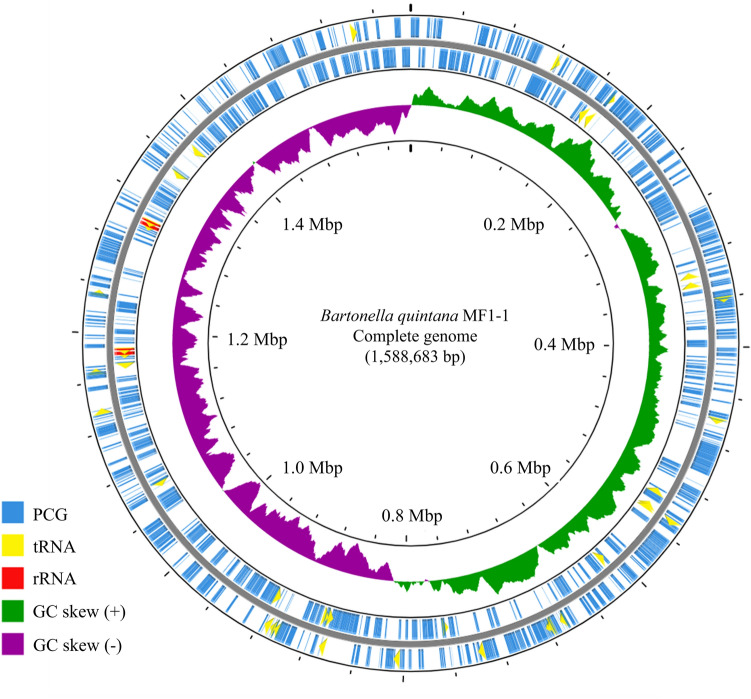 Figure 1
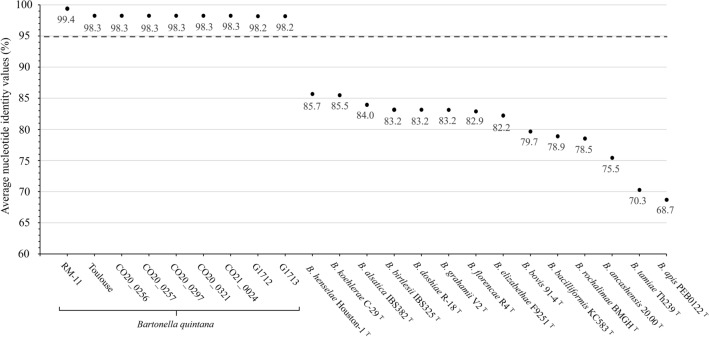 Figure 2
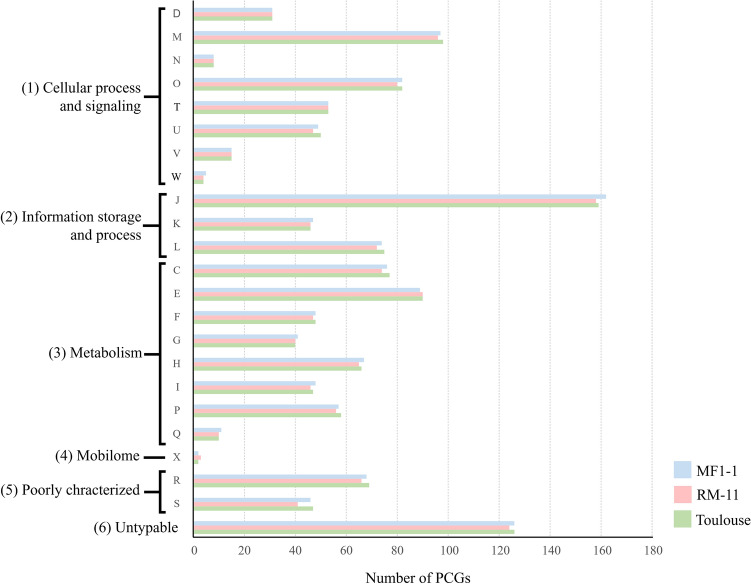 Figure 3
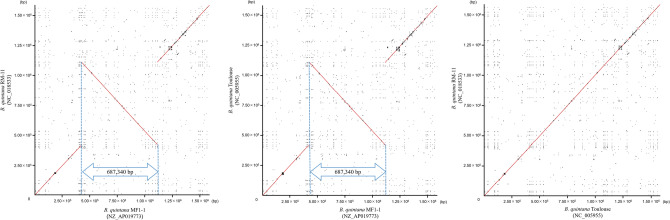 Figure 4
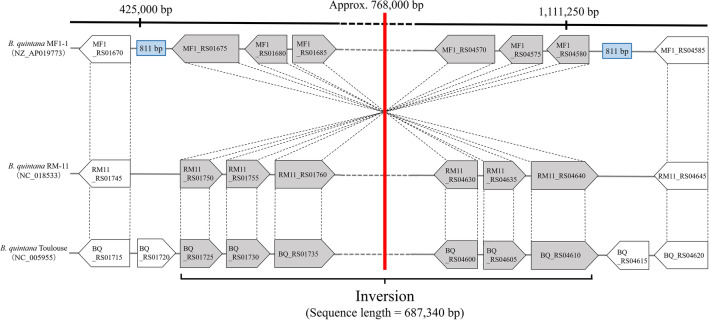 Figure 5
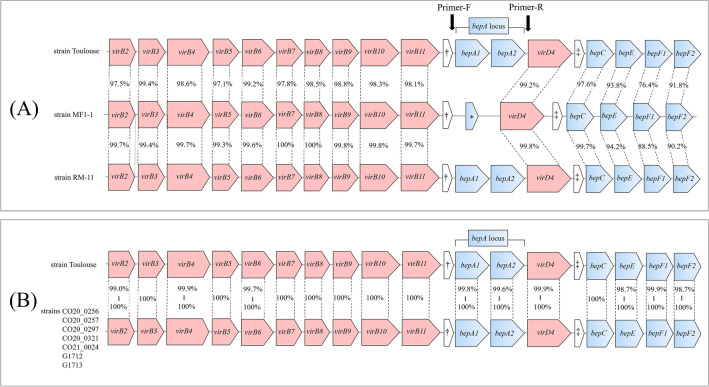 Figure 6
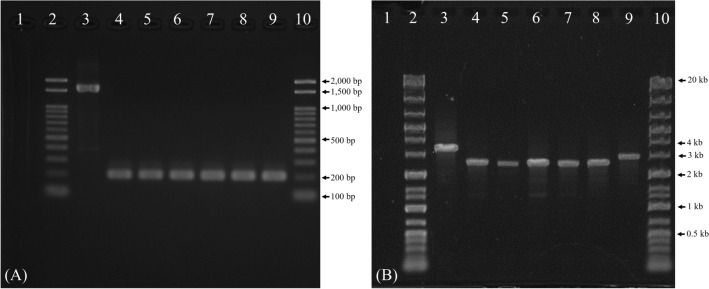 Figure 7
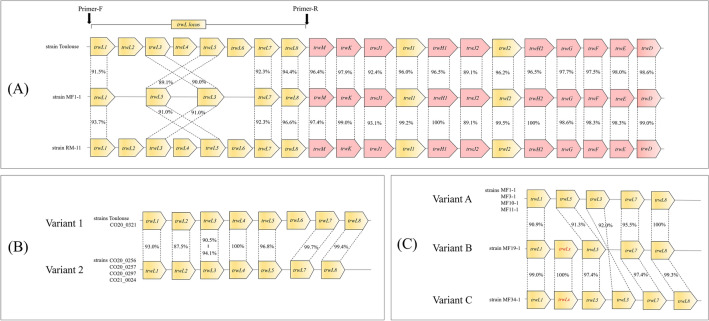 Figure 8
Peer Reviews
No public reviews on file for this paper yet. If you reviewed it on a platform where reviews are public (OpenReview, ICLR, NeurIPS, ICML), you can paste yours below so the community can read it here.
Videos
No videos yet. Explain this paper in a talk, walkthrough, or lecture? Add one.
Taxonomy
TopicsBartonella species infections research · Viral Infections and Vectors · Vector-borne infectious diseases