Thickness Asymmetry of the Vertebral Artery Groove: A Dried Vertebrae Study
Christos Lyrtzis, Athina Stamati, Parmenion P Tsitsopoulos, Maria Piagkou, Konstantinos Natsis

TL;DR
This study found that the groove in the top cervical vertebra where the vertebral artery runs is asymmetric in thickness, which could affect surgical planning.
Contribution
The study introduces the novel observation of thickness asymmetry in the vertebral artery groove, a previously underexplored morphometric variable.
Findings
The vertebral artery groove is significantly thicker on the right side compared to the left.
Female individuals have a significantly thinner left-sided vertebral artery groove compared to males.
Age does not significantly affect the thickness of the vertebral artery groove.
Abstract
Background: The vertebral artery groove (VAG), located on the posterior arch of the first cervical (atlas) vertebra plays a pivotal role in guiding the vertebral artery’s (VA) third part (V3). Deviations in VAG morphology and morphometry (dimensions) can influence vascular dynamics and pose clinical implications. Aim: The current study delves into the morphometric variants and explores the less-explored morphometric variable of the VAG thickness, highlighting possible laterality (asymmetry). Methods: A morphometric investigation was conducted on 141 dried atlas (73 male and 68 female) vertebrae from a Greek adult population. The VAG's minimum thickness was investigated by considering the laterality (sides’ differences), gender, and age impact on it. Measurements were performed by two independent researchers, ensuring the data reliability. Results: A significant asymmetry was…
Genes, proteins, chemicals, diseases, species, mutations and cell lines named across the full text — each resolved to its canonical identifier and authoritative record.
Click any figure to enlarge with its caption.
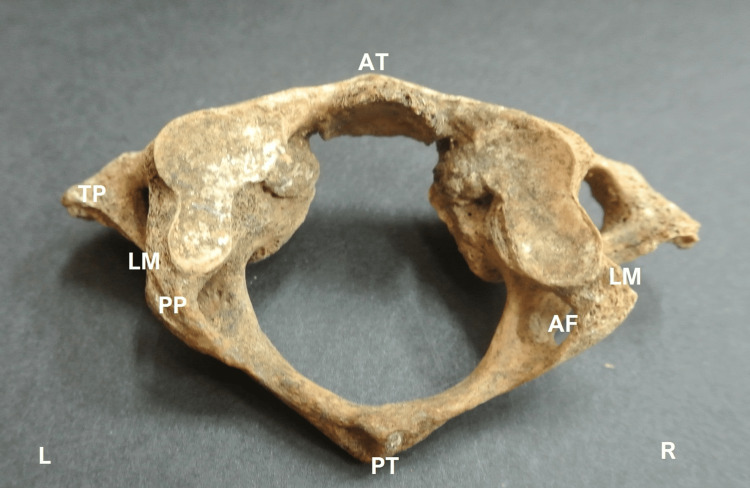 Figure 1
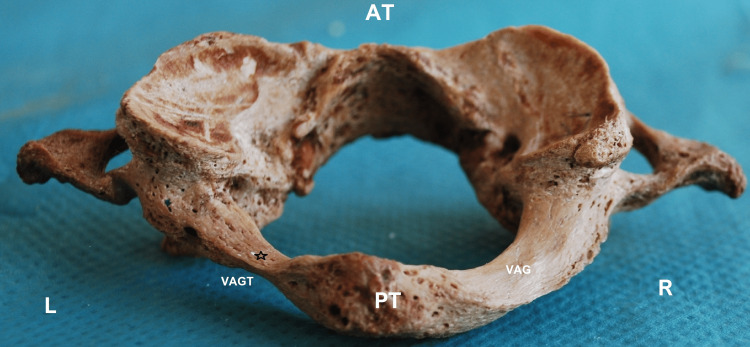 Figure 2
Peer Reviews
No public reviews on file for this paper yet. If you reviewed it on a platform where reviews are public (OpenReview, ICLR, NeurIPS, ICML), you can paste yours below so the community can read it here.
Videos
No videos yet. Explain this paper in a talk, walkthrough, or lecture? Add one.
Taxonomy
TopicsSpinal Fractures and Fixation Techniques · Medical Imaging and Analysis · Spine and Intervertebral Disc Pathology