Selective disrupted gray matter volume covariance of amygdala subregions in schizophrenia
Zhongyu Chang, Liping Liu, Liyuan Lin, Gang Wang, Chen Zhang, Hongjun Tian, Wei Liu, Lina Wang, Bin Zhang, Juanjuan Ren, Yu Zhang, Yingying Xie, Xiaotong Du, Xiaotong Wei, Luli Wei, Yun Luo, Haoyang Dong, Xin Li, Zhen Zhao, Meng Liang, Congpei Zhang, Xijin Wang, Chunshui Yu

TL;DR
This study finds that specific parts of the amygdala show abnormal volume connections in schizophrenia patients compared to healthy individuals.
Contribution
The first large-scale investigation of disrupted gray matter volume covariance in amygdala subregions in schizophrenia.
Findings
Five amygdala subregions showed increased GMV covariance with brain regions like the hippocampus and striatum in schizophrenia patients.
The altered GMV covariance patterns were selectively observed and replicated across most centers.
No significant correlations were found between the GMV covariance changes and clinical symptoms or medication use.
Abstract
Although extensive structural and functional abnormalities have been reported in schizophrenia, the gray matter volume (GMV) covariance of the amygdala remain unknown. The amygdala contains several subregions with different connection patterns and functions, but it is unclear whether the GMV covariance of these subregions are selectively affected in schizophrenia. To address this issue, we compared the GMV covariance of each amygdala subregion between 807 schizophrenia patients and 845 healthy controls from 11 centers. The amygdala was segmented into nine subregions using FreeSurfer (v7.1.1), including the lateral (La), basal (Ba), accessory-basal (AB), anterior-amygdaloid-area (AAA), central (Ce), medial (Me), cortical (Co), corticoamygdaloid-transition (CAT), and paralaminar (PL) nucleus. We developed an operational combat harmonization model for 11 centers, subsequently employing a…
Genes, proteins, chemicals, diseases, species, mutations and cell lines named across the full text — each resolved to its canonical identifier and authoritative record.
Click any figure to enlarge with its caption.
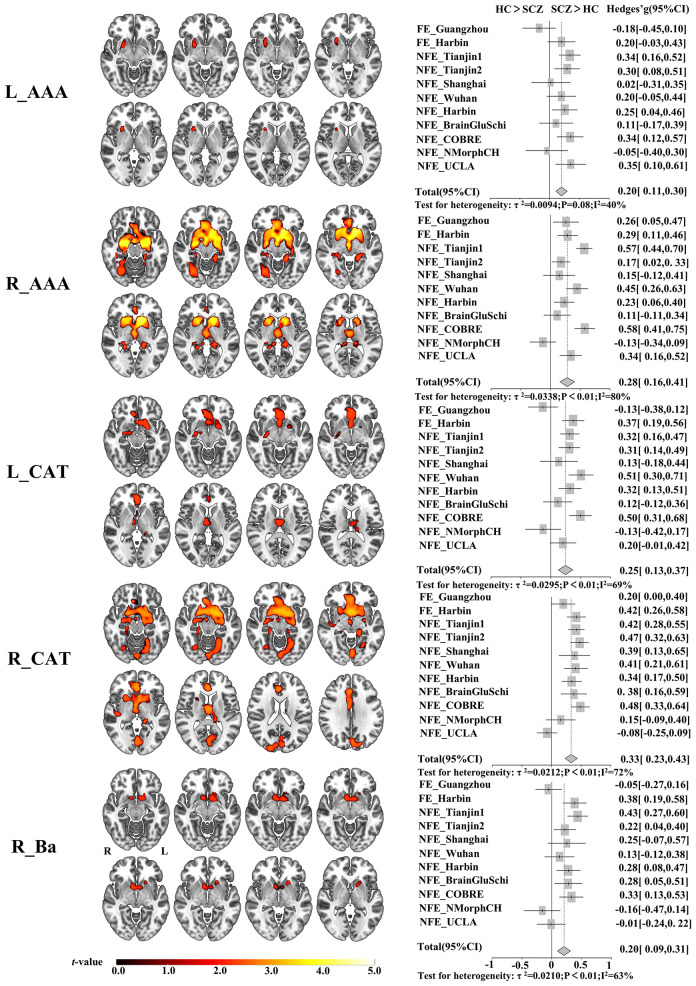 Figure 1
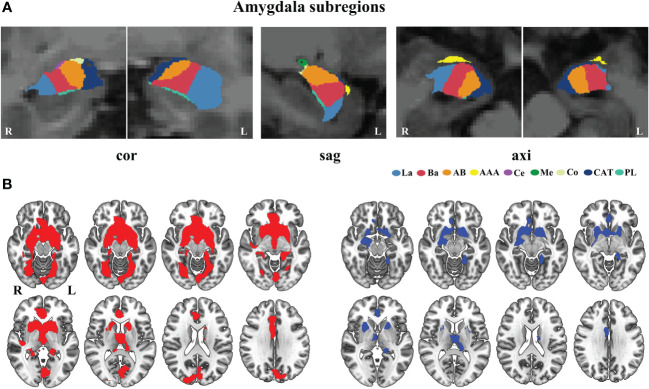 Figure 2
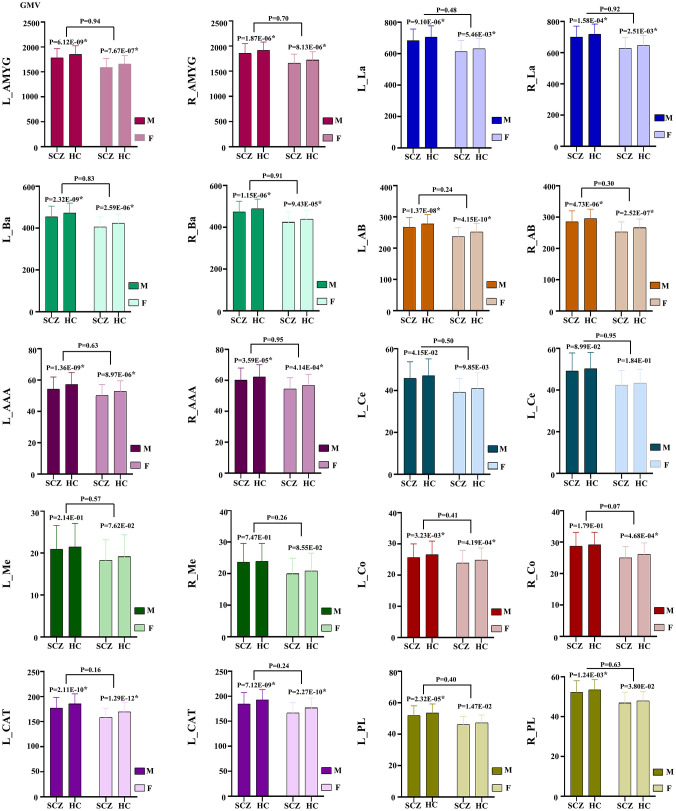 Figure 3
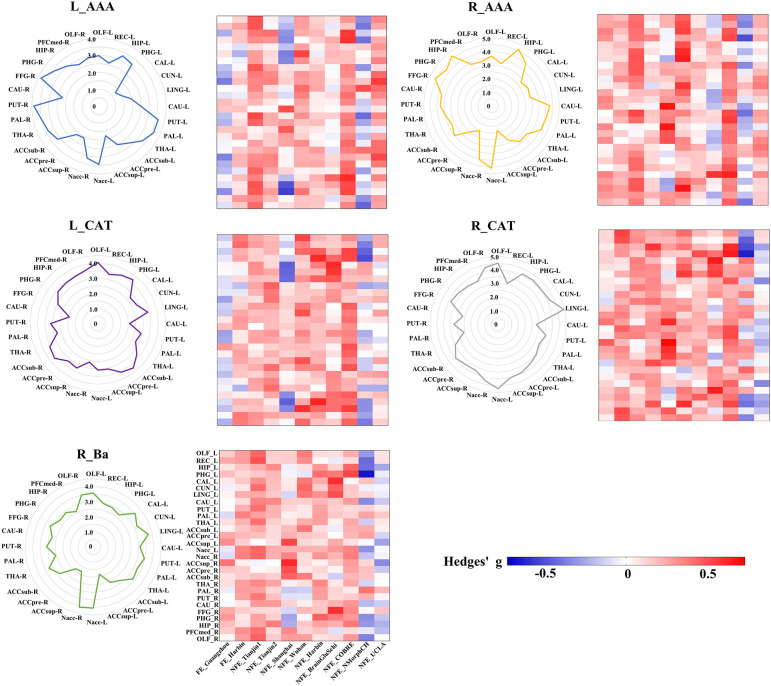 Figure 4
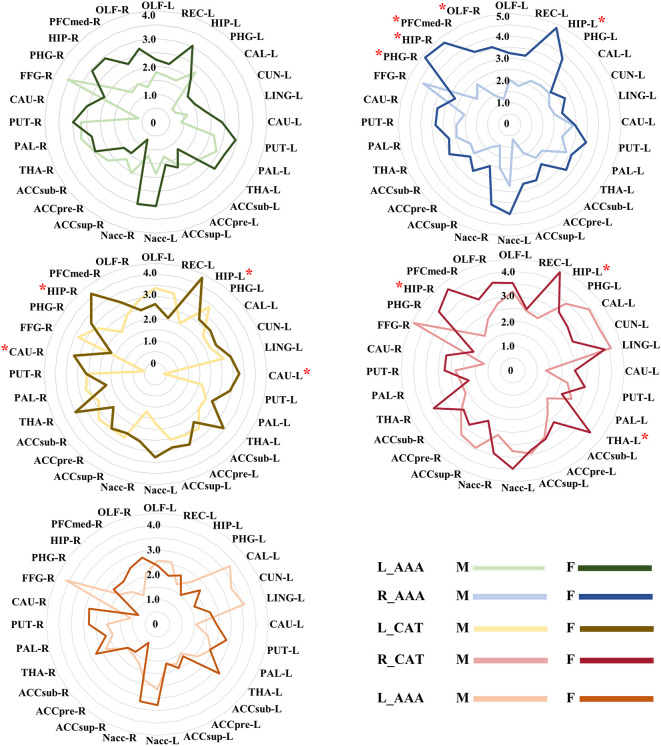 Figure 5
Peer Reviews
No public reviews on file for this paper yet. If you reviewed it on a platform where reviews are public (OpenReview, ICLR, NeurIPS, ICML), you can paste yours below so the community can read it here.
Videos
No videos yet. Explain this paper in a talk, walkthrough, or lecture? Add one.
Taxonomy
TopicsFunctional Brain Connectivity Studies · Schizophrenia research and treatment · Memory and Neural Mechanisms