Molecular characterization and induced changes of histone acetyltransferases in the tick Haemaphysalis longicornis in response to cold stress
Tingwei Pei, Miao Zhang, Ziwen Gao, Lu Li, Ziyan Bing, Jianglei Meng, Chuks Fidel Nwanade, Chaohui Yuan, Zhijun Yu, Jingze Liu

TL;DR
This study identifies two histone acetyltransferase genes in ticks and shows they help ticks survive cold stress.
Contribution
The study identifies and characterizes two HAT genes in Haemaphysalis longicornis ticks and their role in cold stress response.
Findings
Two HAT genes (HlGNAT and HlHAT-B) were identified in Haemaphysalis longicornis.
Knockdown of HlGNAT or HlHAT-B increased tick mortality at low temperatures.
Expression of HAT genes decreased initially but increased with prolonged cold exposure.
Abstract
Epigenetic modifications of histones play important roles in the response of eukaryotic organisms to environmental stress. However, many histone acetyltransferases (HATs), which are responsible for histone acetylation, and their roles in mediating the tick response to cold stress have yet to be identified. In the present study, HATs were molecularly characterized and their associations with the cold response of the tick Haemaphysalis longicornis explored. HATs were characterized by using polymerase chain reaction (PCR) based on published genome sequences, followed by multiple bioinformatic analyses. The differential expression of genes in H. longicornis under different cold treatment conditions was evaluated using reverse transcription quantitative PCR (RT-qPCR). RNA interference was used to explore the association of HATs with the cold response of H. longicornis. Two HAT genes were…
Genes, proteins, chemicals, diseases, species, mutations and cell lines named across the full text — each resolved to its canonical identifier and authoritative record.
Click any figure to enlarge with its caption.
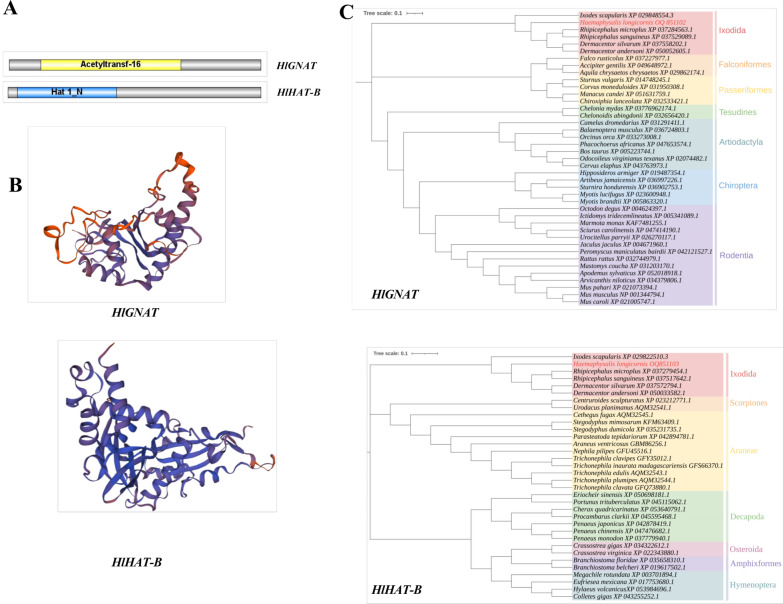 Figure 1
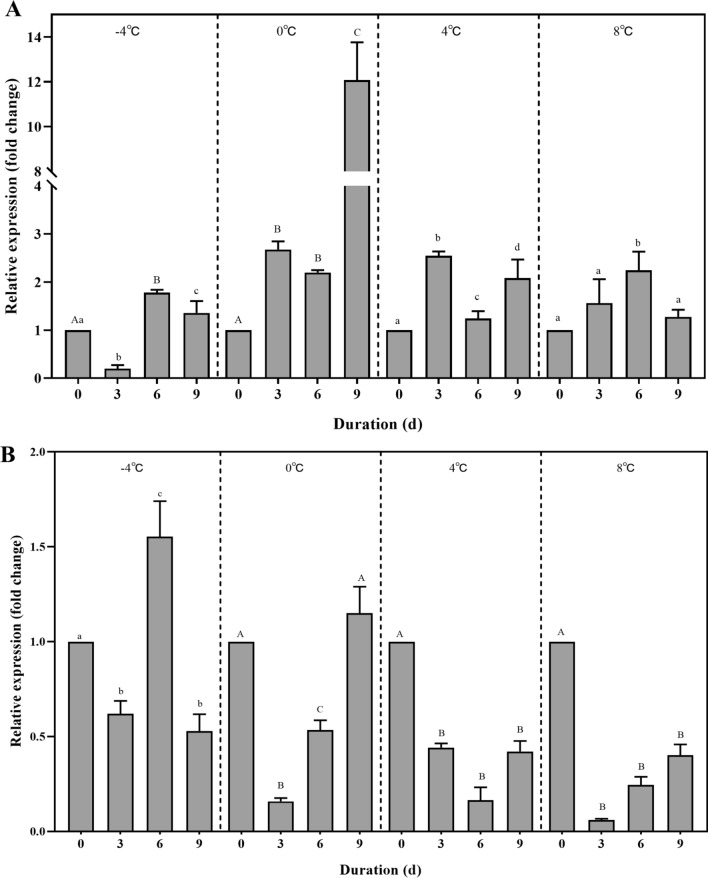 Figure 2
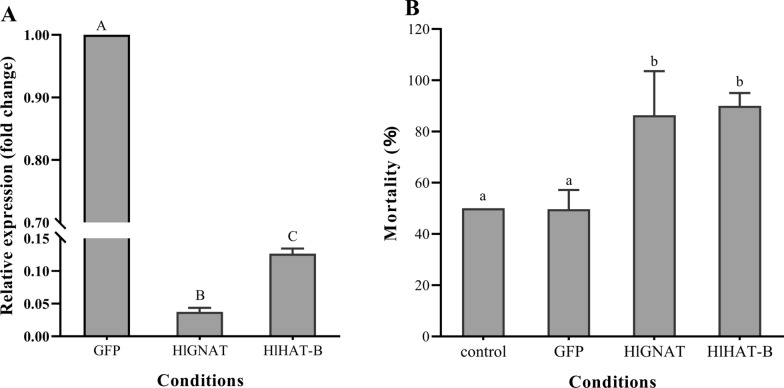 Figure 3
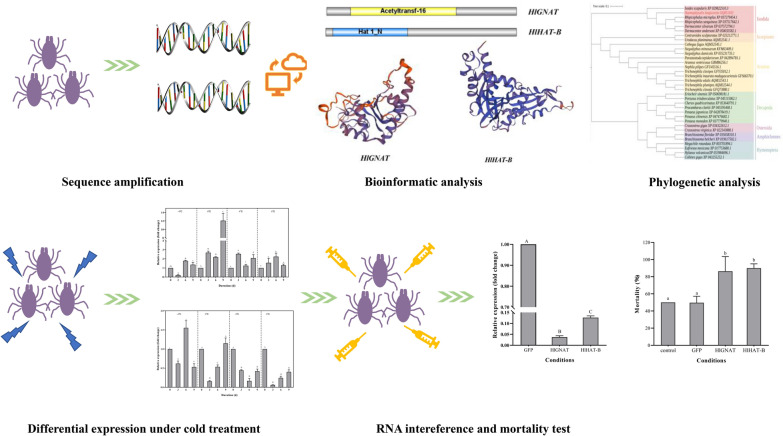 Figure 4
Peer Reviews
No public reviews on file for this paper yet. If you reviewed it on a platform where reviews are public (OpenReview, ICLR, NeurIPS, ICML), you can paste yours below so the community can read it here.
Videos
No videos yet. Explain this paper in a talk, walkthrough, or lecture? Add one.
Taxonomy
TopicsVector-borne infectious diseases · Insect symbiosis and bacterial influences · Invertebrate Immune Response Mechanisms