Percutaneous Vertebroplasty as the Treatment of Choice for Multiple Adjacent Lumbar Atypical Haemangiomas: A Case Report
Davide De Los Rios, Cristiana Germano, Sergio Corvino, Antonio Bocchetti, Giuseppe Corazzelli

TL;DR
A patient with two adjacent lumbar atypical hemangiomas was successfully treated with percutaneous vertebroplasty, a minimally invasive procedure that relieved pain without affecting spinal stability.
Contribution
This case report presents percutaneous vertebroplasty as a potential treatment option for adjacent atypical vertebral hemangiomas.
Findings
Percutaneous vertebroplasty effectively relieved the patient's pain.
The procedure did not compromise spinal column stability.
PV is a viable treatment for selected cases of adjacent atypical vertebral hemangiomas.
Abstract
Atypical vertebral haemangiomas (VHs) are uncommon lesions that cause lumbar pain and motor symptoms. Current management mainly relies on radiotherapy, surgical spine decompression, or percutaneous techniques. We describe a unique case of a patient with two adjacent lumbar VHs and an underlying lumbar fracture which was treated only by percutaneous vertebroplasty (PV). The non-invasive technique relieved the patient’s pain and did not affect column stability. PV may be considered an amenable pain-relieving treatment for adjacent atypical VHs in selected patients.
Genes, proteins, chemicals, diseases, species, mutations and cell lines named across the full text — each resolved to its canonical identifier and authoritative record.
Click any figure to enlarge with its caption.
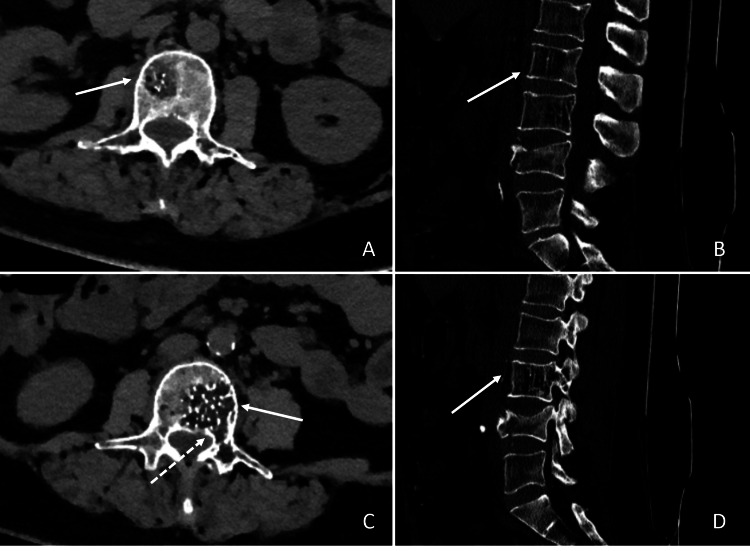 Figure 1
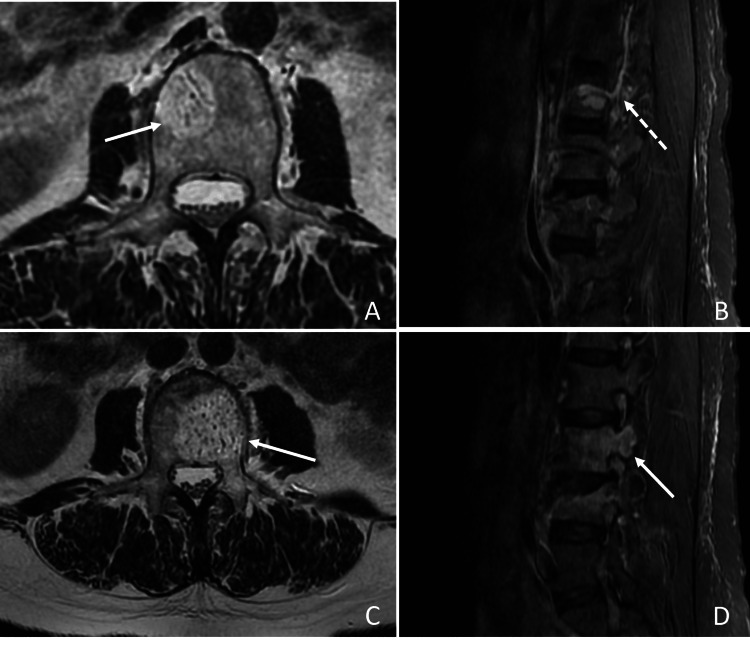 Figure 2
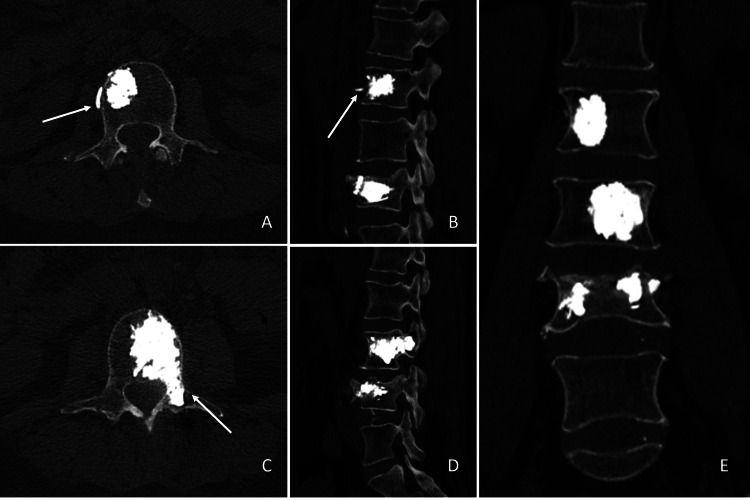 Figure 3
Peer Reviews
No public reviews on file for this paper yet. If you reviewed it on a platform where reviews are public (OpenReview, ICLR, NeurIPS, ICML), you can paste yours below so the community can read it here.
Videos
No videos yet. Explain this paper in a talk, walkthrough, or lecture? Add one.
Taxonomy
TopicsSpinal Fractures and Fixation Techniques · Spine and Intervertebral Disc Pathology · Pelvic and Acetabular Injuries