A retrospective study on the correction of distal arthrogryposis with a progressive extension brace
Jiateng Zhou, Tong Zhang, Zhibo Wang, Dongdong Li, Xin Wu, Qinyuan Yu, Bin Wang

TL;DR
A study shows that using a progressive extension brace early in children with distal arthrogryposis improves hand mobility and reduces deformities.
Contribution
The study introduces a progressive extension brace as an effective early intervention for correcting hand deformities in distal arthrogryposis.
Findings
Early use of the brace improved joint mobility and corrected camptodactyly and clasped thumbs in infants and toddlers.
Average PedsQL scores after treatment reached 94.7 (parent-reported) and 89.3 (child-reported).
Patients under 3 years showed significantly better outcomes than older patients.
Abstract
Camptodactyly, clasped thumbs, and windblown hands are distinctive features of distal arthrogryposis (DA). Current therapeutic interventions often yield suboptimal effects, predisposing patients to relapses and complications. This study explicates a corrective approach involving a progressive extension brace for the management of DA and evaluates its clinical outcomes. Between 2015 and 2023, progressive extension braces were used in 32 DA patients, with an average follow-up of 4.8 years. Patients were stratified by age into four groups: 0–1, 1–3, 3–7, and above 7 years. The correction of camptodactyly was assessed based on the total active movement (TAM) of metacarpophalangeal joints (MPJ) and proximal interphalangeal joints (PIPJ), as well as the extensor lag of PIPJ. Clasped thumb correction was evaluated by measuring the thumb-to-index finger metacarpal angle (M1M2 angle) and the…
Genes, proteins, chemicals, diseases, species, mutations and cell lines named across the full text — each resolved to its canonical identifier and authoritative record.
Click any figure to enlarge with its caption.
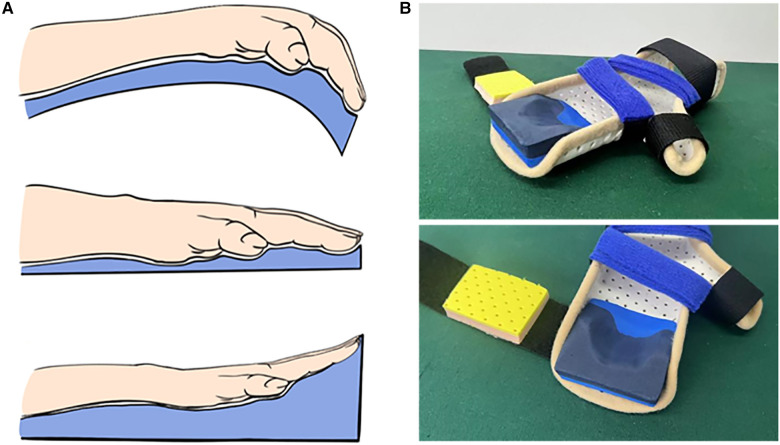 Figure 1
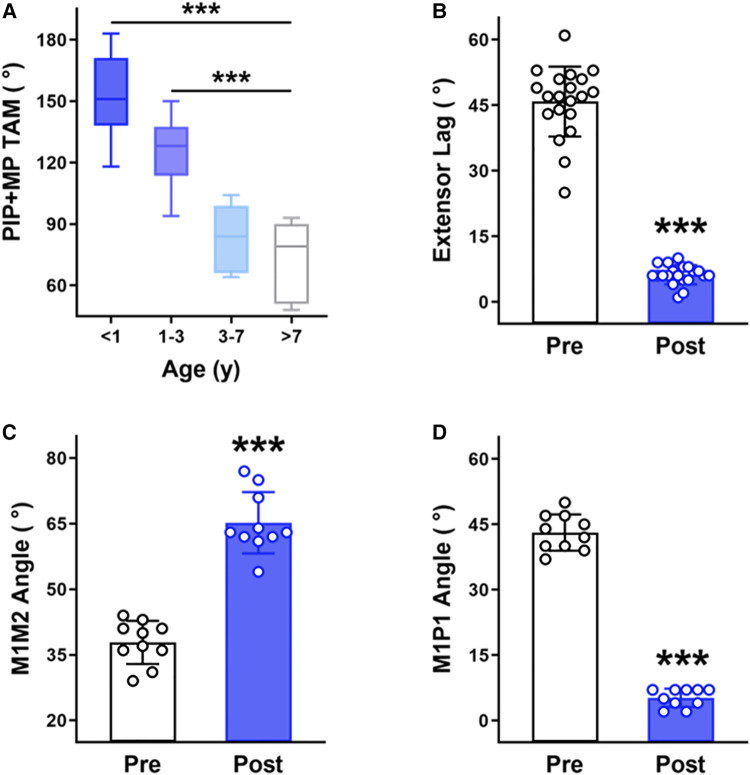 Figure 2
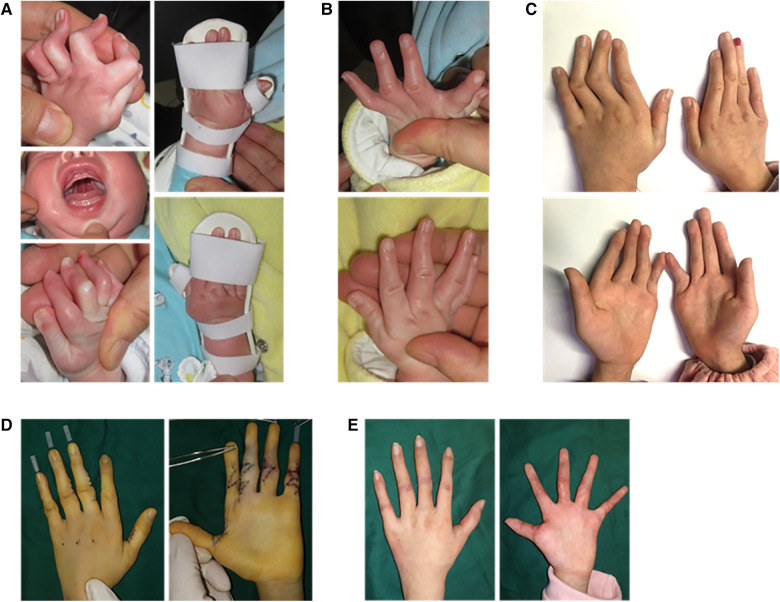 Figure 3
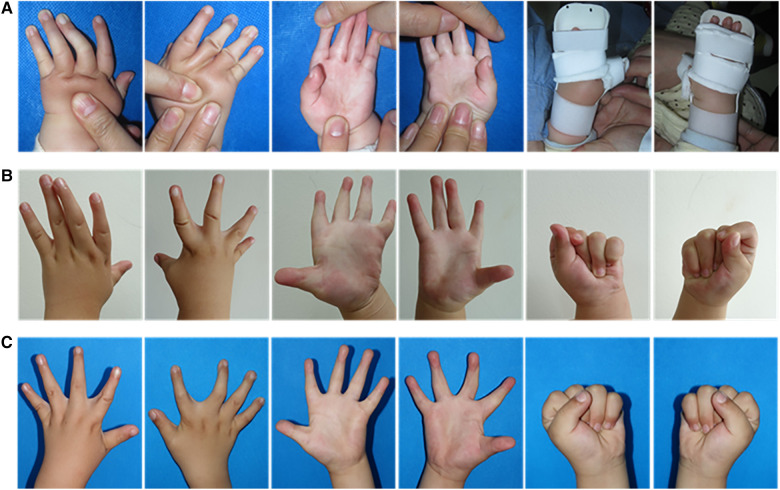 Figure 4
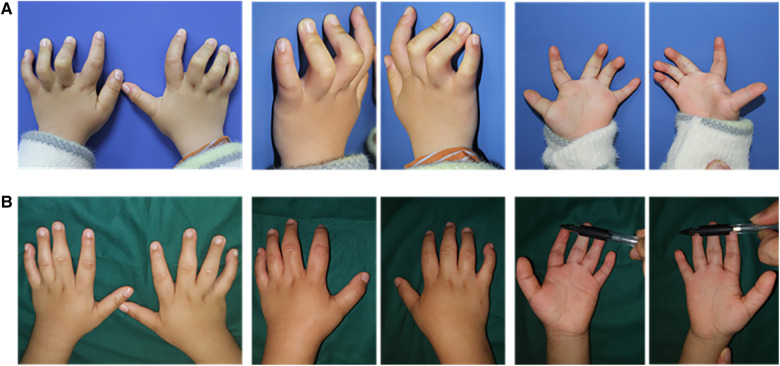 Figure 5
Peer Reviews
No public reviews on file for this paper yet. If you reviewed it on a platform where reviews are public (OpenReview, ICLR, NeurIPS, ICML), you can paste yours below so the community can read it here.
Videos
No videos yet. Explain this paper in a talk, walkthrough, or lecture? Add one.
Taxonomy
TopicsNeurogenetic and Muscular Disorders Research · Congenital limb and hand anomalies · Prenatal Screening and Diagnostics