A Novel Use of a Not So “EZ-Blocker” For Lung Isolation During a Direct Transaortic Transcatheter Aortic Valve Replacement
Kenneth John, Becca Berube, Danielle Sawka, Shyamal R Asher

TL;DR
This paper describes a novel use of an endobronchial blocker for lung isolation during a complex heart valve procedure.
Contribution
The paper introduces a new application of the 'EZ-blocker' for lung isolation in a challenging surgical setting.
Findings
A direct transaortic transcatheter aortic valve replacement required lung isolation.
The 'EZ-blocker' was used in a novel way to achieve adequate lung isolation.
The approach maintained patient safety while overcoming spatial constraints.
Abstract
Alternate access transcatheter aortic valve replacement presents unique challenges for anesthesiologists, including the possible need for lung isolation while working with space constraints around the patient's airway. Troubleshooting lung isolation in these cases can be challenging, requiring quick thinking and adaptability while maintaining patient safety. We present a case of direct transaortic transcatheter aortic valve replacement with an endobronchial blocker ("EZ-blocker") used for lung isolation that required a novel use of the "EZ-blocker" to achieve adequate lung isolation.
Genes, proteins, chemicals, diseases, species, mutations and cell lines named across the full text — each resolved to its canonical identifier and authoritative record.
Click any figure to enlarge with its caption.
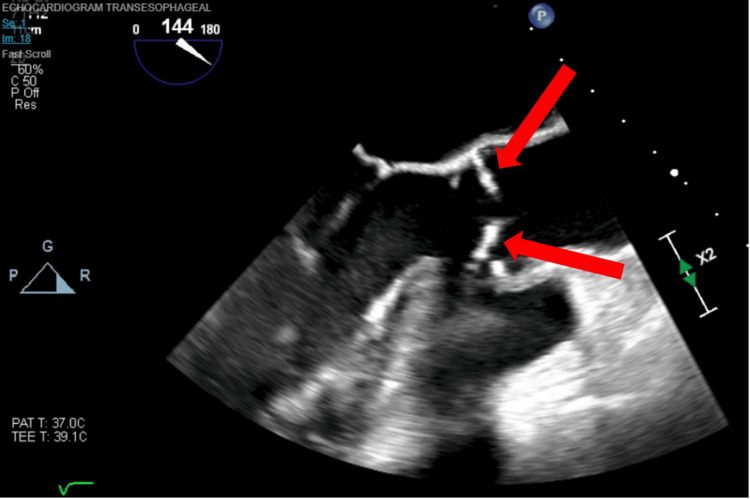 Figure 1
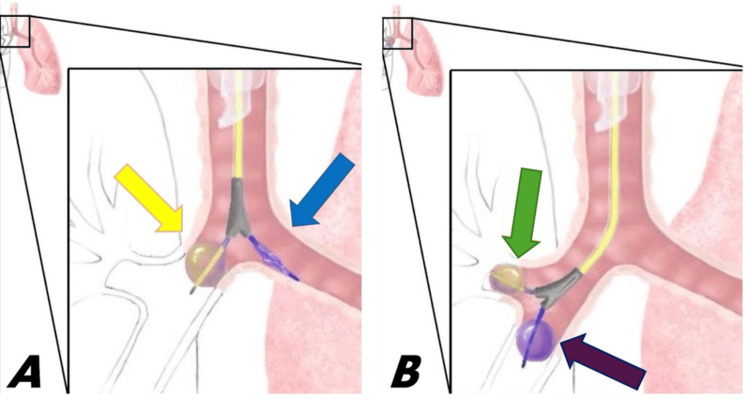 Figure 2
Peer Reviews
No public reviews on file for this paper yet. If you reviewed it on a platform where reviews are public (OpenReview, ICLR, NeurIPS, ICML), you can paste yours below so the community can read it here.
Videos
No videos yet. Explain this paper in a talk, walkthrough, or lecture? Add one.
Taxonomy
TopicsCardiac Valve Diseases and Treatments · Cardiac pacing and defibrillation studies · Mechanical Circulatory Support Devices