Biological response to Przewalski’s horse reintroduction in native desert grasslands: a case study on the spatial analysis of ticks
Yu Zhang, Jiawei Liu, Ke Zhang, Anqi Wang, Duishan Sailikebieke, Zexin Zhang, Tegen Ao, Liping Yan, Dong Zhang, Kai Li, Heqing Huang

TL;DR
Reintroducing Przewalski's horses in a desert grassland affects tick distribution, highlighting ecological interactions that need consideration in conservation efforts.
Contribution
This study demonstrates a novel spatial analysis of tick distribution linked to Przewalski's horse reintroduction in desert grasslands.
Findings
Hyalomma asiaticum ticks are most prevalent near donkey trails and water sources with fresh horse feces.
Tick risk areas strongly overlap with the distribution of Przewalski's horses, especially in high-risk zones.
Generalized Linear Models confirm a positive correlation between H. asiaticum and horse feces presence.
Abstract
Reintroduction represents an effective strategy for the conservation of endangered wildlife, yet it might inadvertently impact the native ecosystems. This investigation assesses the impact of reintroducing endangered Przewalski's horses into the desert grassland ecosystem of the Kalamaili Nature Reserve (KNR), particularly its effect on the spatial distribution of ticks. In a 25 km2 core area of Przewalski's horse distribution, we set up 441 tick sampling sites across diverse habitats, including water sources, donkey trails, and grasslands, recording horse feces and characteristics to analyze the occurrence rate of ticks. Additionally, we gathered the data of 669 fresh feces of horses. To evaluate the spatial dynamics between these feces and ticks, we used methods such as Fixed Kernel Estimation (FKE), Moran’s I spatial autocorrelation index, and Generalized Linear Models (GLM). The…
Genes, proteins, chemicals, diseases, species, mutations and cell lines named across the full text — each resolved to its canonical identifier and authoritative record.
Click any figure to enlarge with its caption.
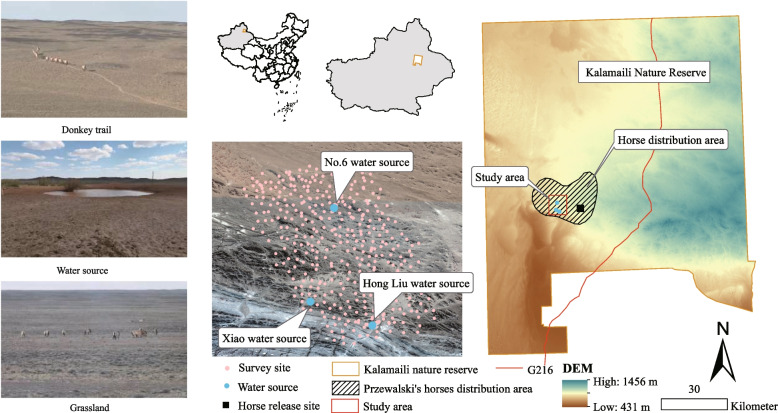 Figure 1
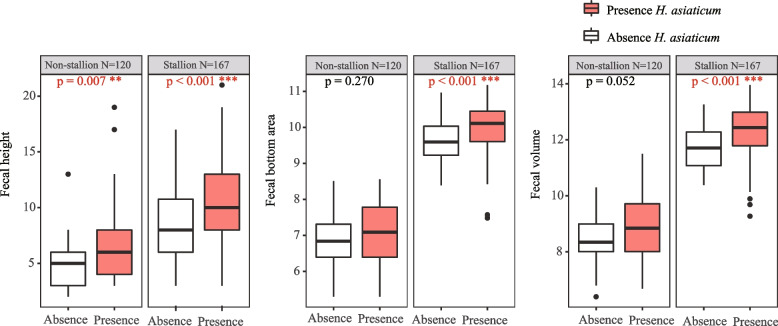 Figure 2
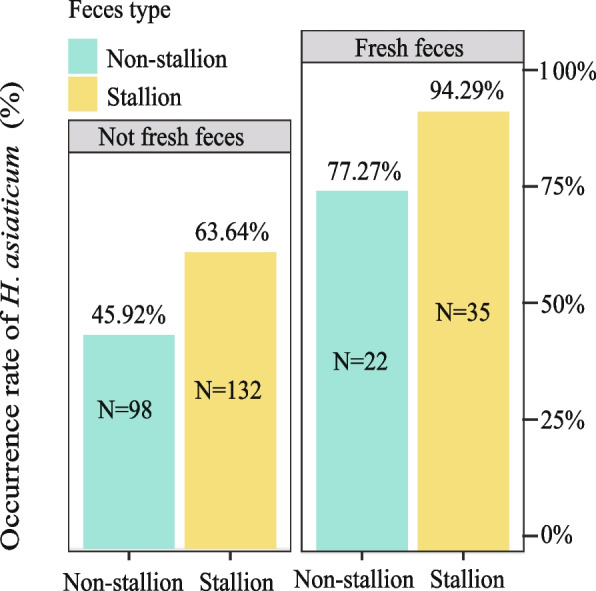 Figure 3
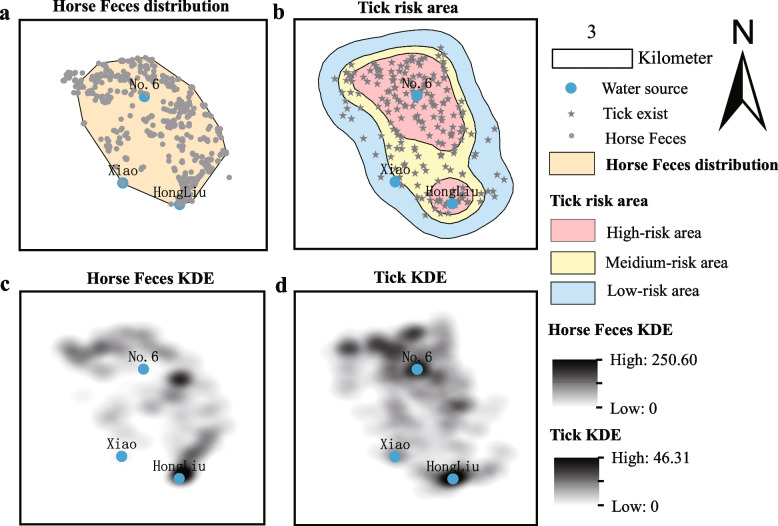 Figure 4
Peer Reviews
No public reviews on file for this paper yet. If you reviewed it on a platform where reviews are public (OpenReview, ICLR, NeurIPS, ICML), you can paste yours below so the community can read it here.
Videos
No videos yet. Explain this paper in a talk, walkthrough, or lecture? Add one.
Taxonomy
TopicsWildlife Ecology and Conservation · Vector-borne infectious diseases · Zoonotic diseases and public health