Critical Circulatory Failure Accompanied With the aVR Sign Caused by Severe Graft Kinking Related to Acute Pseudoaneurysm Formation After Type A Acute Aortic Dissection Repair
Yuta Inoue, Shohei Mitta, Yukihiro Matsuno, Yukio Umeda

TL;DR
A patient with a history of aortic dissection repair developed life-threatening circulatory failure linked to a rare heart condition, successfully treated with emergency surgery.
Contribution
Highlights a rare cause of the aVR sign and critical circulatory failure related to graft kinking after aortic dissection repair.
Findings
The aVR sign was linked to severe graft kinking from pseudoaneurysm formation, not coronary issues.
Veno-arterial ECMO stabilized the patient before emergency surgery resolved the pseudoaneurysm.
Early recognition of the aVR sign and timely intervention improved outcomes in this critical case.
Abstract
The aVR sign characterized by ST-segment elevation in lead aVR and diffuse ST-segment depression on the electrocardiogram indicates potential life-threatening conditions. We report the case of a 53-year-old male with a history of ascending aortic replacement for acute aortic dissection, who presented to our institution in shock. The initial electrocardiogram revealed the aVR sign, consisting of ST-segment elevation in lead aVR and ST-segment depression in leads II, III, aVF, and V3-6, leading to the initiation of salvage veno-arterial extracorporeal membrane oxygenation (ECMO) due to deteriorating hemodynamics. The aVR sign resolved shortly after ECMO initiation, and hemodynamics stabilized even with reduced ECMO flow. Subsequent coronary angiography showed no impaired coronary perfusion, whereas contrast-enhanced CT revealed severe supra-valvular stenosis due to pseudoaneurysm-induced…
Genes, proteins, chemicals, diseases, species, mutations and cell lines named across the full text — each resolved to its canonical identifier and authoritative record.
Click any figure to enlarge with its caption.
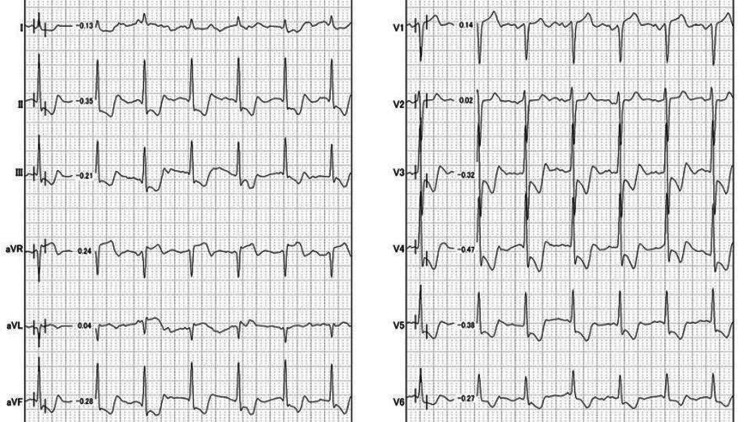 Figure 1
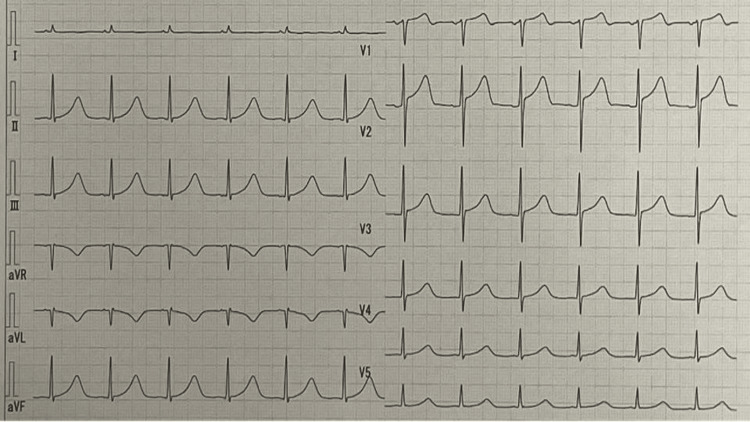 Figure 2
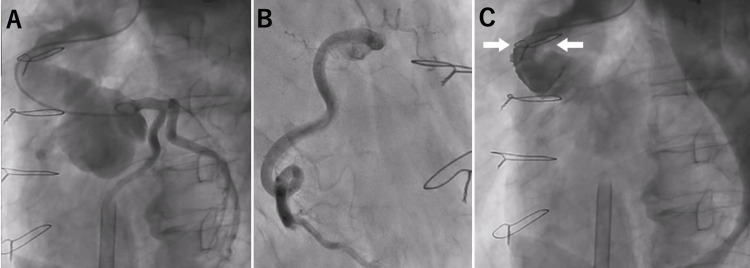 Figure 3
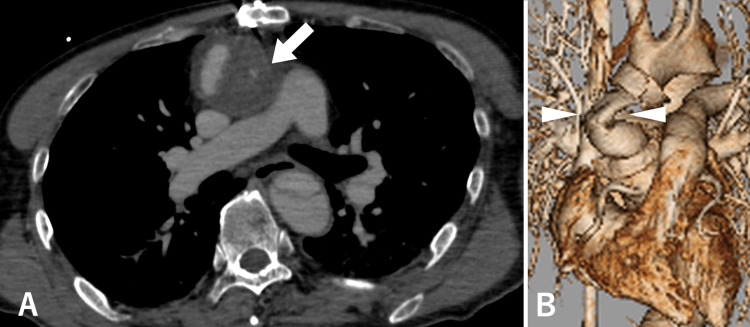 Figure 4
Peer Reviews
No public reviews on file for this paper yet. If you reviewed it on a platform where reviews are public (OpenReview, ICLR, NeurIPS, ICML), you can paste yours below so the community can read it here.
Videos
No videos yet. Explain this paper in a talk, walkthrough, or lecture? Add one.
Taxonomy
TopicsAortic Disease and Treatment Approaches · Cardiac Structural Anomalies and Repair · Mechanical Circulatory Support Devices