A CXCR3-Activating Peptide Increases Tear Break Up Time and Corrects Corneal haze in a Rabbit Model of Environmental Dry Eye
Alan Wells, Yadong Wang, Hanshuang Shao, Peri Sohnen, Shivalingappa K. Swamynathan

TL;DR
A CXCR3-activating peptide improves tear quality and reduces corneal haze in a rabbit model of dry eye disease.
Contribution
A novel CXCR3-activating peptide is shown to correct tear instability and corneal inflammation in environmental dry eye.
Findings
The peptide increased tear break up time (TBUT) threefold in treated rabbits.
Corneal haze was completely reversed in 36 of 48 eyes across treatment groups.
Peptide co-treatment reduced TNFα production in human conjunctival cells under inflammatory conditions.
Abstract
Environmentally-triggered dry eye disease (DED) or keratoconjunctivitis sicca (KCS), which constitutes the majority of DED cases, currently is palliatively treated with aqueous replacement solutions that do not target the dysfunction of the mucin and lipid components of tears. We tested whether a peptide that increased goblet cell numbers in a model of scleral chemical injury would also improve tear quality in environmental DED. Environmental DED was established by exposing New Zealand white rabbits (8 per group, female) to 20% humidity with rapid air replacement and b.i.d. atropine sulfate eyedrops for 3 weeks prior to test article administration; this continued for the subsequent 3 weeks of testing. Animals were dosed by (A) saline, (B) b.i.d. eyedrop of peptide in saline, (C) b.i.d. eyedrop of peptide in coacervate, or (D) weekly subconjunctival injection of peptide. In vitro, human…
Genes, proteins, chemicals, diseases, species, mutations and cell lines named across the full text — each resolved to its canonical identifier and authoritative record.
Click any figure to enlarge with its caption.
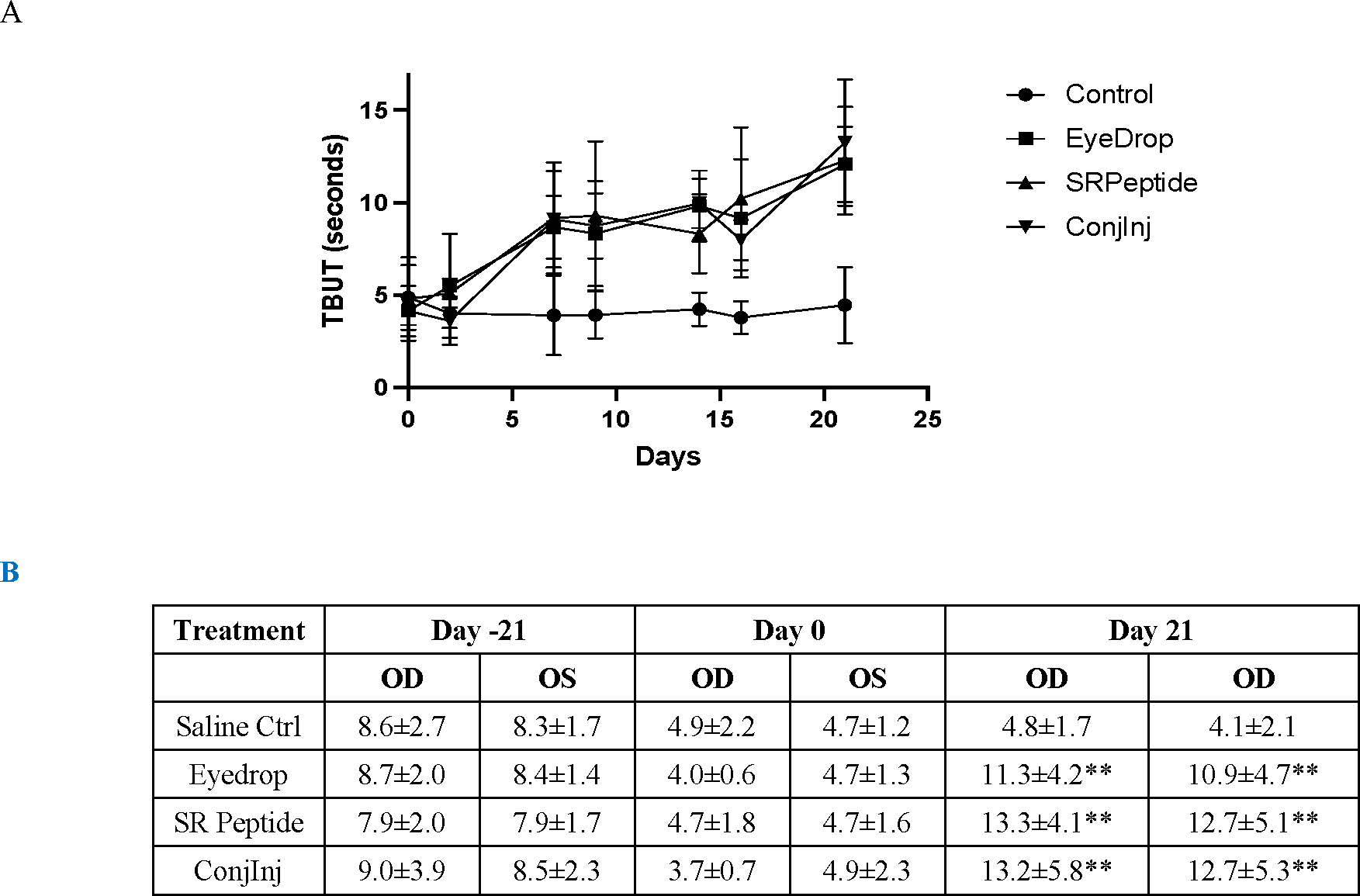 Figure 1
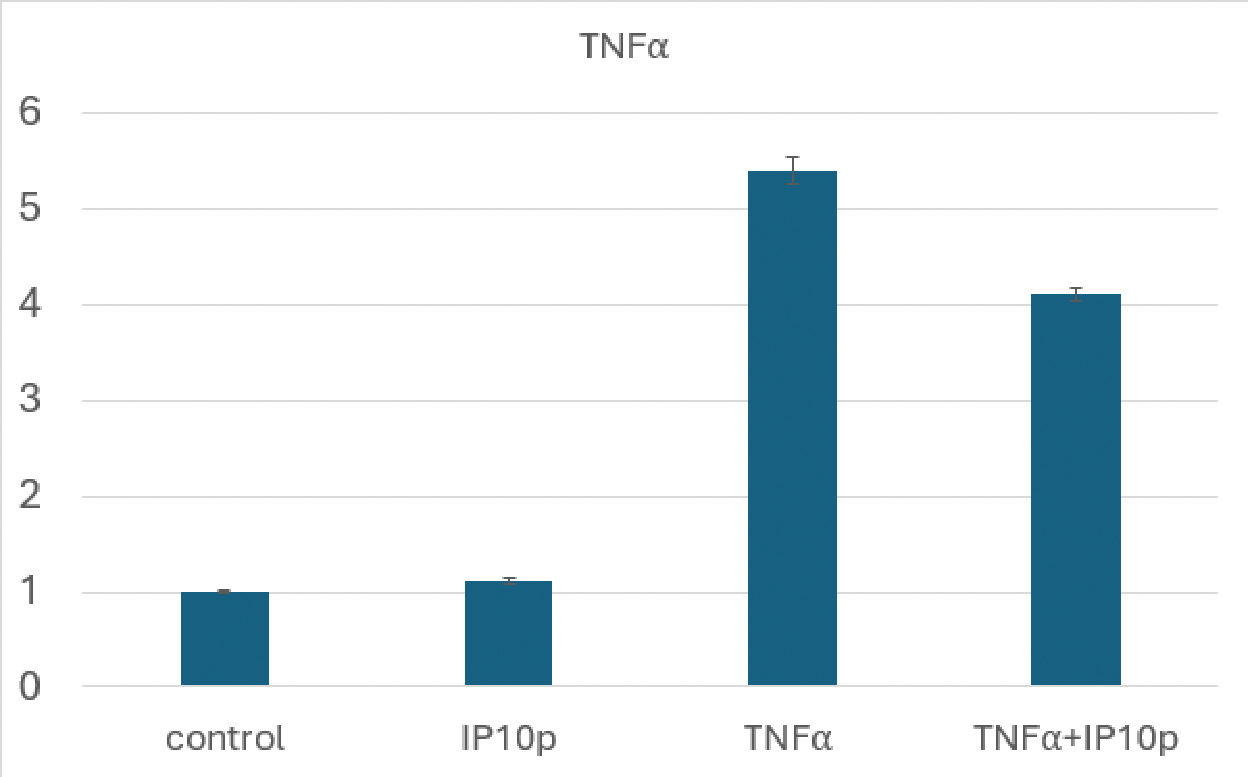 Figure 2
Peer Reviews
No public reviews on file for this paper yet. If you reviewed it on a platform where reviews are public (OpenReview, ICLR, NeurIPS, ICML), you can paste yours below so the community can read it here.
Videos
No videos yet. Explain this paper in a talk, walkthrough, or lecture? Add one.
Taxonomy
TopicsOcular Surface and Contact Lens · Glaucoma and retinal disorders · Corneal Surgery and Treatments