Unveiling the Low-Lying Spin States of [Fe3S4] Clusters via the Extended Broken-Symmetry Method
Shibing Chu, Qiuyu Gao

TL;DR
This paper introduces a new method to better understand the magnetic properties of iron-sulfur clusters in hydrogenase enzymes, which are important for clean energy production.
Contribution
The Extended Broken-Symmetry method is introduced to accurately compute low-lying spin states of [Fe3S4] clusters in hydrogenases.
Findings
The Extended Broken-Symmetry method reduces spin contamination errors in calculations.
The method provides accurate bond length differences and magnetic coupling constants for [Fe3S4] clusters.
Geometric arrangement of metal centers significantly affects the magnetic properties of the clusters.
Abstract
Photosynthetic water splitting, when synergized with hydrogen production catalyzed by hydrogenases, emerges as a promising avenue for clean and renewable energy. However, theoretical calculations have faced challenges in elucidating the low-lying spin states of iron–sulfur clusters, which are integral components of hydrogenases. To address this challenge, we employ the Extended Broken-Symmetry method for the computation of the cubane–[Fe3S4] cluster within the [FeNi] hydrogenase enzyme. This approach rectifies the error caused by spin contamination, allowing us to obtain the magnetic exchange coupling constant and the energy level of the low-lying state. We find that the Extended Broken-Symmetry method provides more accurate results for differences in bond length and the magnetic coupling constant. This accuracy assists in reconstructing the low-spin ground state force and determining…
Click any figure to enlarge with its caption.
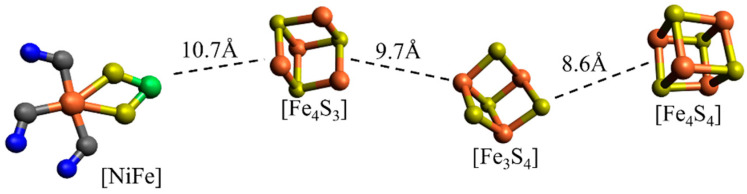 Figure 1
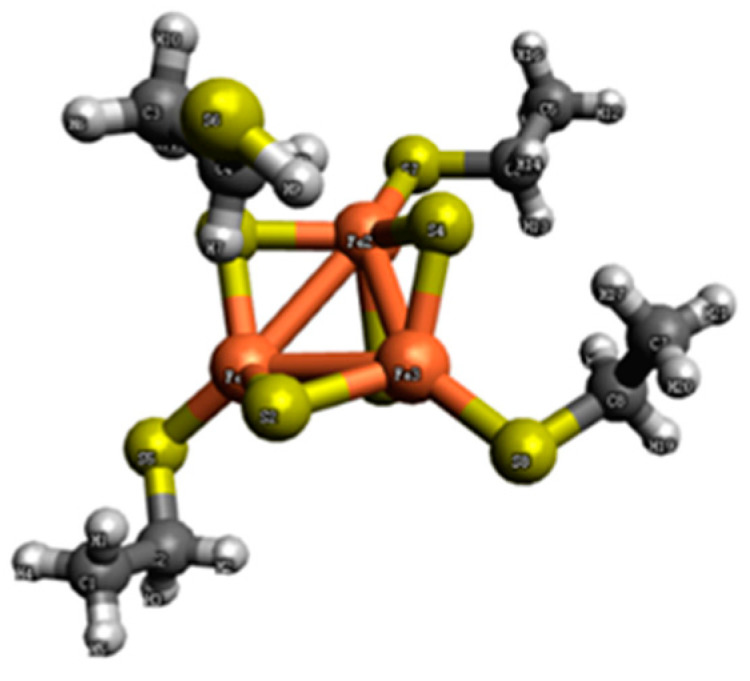 Figure 2
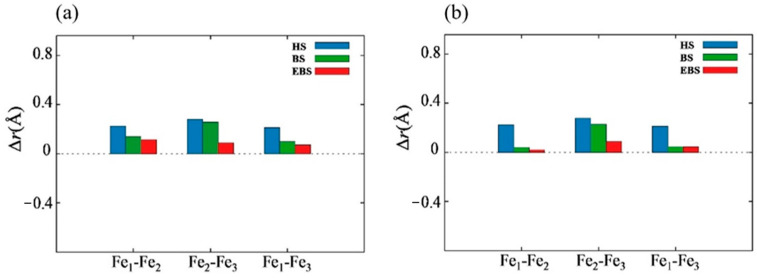 Figure 3
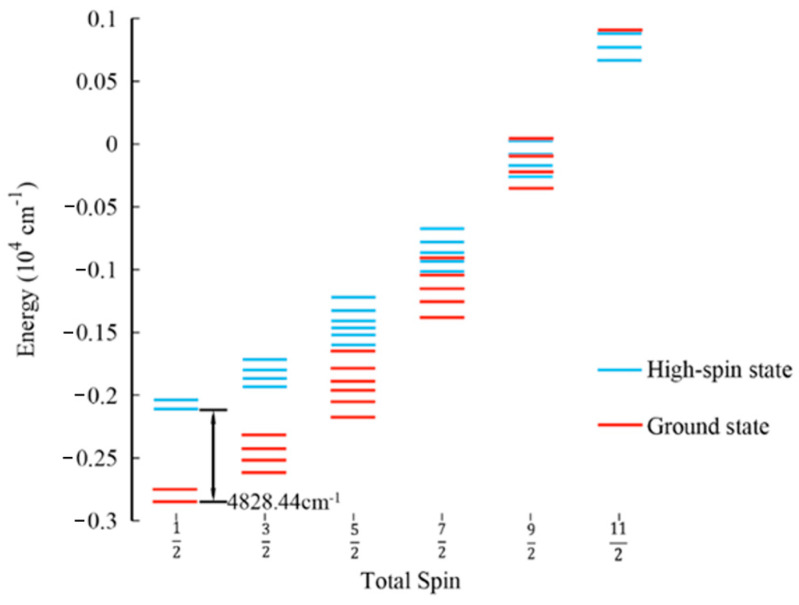 Figure 4
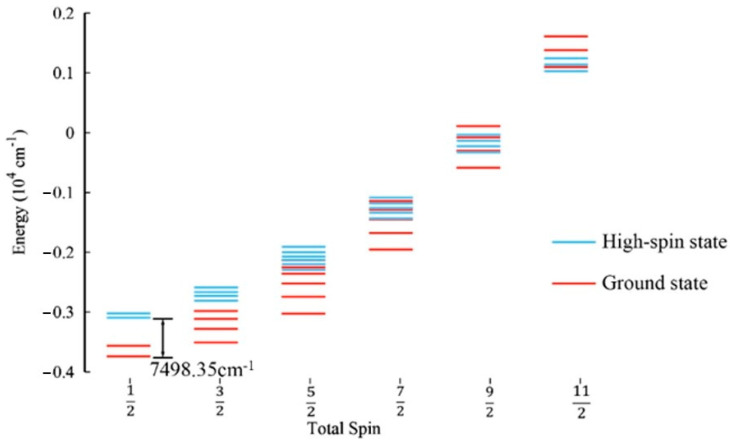 Figure 5
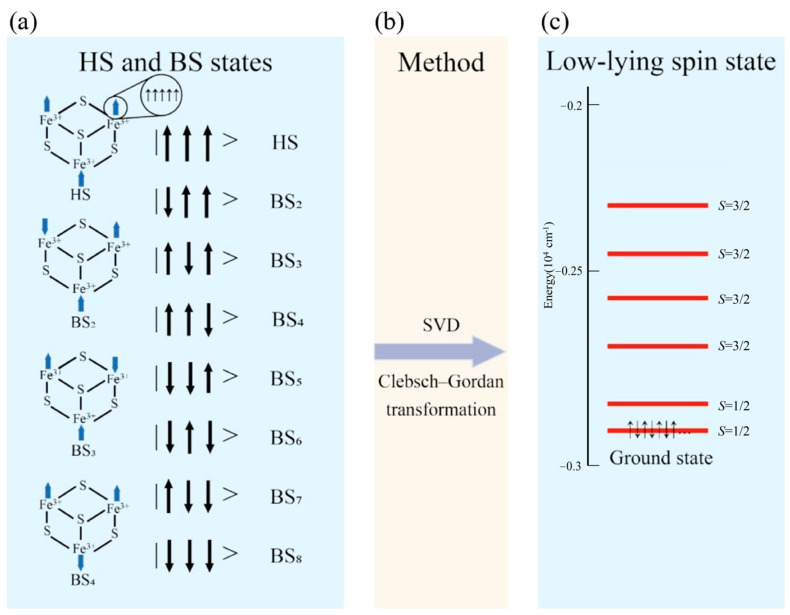 Figure 6
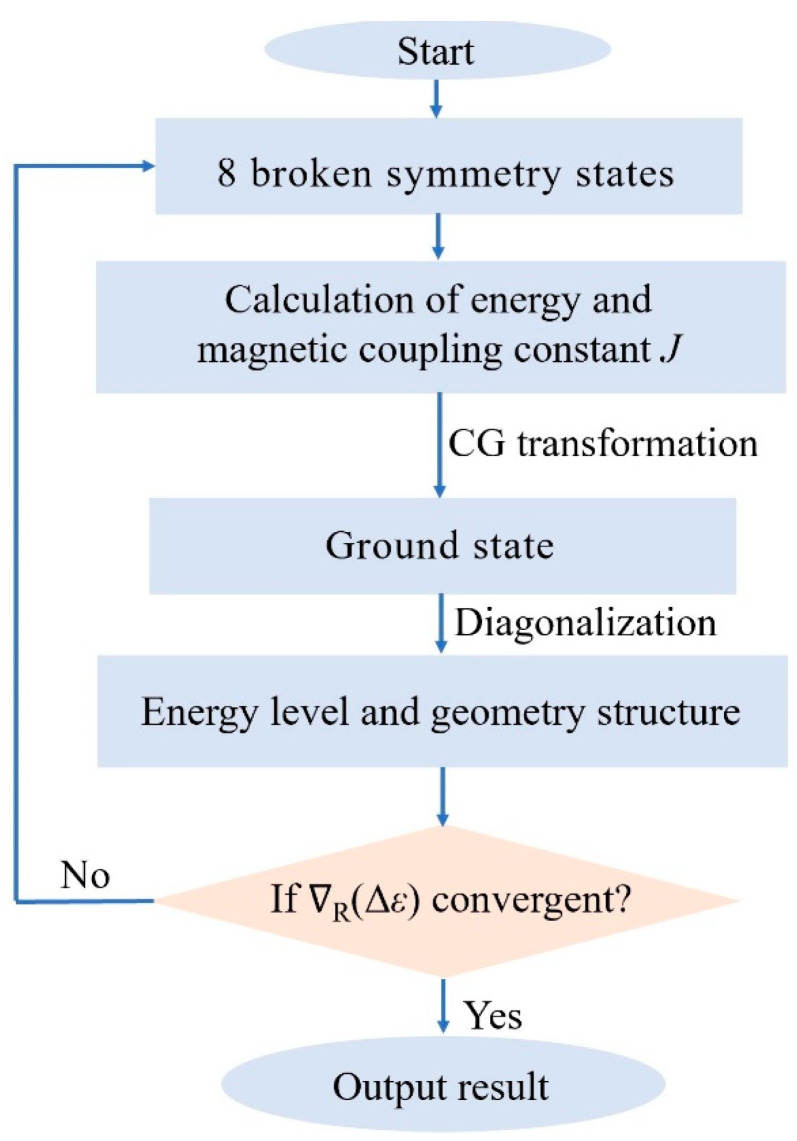 Figure 7
Peer Reviews
No public reviews on file for this paper yet. If you reviewed it on a platform where reviews are public (OpenReview, ICLR, NeurIPS, ICML), you can paste yours below so the community can read it here.
Videos
No videos yet. Explain this paper in a talk, walkthrough, or lecture? Add one.
Taxonomy
TopicsMagnetism in coordination complexes · Nanocluster Synthesis and Applications · Metalloenzymes and iron-sulfur proteins