Efficient Separation of Methanol Single-Micron Droplets by Tailing Phenomenon Using a PDMS Microfluidic Device
Daiki Tanaka, Shengqi Zheng, Masahiro Furuya, Masashi Kobayashi, Hiroyuki Fujita, Takashiro Akitsu, Tetsushi Sekiguchi, Shuichi Shoji

TL;DR
A new microfluidic device efficiently separates methanol droplets using a tailing phenomenon without surfactants.
Contribution
A novel surfactant-free method for generating and separating single-micron organic droplets using a PDMS microfluidic device.
Findings
A tapered separation channel with side channels enhances shear forces to break up methanol droplets.
Surface treatment with CYTOP fluoropolymer prevents organic fluid damage to PDMS devices.
The method enables tailing-based separation of methanol droplets smaller than 5 μm in diameter.
Abstract
Microdroplet-based fluidic systems have the advantages of small size, short diffusion time, and no cross-contamination; consequently, droplets often provide a fast and precise reaction environment as well as an analytical environment for individual molecules. In order to handle diverse reactions, we developed a method to create organic single-micron droplets (S-MDs) smaller than 5 μm in diameter dispersed in silicone oil without surfactant. The S-MD generation microflow device consists of a mother droplet (MoD) generator and a tapered separation channel featuring multiple side channels. The tapered channel enhanced the shear forces to form tails from the MoDs, causing them to break up. Surface treatment with the fluoropolymer CYTOP protected PDMS fluid devices from organic fluids. The tailing separation of methanol droplets was accomplished without the use of surfactants. The generation…
Genes, proteins, chemicals, diseases, species, mutations and cell lines named across the full text — each resolved to its canonical identifier and authoritative record.
Click any figure to enlarge with its caption.
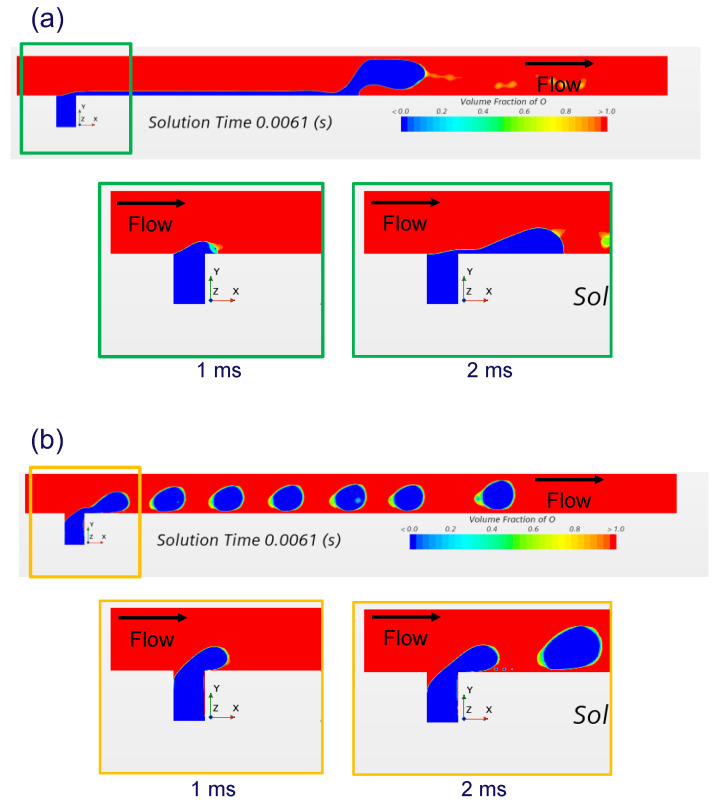 Figure 1
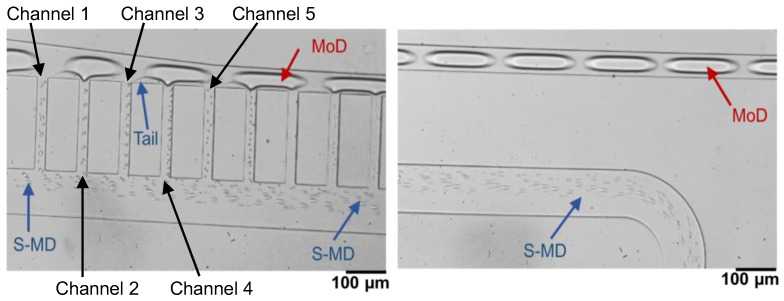 Figure 2
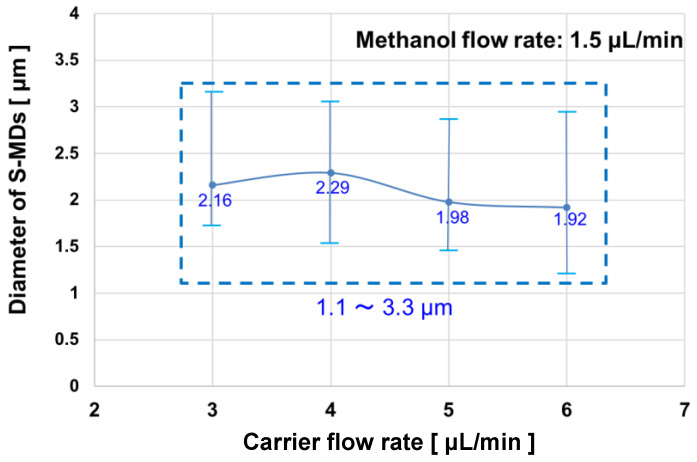 Figure 3
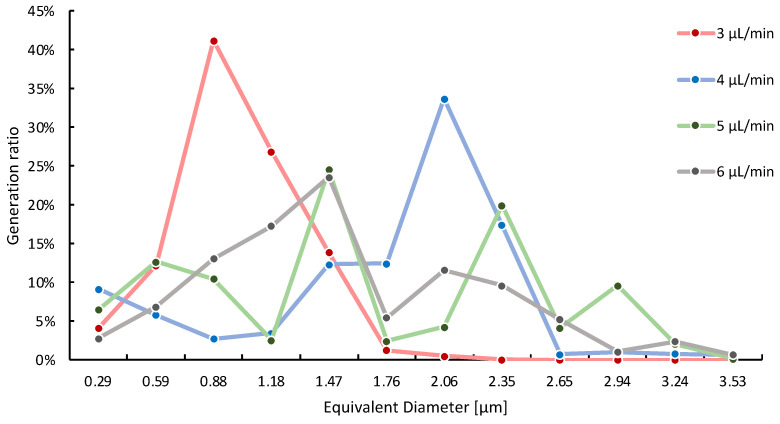 Figure 4
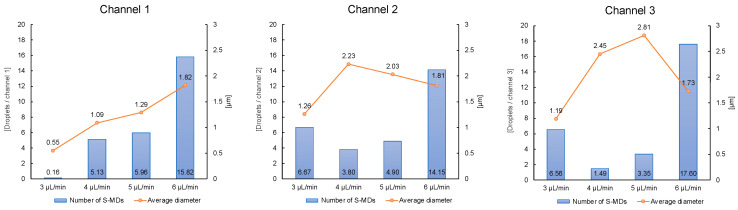 Figure 5
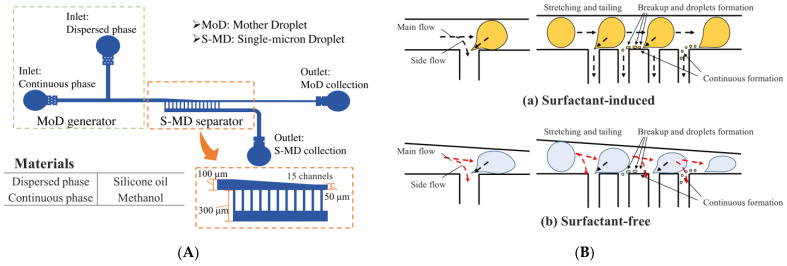 Figure 6
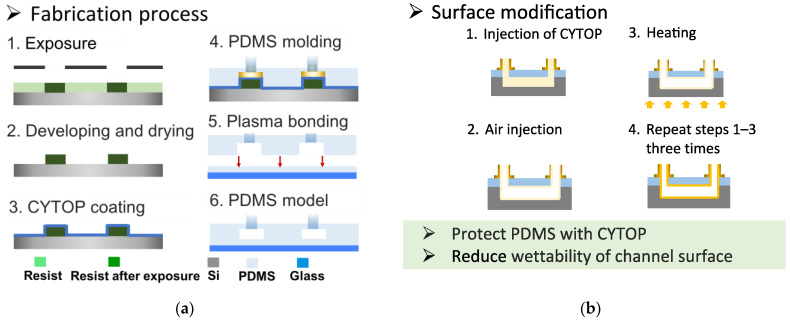 Figure 7
 Figure 8
Peer Reviews
No public reviews on file for this paper yet. If you reviewed it on a platform where reviews are public (OpenReview, ICLR, NeurIPS, ICML), you can paste yours below so the community can read it here.
Videos
No videos yet. Explain this paper in a talk, walkthrough, or lecture? Add one.
Taxonomy
TopicsInnovative Microfluidic and Catalytic Techniques Innovation · Microfluidic and Capillary Electrophoresis Applications · Electrowetting and Microfluidic Technologies