Implications of the Propagation Method for the Phytochemistry of Nepeta cataria L. throughout a Growing Season
Erik Nunes Gomes, Bo Yuan, Harna K. Patel, Anthony Lockhart, Christian A. Wyenandt, Qingli Wu, James E. Simon

TL;DR
This study examines how different propagation methods affect the chemical composition of catnip plants over a growing season in two locations.
Contribution
The study reveals how propagation methods and environmental conditions influence nepetalactone and phenolic compound production in catnip.
Findings
Seed-propagated catnip plants produced higher nepetalactone levels earlier than cuttings.
Pittstown plants had significantly higher nepetalactone productivity per plant than Upper Deerfield plants.
Phenolic acids increased at the end of the season in both locations after low precipitation.
Abstract
Catnip (Nepeta cataria L.) plants produce a wide array of specialized metabolites with multiple applications for human health. The productivity of such metabolites, including nepetalactones, and natural insect repellents is influenced by the conditions under which the plants are cultivated. In this study, we assessed how field-grown catnip plants, transplanted after being propagated via either single-node stem cuttings or seeds, varied regarding their phytochemical composition throughout a growing season in two distinct environmental conditions (Pittstown and Upper Deerfield) in the state of New Jersey, United States. Iridoid terpenes were quantified in plant tissues via ultra-high-performance liquid chromatography with triple quadrupole mass spectrometry (UHPLC-QqQ-MS), and phenolic compounds (phenolic acids and flavonoids) were analyzed via UHPLC with diode-array detection…
Genes, proteins, chemicals, diseases, species, mutations and cell lines named across the full text — each resolved to its canonical identifier and authoritative record.
Click any figure to enlarge with its caption.
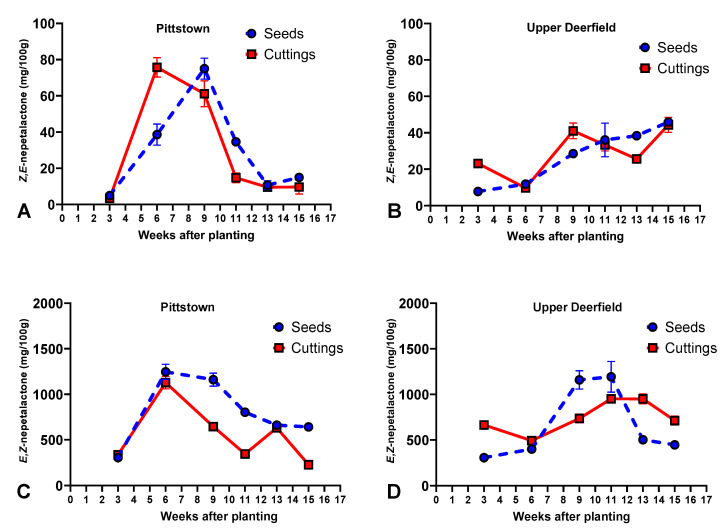 Figure 1
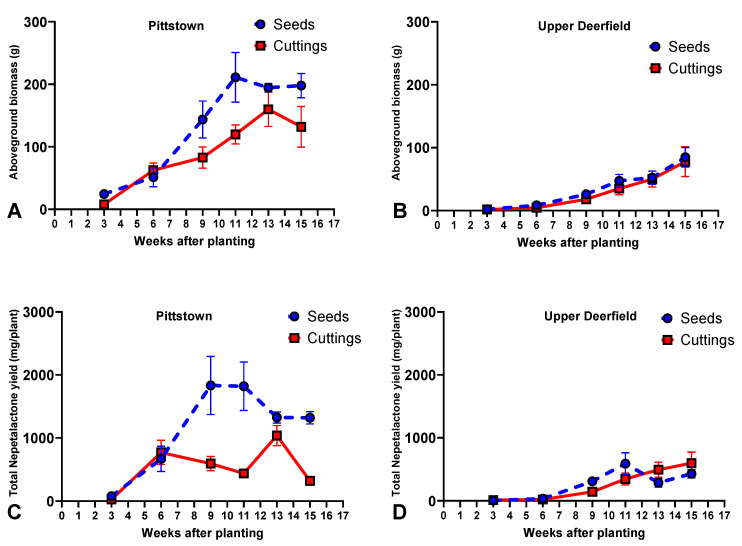 Figure 2
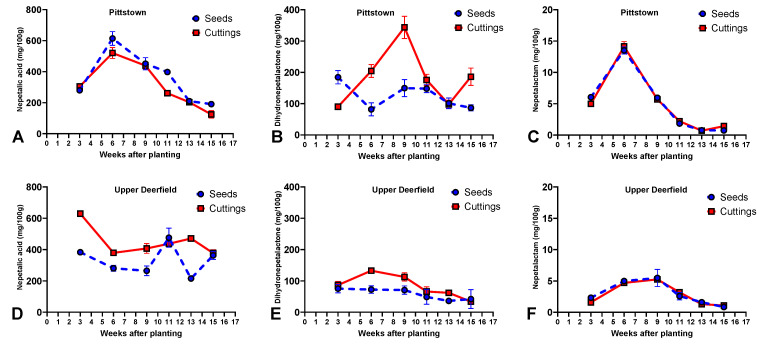 Figure 3
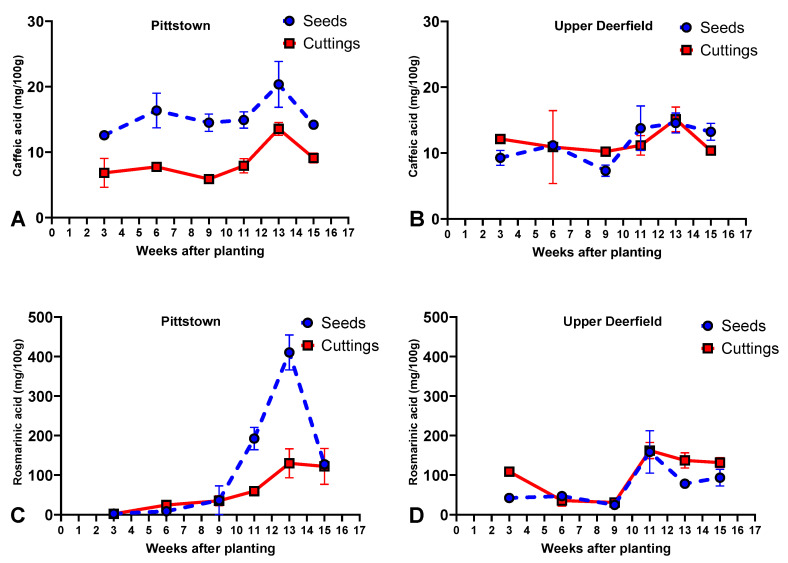 Figure 4
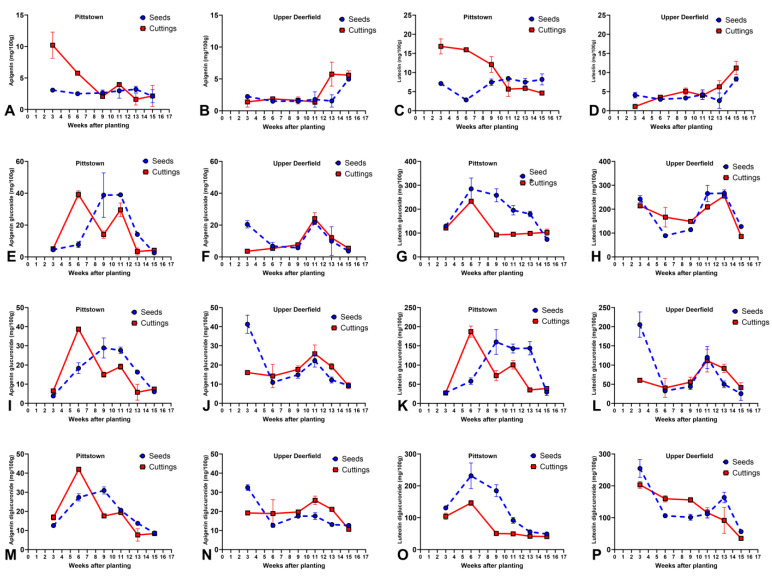 Figure 5
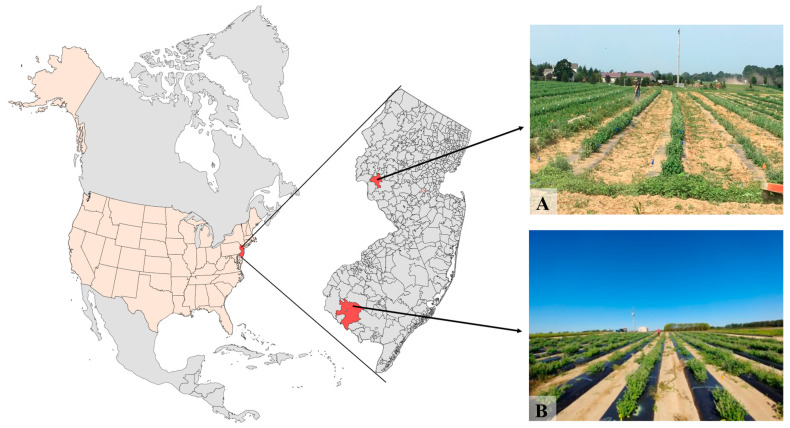 Figure 6
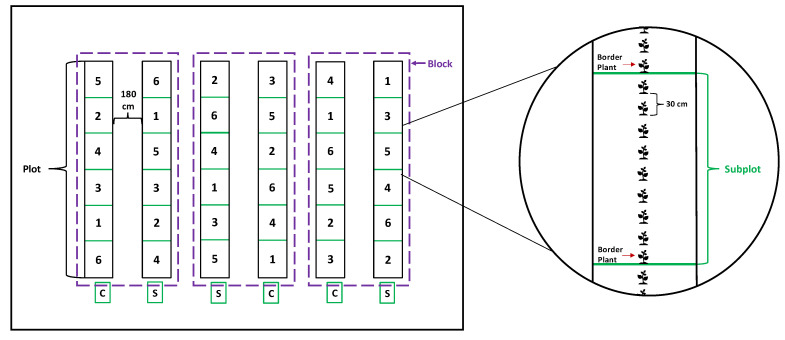 Figure 7
Peer Reviews
No public reviews on file for this paper yet. If you reviewed it on a platform where reviews are public (OpenReview, ICLR, NeurIPS, ICML), you can paste yours below so the community can read it here.
Videos
No videos yet. Explain this paper in a talk, walkthrough, or lecture? Add one.
Taxonomy
TopicsPlant biochemistry and biosynthesis · Essential Oils and Antimicrobial Activity · Insect Pest Control Strategies