Protection of Si Nanowires against Aβ Toxicity by the Inhibition of Aβ Aggregation
Xuechun Zhao, Chenye Mou, Jiayi Xu, Wei Cui, Yijing Shi, Yangzhe Wang, Tian Luo, Wei Guo, Jichun Ye, Wanghua Chen

TL;DR
This study shows that silicon nanowires can protect nerve cells from the toxic effects of amyloid beta, a key factor in Alzheimer's disease, by preventing its harmful aggregation.
Contribution
The novel contribution is demonstrating that Si nanowires inhibit Aβ aggregation and reduce neurotoxicity in a cellular model of Alzheimer's disease.
Findings
Si nanowires significantly reduced cell death in PC12 cells caused by Aβ1–42 oligomers.
Si nanowires inhibited Aβ aggregation by interfering with β-sheet structure formation.
Pre-incubation with Si nanowires provided neuroprotection against Aβ-induced toxicity.
Abstract
Alzheimer’s disease (AD) is a progressive neurodegenerative disease characterized by the accumulation of amyloid beta (Aβ) plaques in the brain. Aβ1–42 is the main component of Aβ plaque, which is toxic to neuronal cells. Si nanowires (Si NWs) have the advantages of small particle size, high specific surface area, and good biocompatibility, and have potential application prospects in suppressing Aβ aggregation. In this study, we employed the vapor–liquid–solid (VLS) growth mechanism to grow Si NWs using Au nanoparticles as catalysts in a plasma-enhanced chemical vapor deposition (PECVD) system. Subsequently, these Si NWs were transferred to a phosphoric acid buffer solution (PBS). We found that Si NWs significantly reduced cell death in PC12 cells (rat adrenal pheochromocytoma cells) induced by Aβ1–42 oligomers via double staining with…
Genes, proteins, chemicals, diseases, species, mutations and cell lines named across the full text — each resolved to its canonical identifier and authoritative record.
Click any figure to enlarge with its caption.
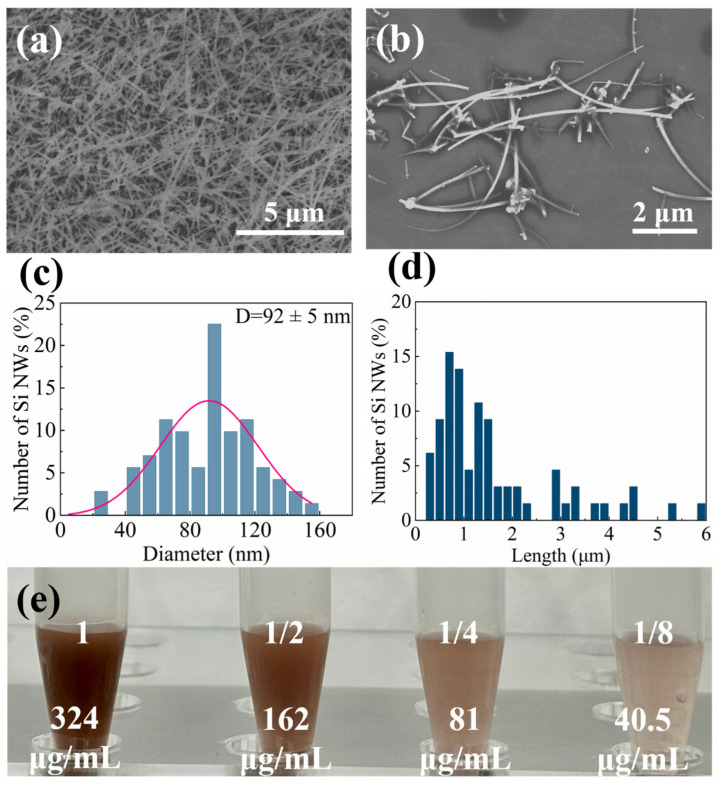 Figure 1
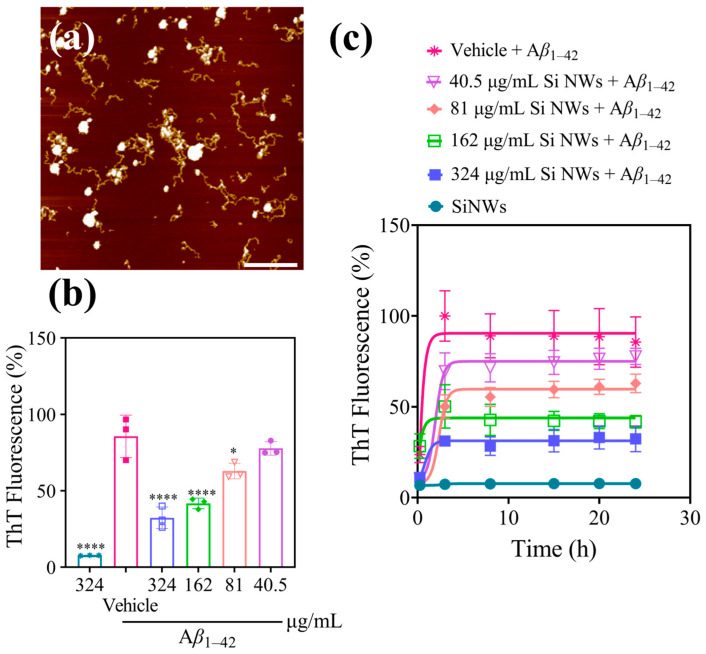 Figure 2
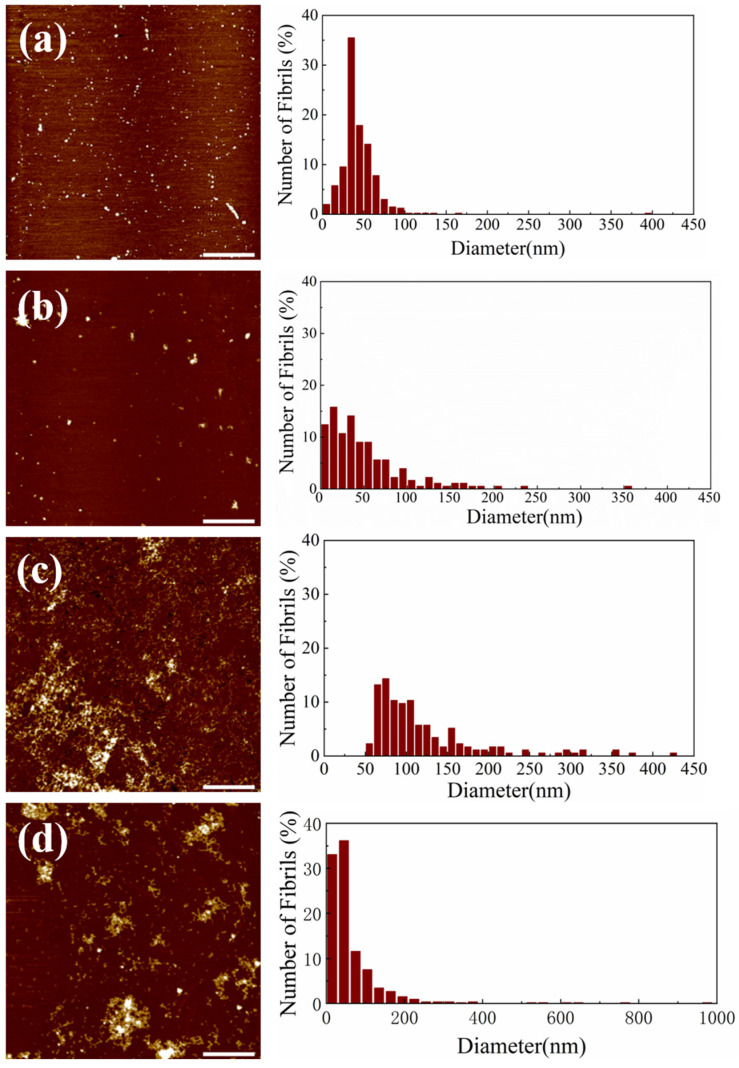 Figure 3
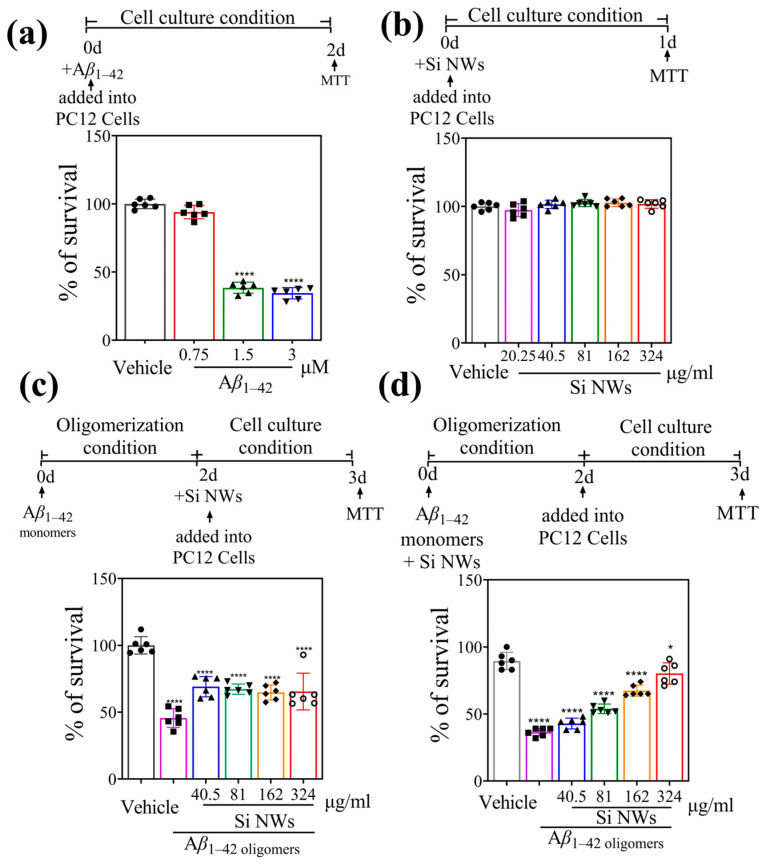 Figure 4
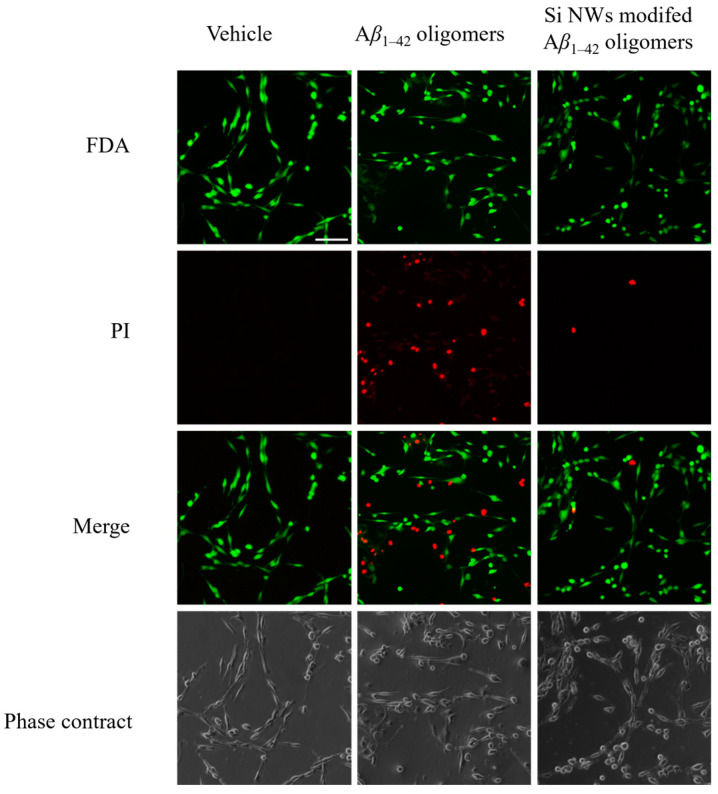 Figure 5
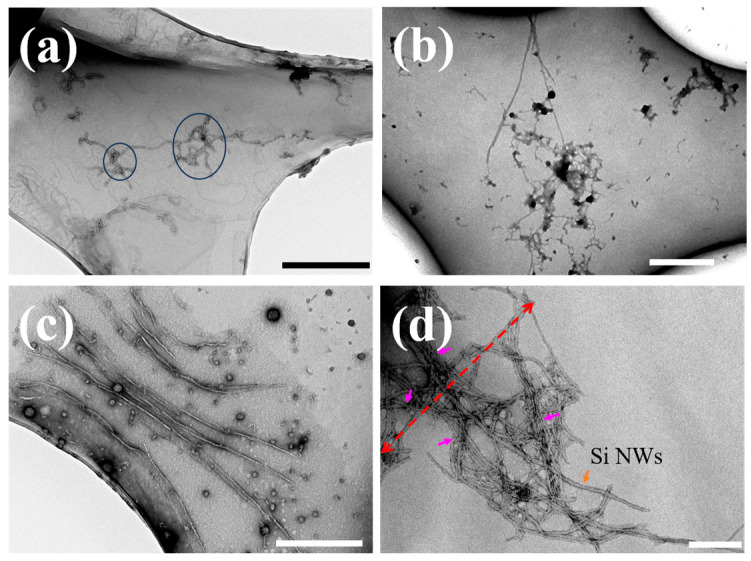 Figure 6
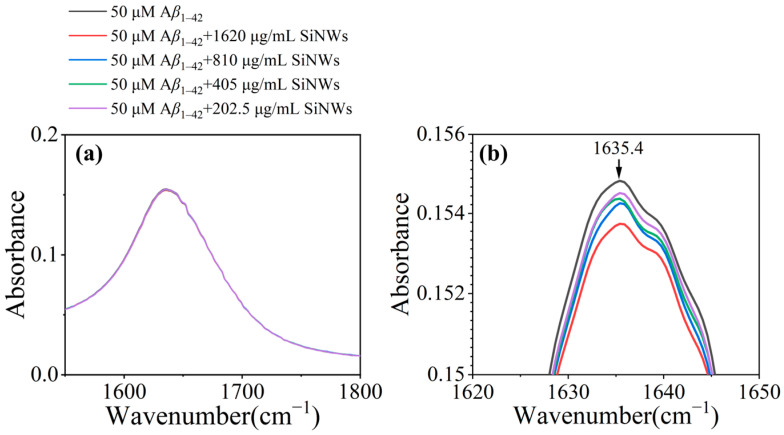 Figure 7
Peer Reviews
No public reviews on file for this paper yet. If you reviewed it on a platform where reviews are public (OpenReview, ICLR, NeurIPS, ICML), you can paste yours below so the community can read it here.
Videos
No videos yet. Explain this paper in a talk, walkthrough, or lecture? Add one.
Taxonomy
TopicsNeuroscience and Neural Engineering · Nanoparticles: synthesis and applications · Advanced biosensing and bioanalysis techniques