Extraction and Isolation of Two Polysaccharides from Chloranthus japonicus Sieb. and Evaluation of Their Anti-Gastric Cancer Activities
Ju Liu, Wenfeng Li, Lu Jin, Yingchao Wang, Xinjun Xu, Enyao Ma, Depo Yang, Zhimin Zhao

TL;DR
This study isolates two new polysaccharides from Chloranthus japonicus and finds they inhibit gastric cancer cell growth, with one showing stronger effects.
Contribution
The discovery and characterization of two novel polysaccharides with anti-gastric cancer activity from Chloranthus japonicus.
Findings
YCJP–1 and YCJP–2 significantly inhibit the proliferation of MGC-803 and AGS gastric cancer cells.
AGS cells are more sensitive to the polysaccharides than MGC-803 cells.
YCJP–2 shows stronger anti-gastric cancer effects than YCJP–1 due to higher glucose content and narrower molecular weight distribution.
Abstract
Two unreported heteropolysaccharides, denoted as YCJP–1 and YCJP–2, were isolated from the herbs of Chloranthus japonicus. YCJP–1 was a heteropolysaccharide composed of glucose, galactose, arabinose, mannose, rhamnose, and a minor proportion of uronic acids, with the molecular weight mainly distributed in the 74,475–228,443 Da range. YCJP–2 was mainly composed of glucose, mannose, and galactose, with the molecular weights ranging from 848 to 5810 Da. To further evaluate the anti-gastric cancer effects of C. japonicus, the inhibitory effects of the crude polysaccharide (YCJP) and the purified polysaccharides (YCJP–1 and YCJP–2) were determined using a CCK-8 assay and colon-forming assay on MGC-803 and AGS gastric cancer cell lines. Our results showed that YCJP, YCJP–1, and YCJP–2 possess prominent inhibitory effects on the proliferation of MGC-803 and AGS cells, and the AGS cell was more…
Genes, proteins, chemicals, diseases, species, mutations and cell lines named across the full text — each resolved to its canonical identifier and authoritative record.
Click any figure to enlarge with its caption.
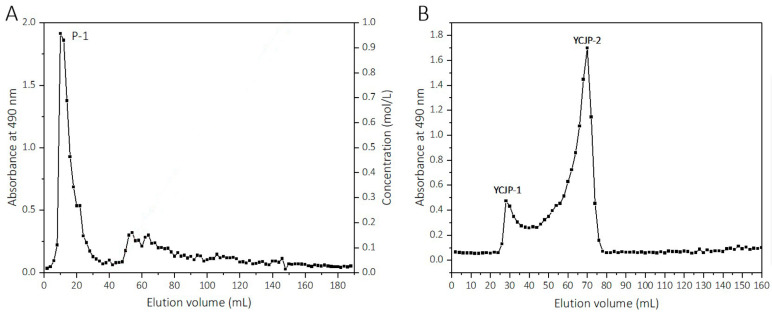 Figure 1
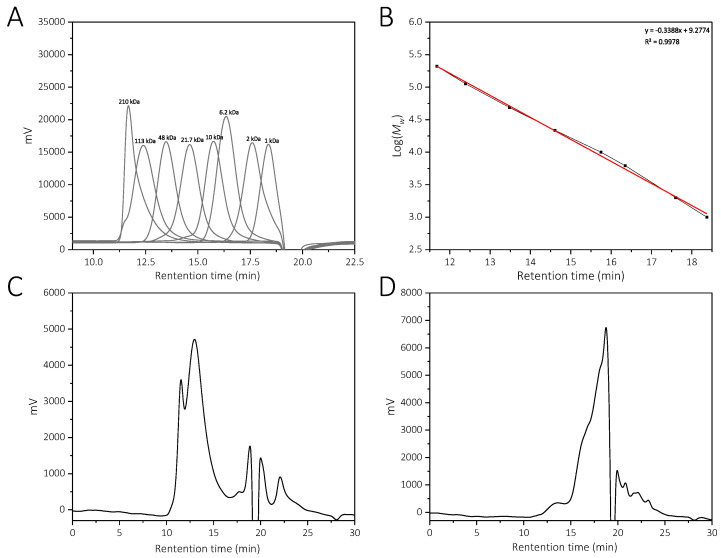 Figure 2
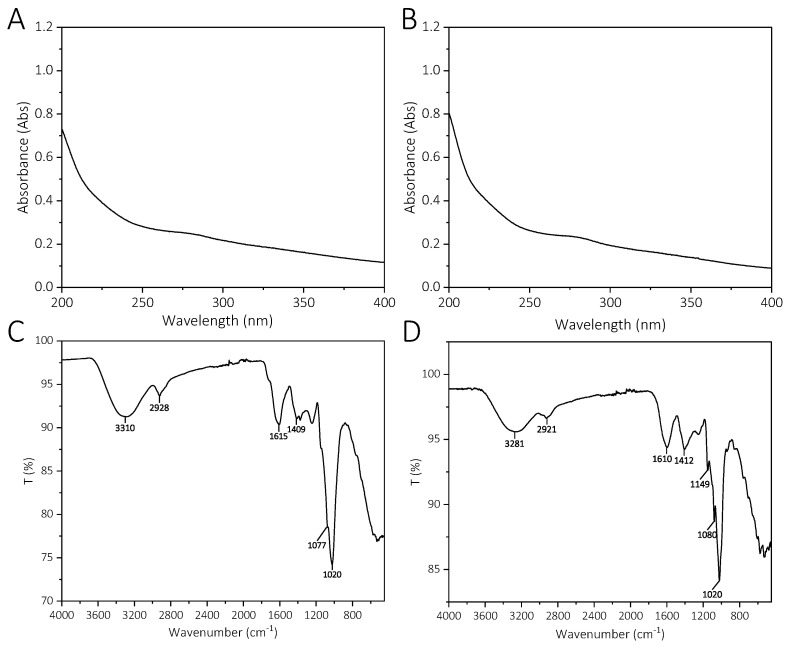 Figure 3
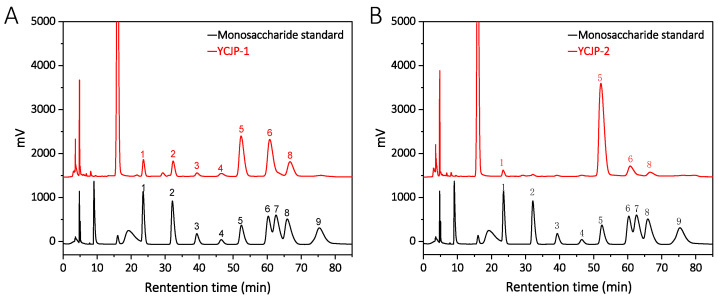 Figure 4
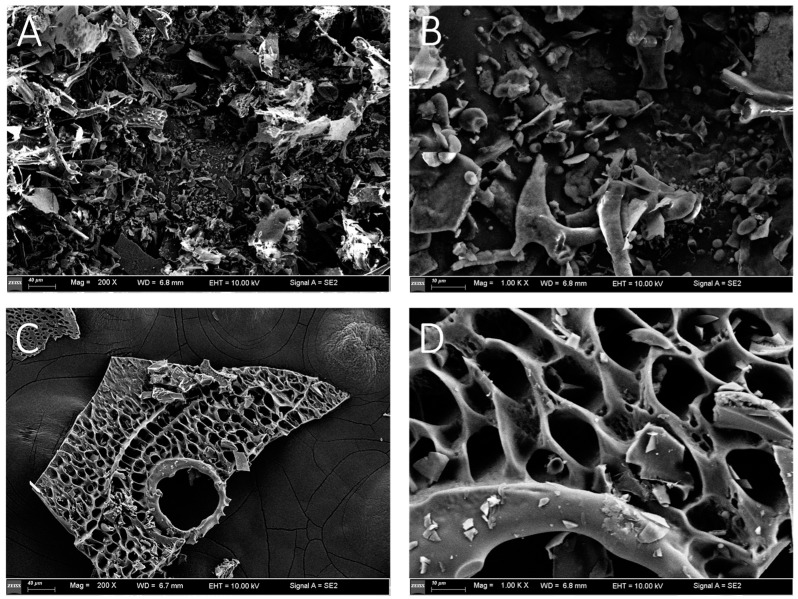 Figure 5
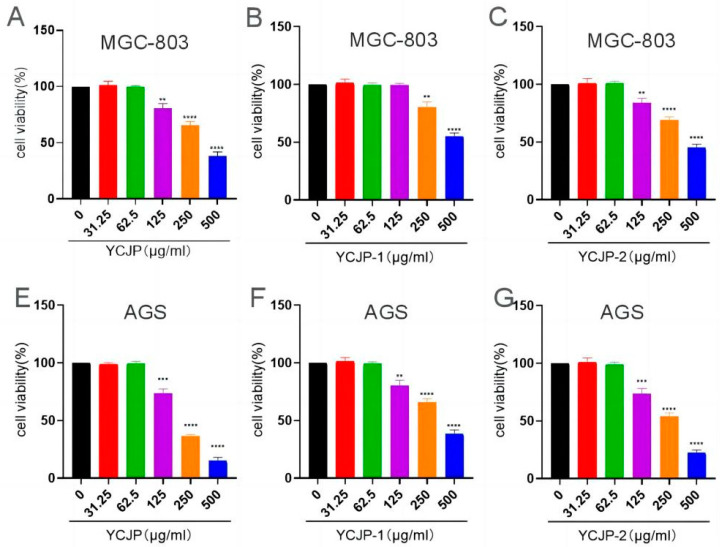 Figure 6
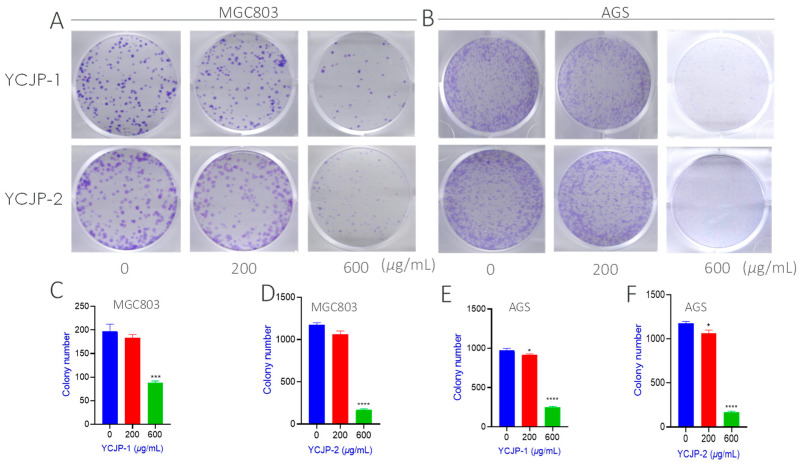 Figure 7
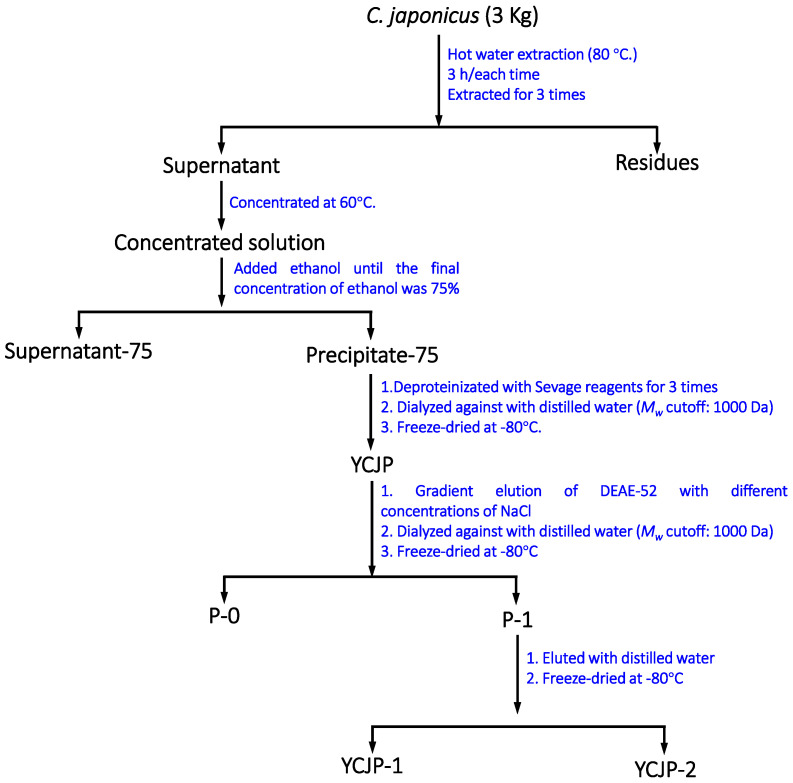 Figure 8
Peer Reviews
No public reviews on file for this paper yet. If you reviewed it on a platform where reviews are public (OpenReview, ICLR, NeurIPS, ICML), you can paste yours below so the community can read it here.
Videos
No videos yet. Explain this paper in a talk, walkthrough, or lecture? Add one.
Taxonomy
TopicsPolysaccharides and Plant Cell Walls · Seaweed-derived Bioactive Compounds · Fungal Biology and Applications