An Electronic Health Record–Integrated Application for Standardizing Care and Monitoring Patients With Autosomal Dominant Polycystic Kidney Disease Enrolled in a Tolvaptan Clinic: Design and Implementation Study
Maroun Chedid, Fouad T Chebib, Erin Dahlen, Theodore Mueller, Theresa Schnell, Melissa Gay, Musab Hommos, Sundararaman Swaminathan, Arvind Garg, Michael Mao, Brigid Amberg, Kirk Balderes, Karen F Johnson, Alyssa Bishop, Jackqueline Kay Vaughn, Marie Hogan, Vicente Torres

TL;DR
A digital tool was developed to safely manage patients with kidney disease taking a specific drug, improving monitoring and workflow efficiency.
Contribution
An EHR-integrated application was designed and implemented to streamline tolvaptan monitoring for ADPKD patients.
Findings
214 patients were enrolled in the tolvaptan program across Mayo Clinic sites.
Only 2.3% of patients discontinued tolvaptan due to liver toxicity.
The EHR applications improved real-time data management and staff workflow.
Abstract
Tolvaptan is the only US Food and Drug Administration–approved drug to slow the progression of autosomal dominant polycystic kidney disease (ADPKD), but it requires strict clinical monitoring due to potential serious adverse events. We aimed to share our experience in developing and implementing an electronic health record (EHR)–based application to monitor patients with ADPKD who were initiated on tolvaptan. The application was developed in collaboration with clinical informatics professionals based on our clinical protocol with frequent laboratory test monitoring to detect early drug-related toxicity. The application streamlined the clinical workflow and enabled our nursing team to take appropriate actions in real time to prevent drug-related serious adverse events. We retrospectively analyzed the characteristics of the enrolled patients. As of September 2022, a total of 214…
Genes, proteins, chemicals, diseases, species, mutations and cell lines named across the full text — each resolved to its canonical identifier and authoritative record.
Click any figure to enlarge with its caption.
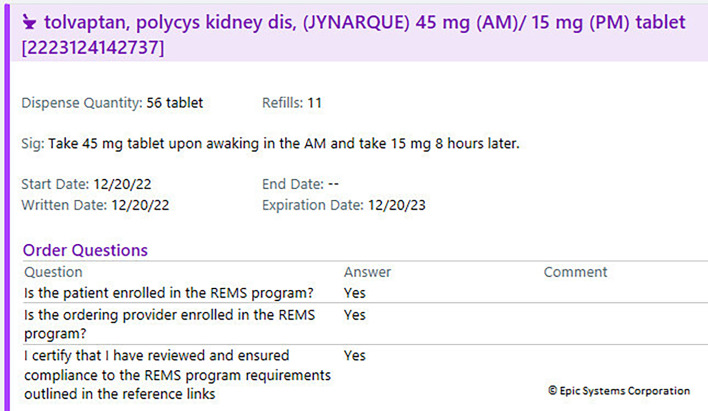 Figure 1
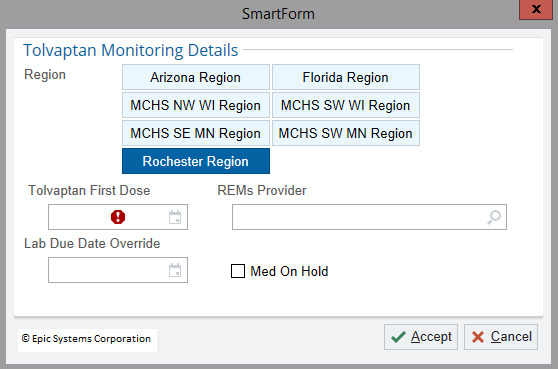 Figure 2
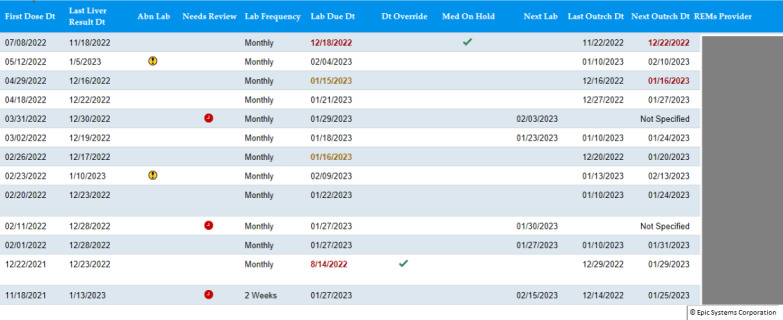 Figure 3
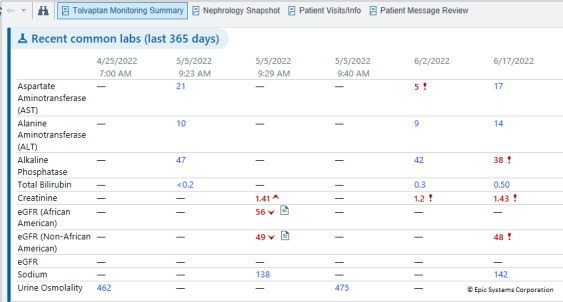 Figure 4
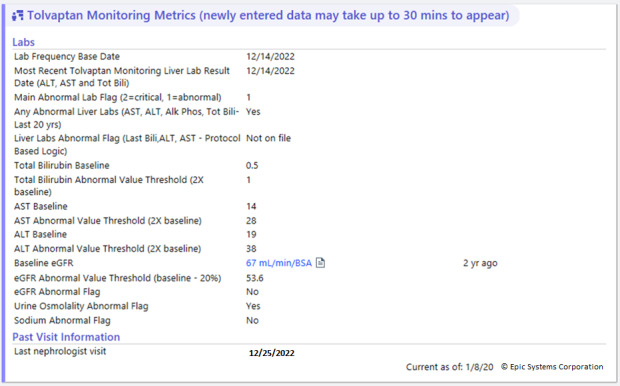 Figure 5
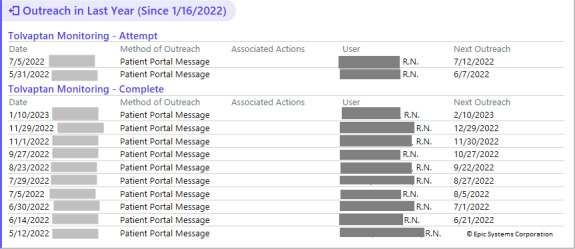 Figure 6
Peer Reviews
No public reviews on file for this paper yet. If you reviewed it on a platform where reviews are public (OpenReview, ICLR, NeurIPS, ICML), you can paste yours below so the community can read it here.
Videos
No videos yet. Explain this paper in a talk, walkthrough, or lecture? Add one.
Taxonomy
TopicsGenetic and Kidney Cyst Diseases · Cystic Fibrosis Research Advances · Genetic Syndromes and Imprinting