3D-Volumetric Shunt Measurement for Detection of High-Risk Esophageal Varices in Liver Cirrhosis
Kathleen Glückert, Alexandra Decker, Jörn Arne Meier, Sebastian Nowak, Feras Sanoubara, Juliana Gödiker, Sara Noemi Reinartz Groba, Markus Kimmann, Julian A. Luetkens, Johannes Chang, Alois M. Sprinkart, Michael Praktiknjo

TL;DR
This study shows that measuring the 3D volume of esophageal varices from CT scans can help detect high-risk varices in liver cirrhosis patients.
Contribution
The study introduces 3D volumetric shunt-vessel measurements from CT scans as a novel method for assessing high-risk esophageal varices.
Findings
A CT cutoff value of 2060 mm³ showed 72.1% sensitivity and 65.5% specificity for detecting high-risk varices.
CT measurements correlated significantly with endoscopic variceal grading (r = 0.417, p < 0.001).
3D volumetric CT assessments may offer prognostic value for cirrhosis patients unsuitable for endoscopy.
Abstract
Background and Objectives: Esophageal varices (EV) and variceal hemorrhages are major causes of mortality in liver cirrhosis patients. Detecting EVs early is crucial for effective management. Computed tomography (CT) scans, commonly performed for various liver-related indications, provide an opportunity for non-invasive EV assessment. However, previous CT studies focused on variceal diameter, neglecting the three-dimensional (3D) nature of varices and shunt vessels. This study aims to evaluate the potential of 3D volumetric shunt-vessel measurements from routine CT scans for detecting high-risk esophageal varices in portal hypertension. Methods: 3D volumetric measurements of esophageal varices were conducted using routine CT scans and compared to endoscopic variceal grading. Receiver operating characteristic (ROC) analyses were performed to determine the optimal cutoff value for…
Genes, proteins, chemicals, diseases, species, mutations and cell lines named across the full text — each resolved to its canonical identifier and authoritative record.
Click any figure to enlarge with its caption.
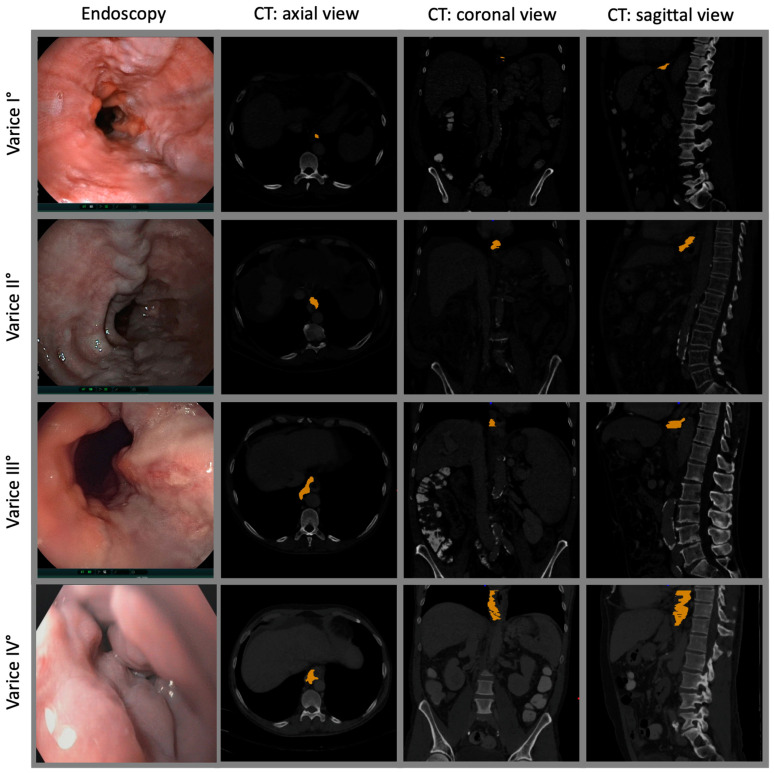 Figure 1
Peer Reviews
No public reviews on file for this paper yet. If you reviewed it on a platform where reviews are public (OpenReview, ICLR, NeurIPS, ICML), you can paste yours below so the community can read it here.
Videos
No videos yet. Explain this paper in a talk, walkthrough, or lecture? Add one.
Taxonomy
TopicsLiver Disease and Transplantation · Liver Disease Diagnosis and Treatment · Organ Transplantation Techniques and Outcomes