Optimizing Oxygen Delivery by Low-Flow Nasal Cannula to Small Infants: A Bench Study
Aris Bertzouanis, Xenophon Sinopidis, Polyxeni Pelekouda, Ageliki Karatza, Gabriel Dimitriou, Sotirios Fouzas

TL;DR
This study improves understanding of how oxygen is delivered to small infants using nasal cannulas, showing that current formulas are inaccurate and proposing new charts for better optimization.
Contribution
The study introduces novel predictive FiO2 charts based on body weight and respiratory rate, which are easier to measure in clinical settings.
Findings
Minute ventilation is the most significant predictor of effective FiO2 in infants using LFNC.
Benaron and Benitz’s formula underestimates FiO2 at low minute ventilation, while Finer’s formula overestimates it.
New predictive FiO2 charts were developed using cannula flow, infant body weight, and respiratory rate.
Abstract
Background: In infants treated with a low-flow nasal cannula (LFNC), the oxygen concentration delivered to the lungs (i.e., the effective FiO2) is difficult to estimate. The existing mathematical formulas rely on important assumptions regarding the values of respiratory parameters and, thus, may be inaccurate. We aimed to assess oxygen delivery by LFNC to small infants using realistic simulations on a mechanical breathing model. Methods: A mechanical breathing simulator (infant upper-airway replica, single-space breathing compartment, electric motor, microcontroller) was developed. Breathing simulations (n = 1200) were performed at various tidal volume (VT), inspiratory time (Ti), and respiratory rate (RR) combinations and different cannula flows. Results: Minute ventilation (MV) was the most significant predictor of effective FiO2. FiO2 was higher at lower VT and higher Ti values.…
Genes, proteins, chemicals, diseases, species, mutations and cell lines named across the full text — each resolved to its canonical identifier and authoritative record.
Click any figure to enlarge with its caption.
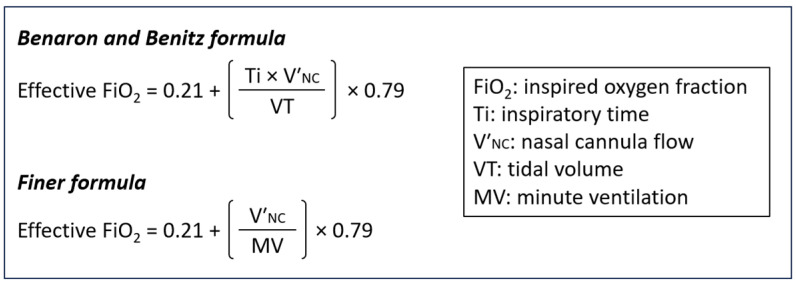 Figure 1
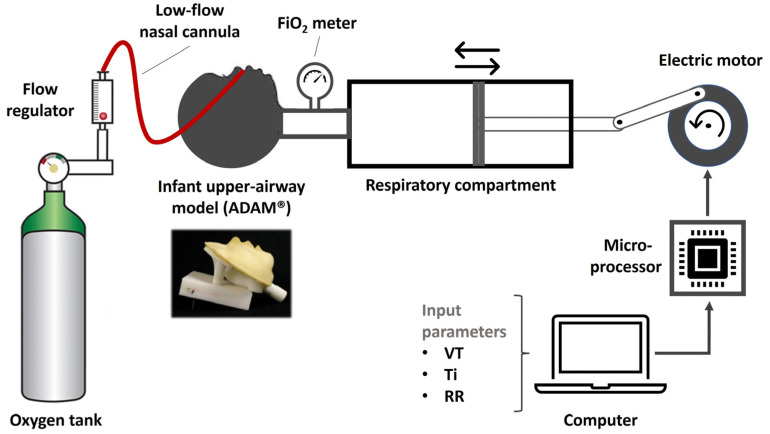 Figure 2
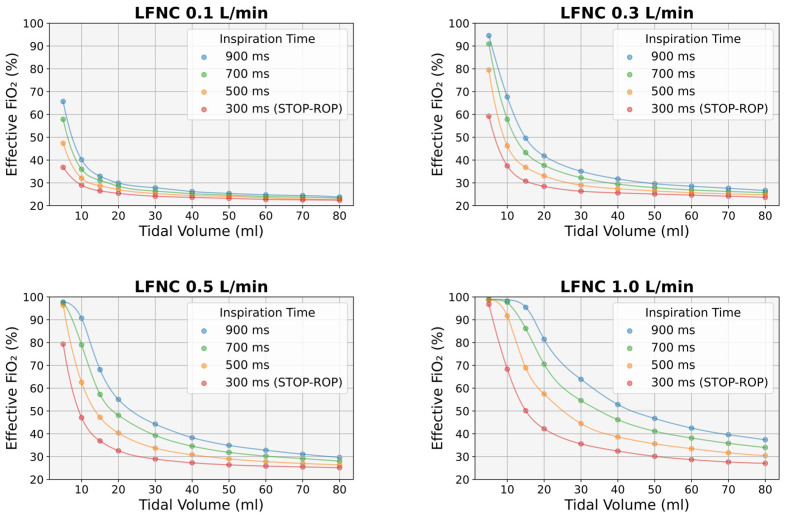 Figure 3
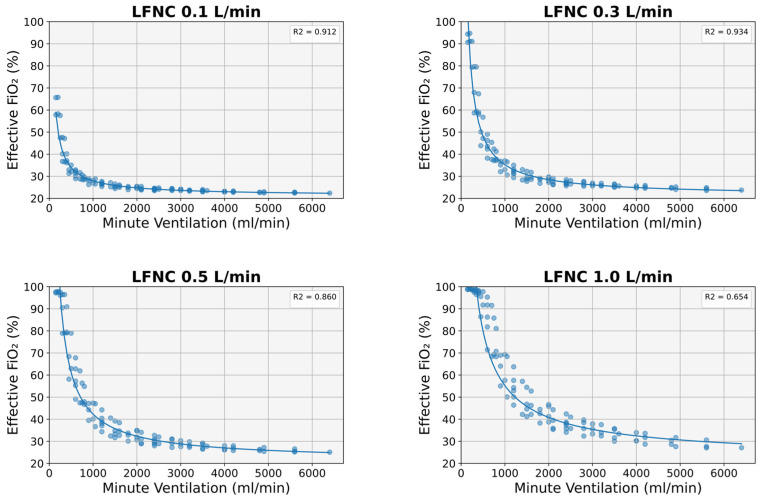 Figure 4
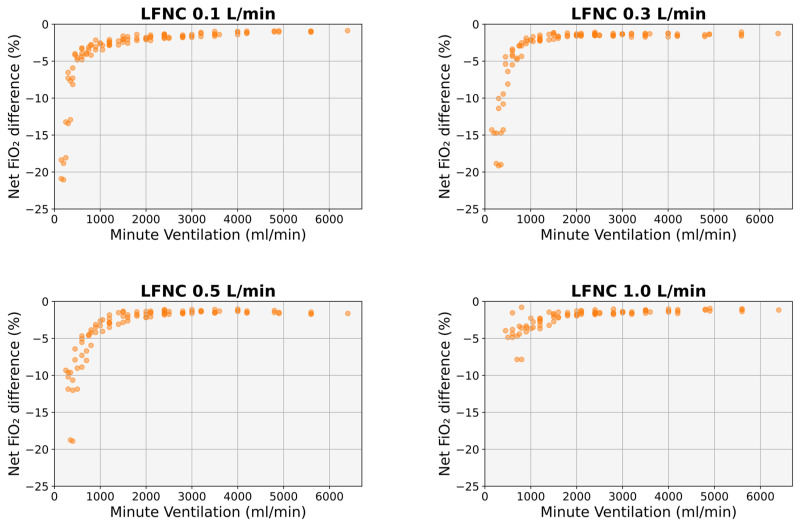 Figure 5
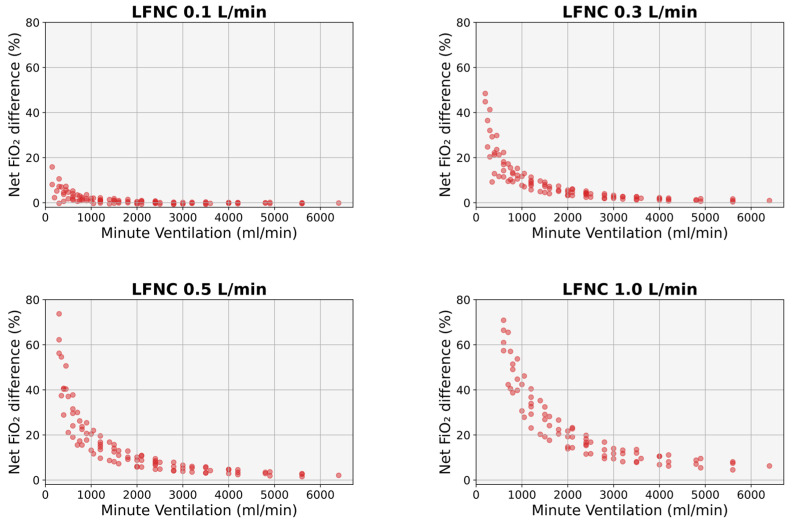 Figure 6
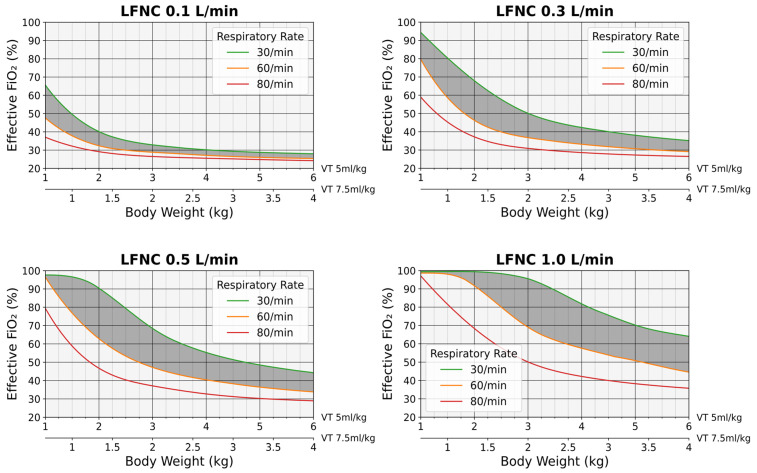 Figure 7
Peer Reviews
No public reviews on file for this paper yet. If you reviewed it on a platform where reviews are public (OpenReview, ICLR, NeurIPS, ICML), you can paste yours below so the community can read it here.
Videos
No videos yet. Explain this paper in a talk, walkthrough, or lecture? Add one.
Taxonomy
TopicsNeonatal Respiratory Health Research · Respiratory Support and Mechanisms · Neuroscience of respiration and sleep