Amino Terminal Acetylation of HOXB13 Regulates the DNA Damage Response in Prostate Cancer
Duy T. Nguyen, Urvashi Mahajan, Duminduni Hewa Angappulige, Aashna Doshi, Nupam P. Mahajan, Kiran Mahajan

TL;DR
This study shows that acetylation of the HOXB13 protein helps prostate cancer cells survive DNA damage, and targeting this process could improve treatment outcomes.
Contribution
The study reveals a novel role of HOXB13 acetylation in DNA damage response and anti-androgen resistance in prostate cancer.
Findings
HOXB13 acetylation at lysine 13 promotes resistance to DNA-damaging therapies in prostate cancer cells.
Ablation of HOXB13 or loss of acetylation enhances sensitivity to Enzalutamide and radiotherapy.
HOXB13 acetylation is required for DNA replication and nuclear puncta formation after DNA damage.
Abstract
A significant number of prostate cancers (PC) recur in patients despite treatment with chemotherapy or radiotherapy. While HOXB13 contributes to resistance to anti-androgen treatment, its role in radio resistance is unknown. Herein, we show that HOXB13 assembles at DNA damage sites and colocalizes with γH2AX at double strand breaks despite Androgen Receptor antagonism. Functionally, ablation of HOXB13 sensitizes PC cells to either radiotherapy or anti-androgen Enzalutamide as well as combination therapies. Resistance to these agents is mediated by acetylation of HOXB13 at lysine 13, which acts as an interaction module for the Switch deficient Sucrose Nonfermenting (SWI/SNF) chromatin remodeling complex. K13-acetylated HOXB13 is required for effective DNA replication following DNA damage and for the formation of nuclear puncta. Our results reveal a hitherto unknown but critical role for…
Genes, proteins, chemicals, diseases, species, mutations and cell lines named across the full text — each resolved to its canonical identifier and authoritative record.
Click any figure to enlarge with its caption.
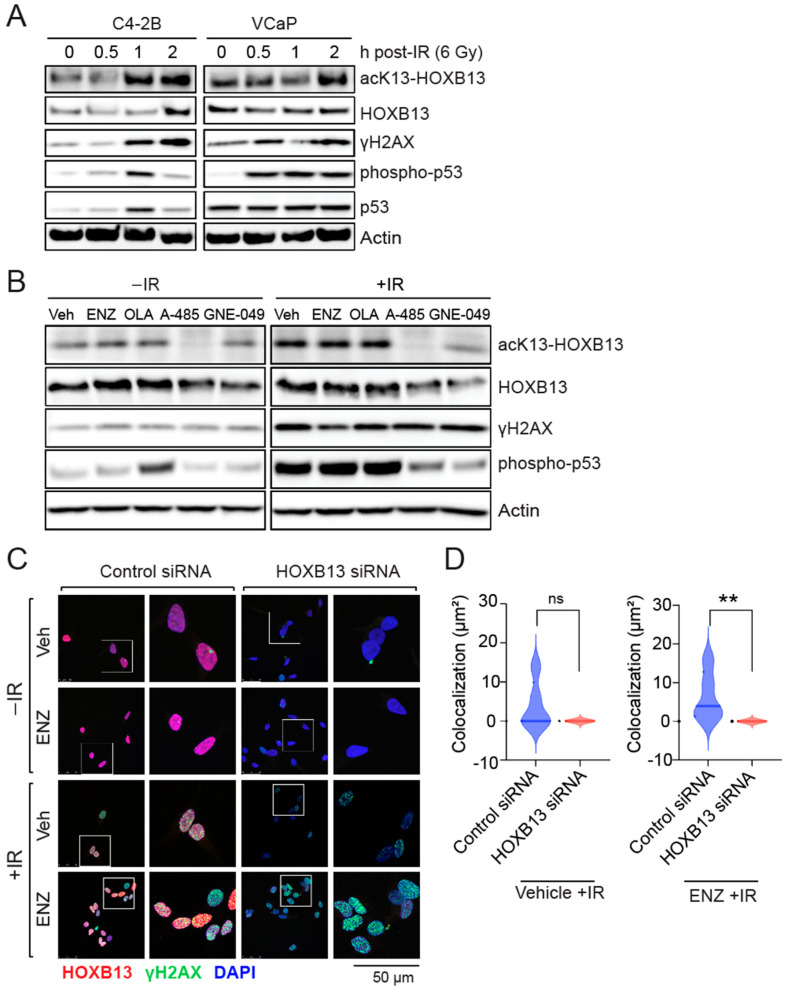 Figure 1
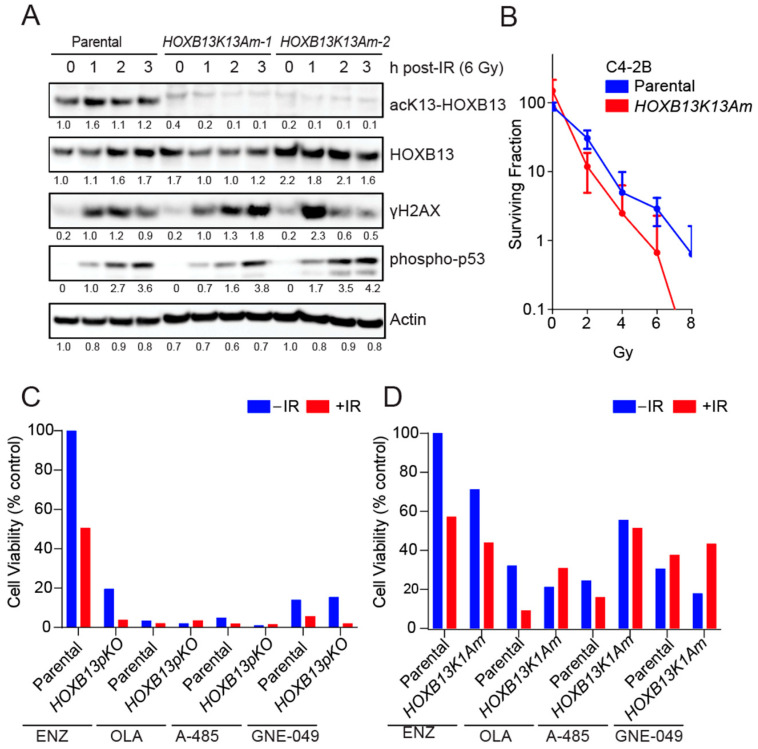 Figure 2
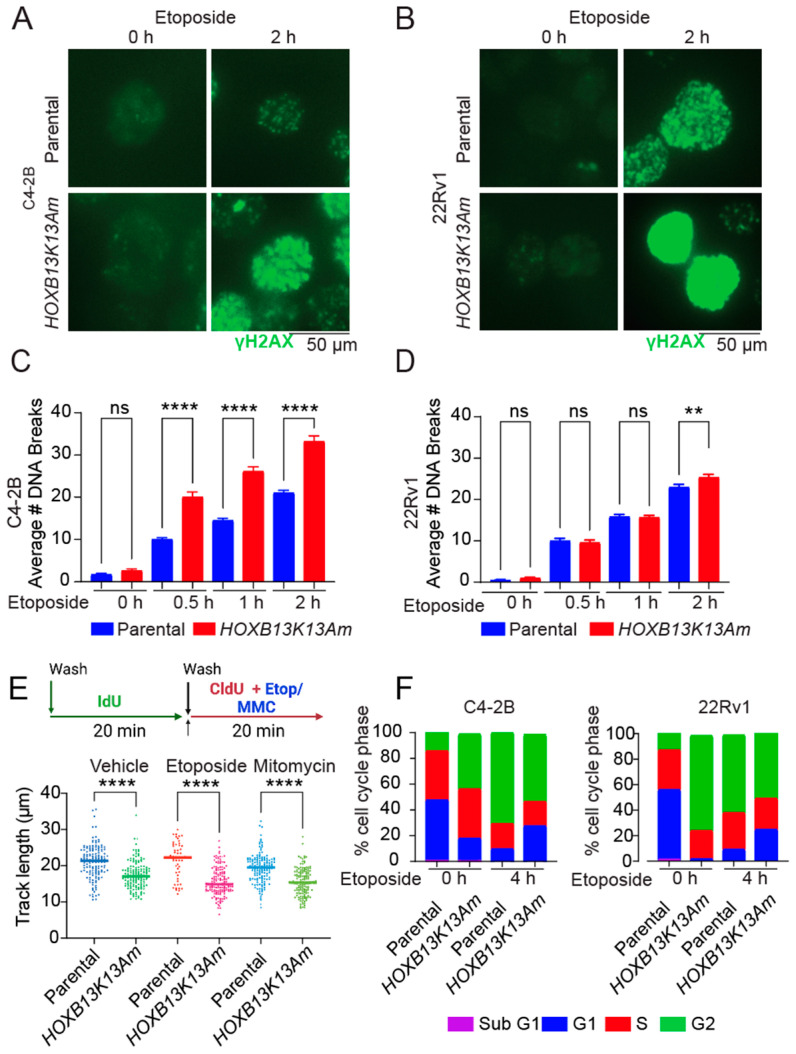 Figure 3
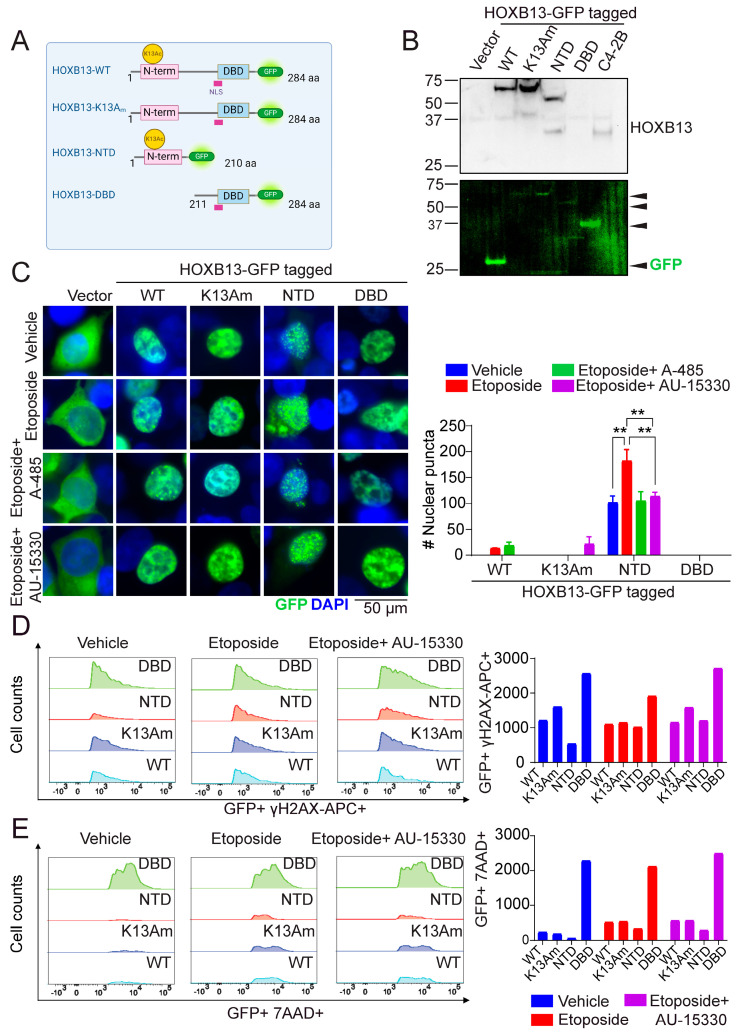 Figure 4
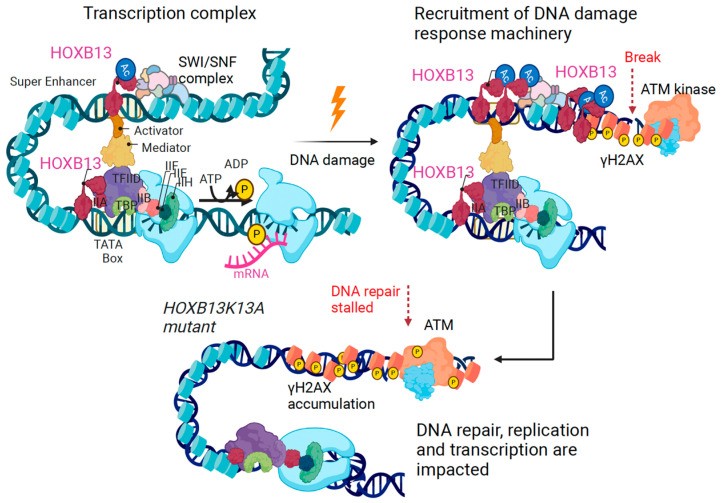 Figure 5
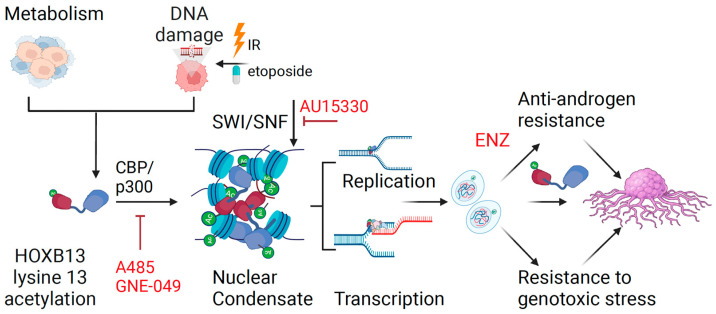 Figure 6
Peer Reviews
No public reviews on file for this paper yet. If you reviewed it on a platform where reviews are public (OpenReview, ICLR, NeurIPS, ICML), you can paste yours below so the community can read it here.
Videos
No videos yet. Explain this paper in a talk, walkthrough, or lecture? Add one.
Taxonomy
TopicsChromatin Remodeling and Cancer · MicroRNA in disease regulation · Circular RNAs in diseases