LINC01021 Attenuates Expression and Affects Alternative Splicing of a Subset of p53-Regulated Genes
Markus Kaller, Ignasi Forné, Axel Imhof, Heiko Hermeking

TL;DR
This study shows that the long noncoding RNA LINC01021 influences how p53 regulates gene expression and splicing, affecting tumor suppression and chemotherapy response in colorectal cancer.
Contribution
The paper reveals that LINC01021 modulates p53-regulated gene expression and splicing, beyond its known role in p53 feedback regulation.
Findings
Loss of LINC01021 increases the number of p53-regulated mRNAs and enhances the induction of genes like NOXA and FAS.
LINC01021 affects alternative splicing of genes such as ARHGAP12, HSF2, and LYN.
RNA binding proteins involved in splicing interact with LINC01021, suggesting a role in RNA processing.
Abstract
Growing evidence indicates that p53-induced long noncoding (lnc) RNAs constitute an elaborate regulatory network that mediates and/or modulates p53 function and, thus, tumor suppression. p53-induced LINC01021 has been suggested to represent a negative feedback regulator of p53 protein stability under non-stress conditions. Furthermore, the loss of LINC01021 in p53-proficient colorectal cancer (CRC) cell lines results in increased sensitivity to DNA-damaging chemotherapeutics. In order to analyze whether LINC01021 affects the transcriptional program of p53 independently from the direct feedback regulation of p53, we studied the effect of CRISPR/Cas9-mediated abrogation of p53-induced LINC01021 transcription on genome-wide RNA expression changes after the activation of ectopic p53 in CRC cells by RNA-Seq analyses. Our results demonstrate diverse regulatory effects of LINC01021 on a subset…
Genes, proteins, chemicals, diseases, species, mutations and cell lines named across the full text — each resolved to its canonical identifier and authoritative record.
Click any figure to enlarge with its caption.
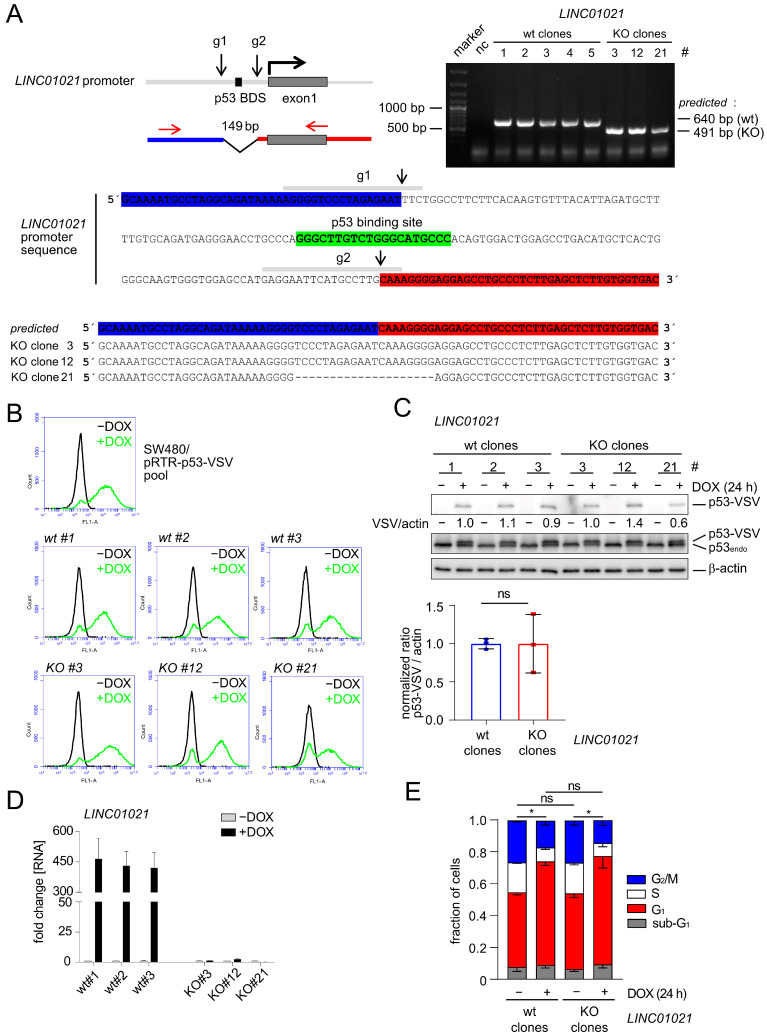 Figure 1
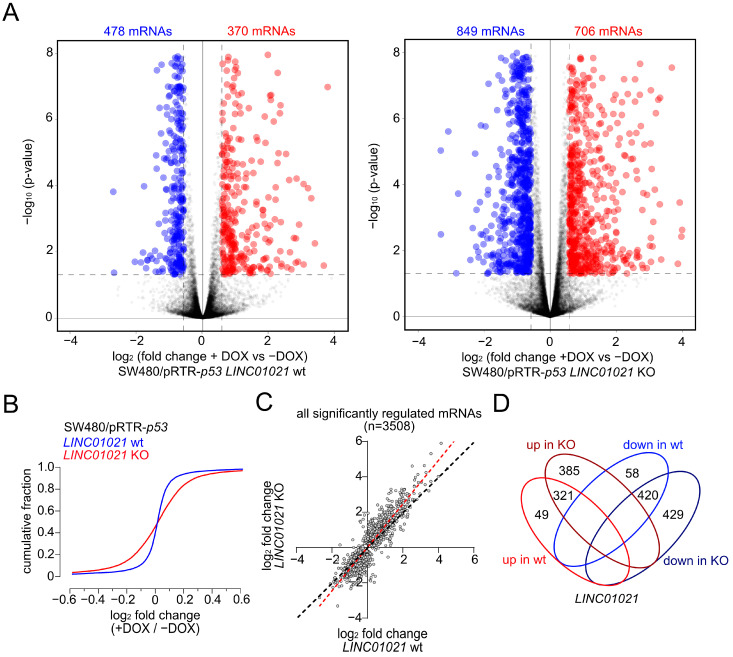 Figure 2
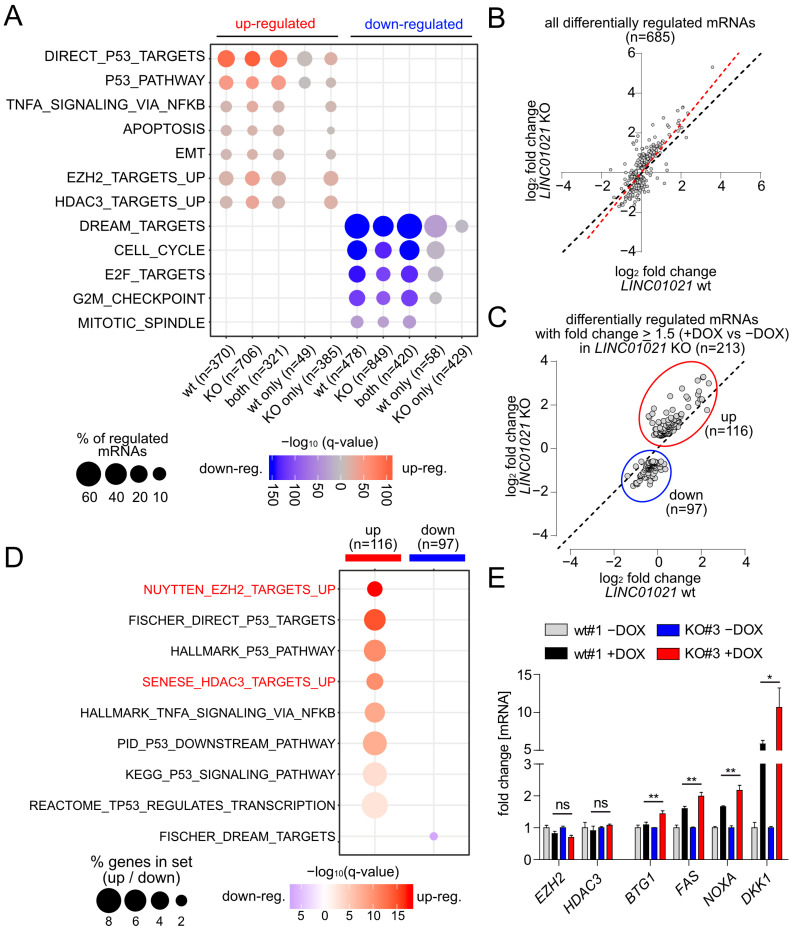 Figure 3
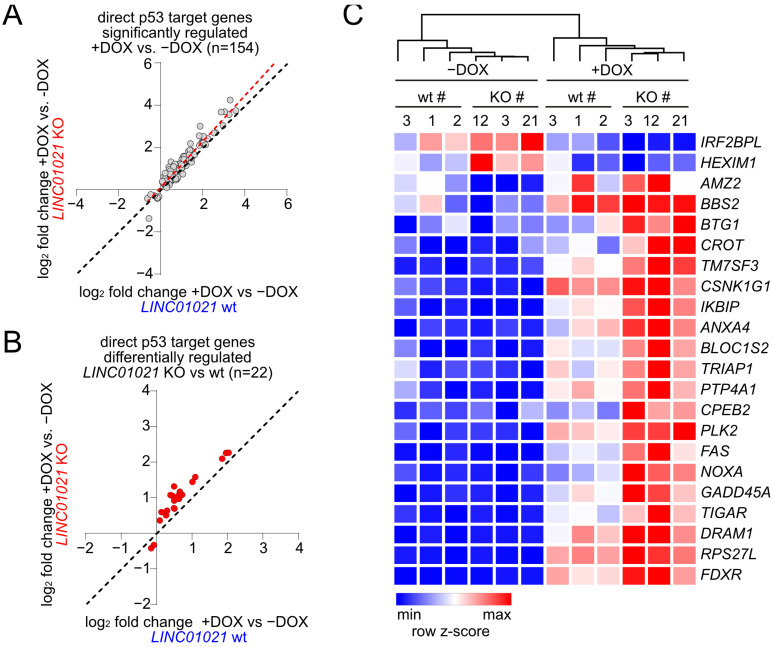 Figure 4
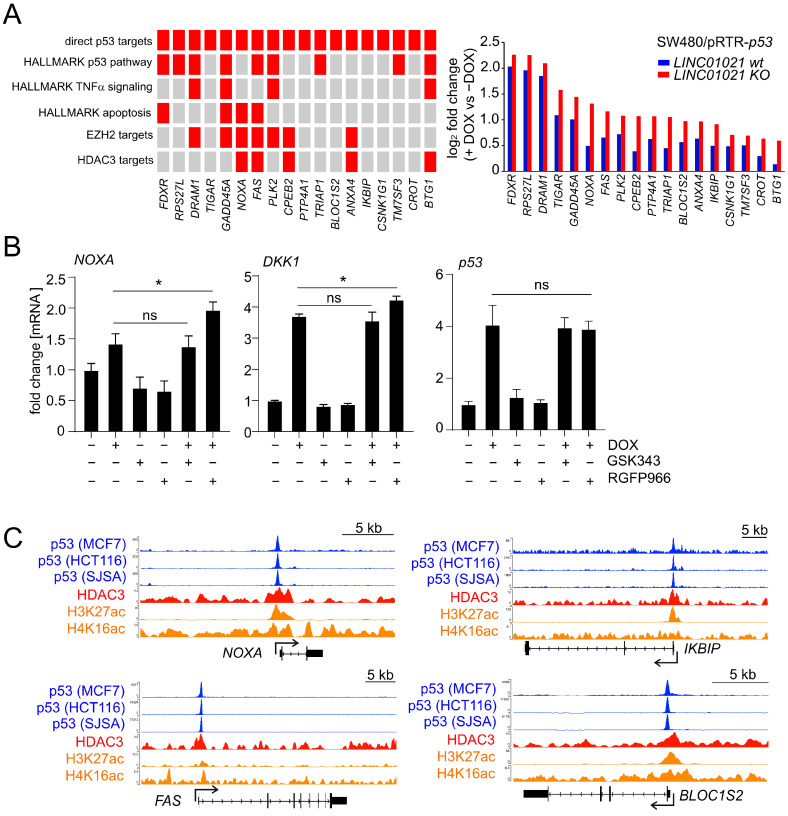 Figure 5
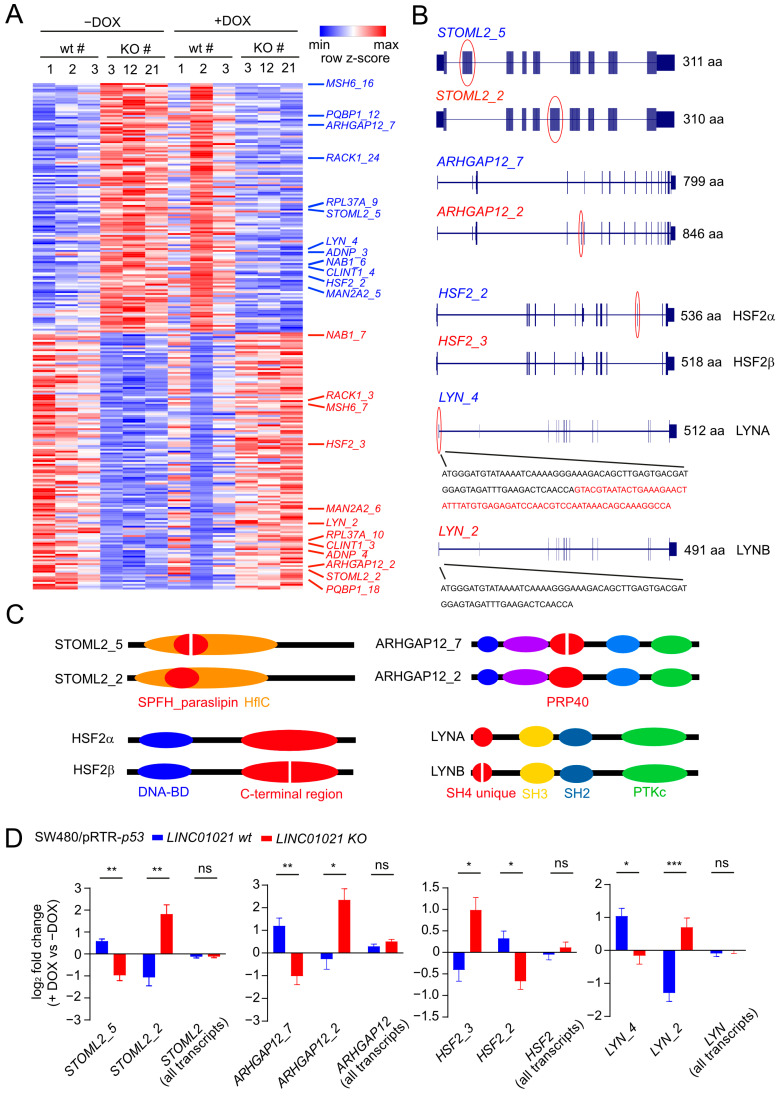 Figure 6
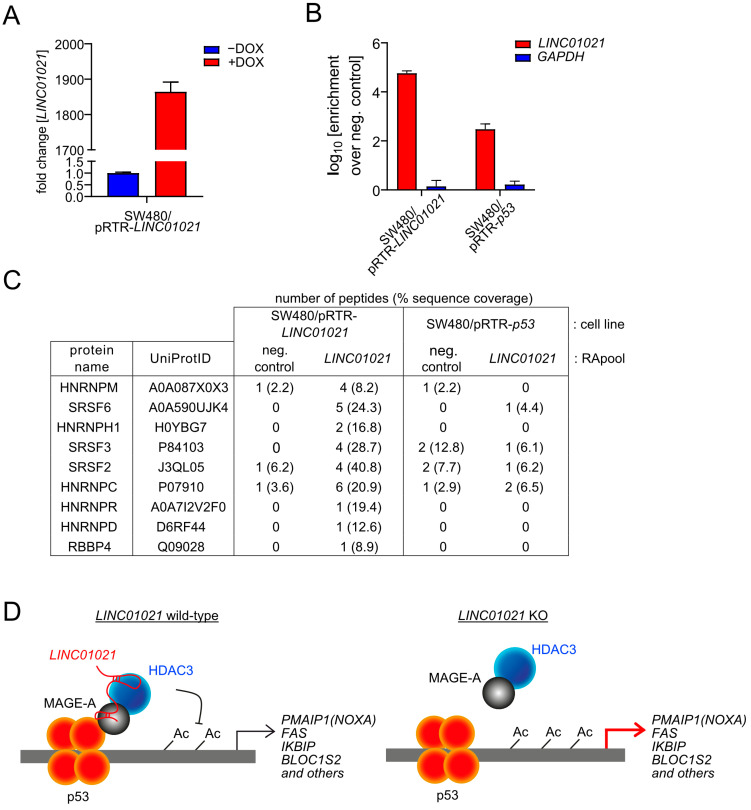 Figure 7
Peer Reviews
No public reviews on file for this paper yet. If you reviewed it on a platform where reviews are public (OpenReview, ICLR, NeurIPS, ICML), you can paste yours below so the community can read it here.
Videos
No videos yet. Explain this paper in a talk, walkthrough, or lecture? Add one.
Taxonomy
TopicsCancer-related molecular mechanisms research · RNA Research and Splicing · RNA modifications and cancer