O-GlcNAcylation levels remain stable regardless of the anaesthesia in healthy rats
Thomas Dupas, Amandine Vergnaud, Thomas Pelé, Angélique Blangy-Letheule, Virginie Aillerie, Martin Bouaud, Angélique Erraud, Anaïs Maillard, Dorian Hassoun, Antoine Persello, Jules Lecomte, Matthieu Rivière, Arnaud Tessier, Aurélia A. Leroux, Bertrand Rozec, Manon Denis

TL;DR
This study shows that O-GlcNAcylation levels in healthy rats remain stable during different types of anesthesia and are not affected by a drug meant to increase them.
Contribution
The study provides new insights into the stability of O-GlcNAcylation and its enzymes during anesthesia in healthy rats.
Findings
O-GlcNAcylation levels in heart, brain, and lungs were not affected by anesthesia.
NButGT did not alter O-GlcNAcylation levels or physiological parameters in anaesthetized rats.
Isoflurane had less impact on blood pressure, heart rate, and glycaemia compared to ketamine-xylazine.
Abstract
Anaesthetics are used daily in human and veterinary medicine as well as in scientific research. Anaesthetics have an impact on cell homeostasis especially through modulation of protein post-translational modifications. O-GlcNAcylation, a ubiquitous post-translational modification, plays a role in many biological processes. The aims of this study were to evaluate whether (1) anaesthesia influences O-GlcNAcylation and (2) its stimulation affects physiological parameters. Male Wistar rats (n = 38) were anaesthetized with ketamine-xylazine or isoflurane. They randomly received either an intravenous injection of Ringer's lactate or NButGT (10mg/kg) in order to increase O-GlcNAcylation levels. One hour after induction of anaesthesia, haemodynamic parameters and plasmatic markers were evaluated. Heart, brain and lungs were harvested and O-GlcNAcylation levels and O-GlcNAc-related enzymes were…
Genes, proteins, chemicals, diseases, species, mutations and cell lines named across the full text — each resolved to its canonical identifier and authoritative record.
Click any figure to enlarge with its caption.
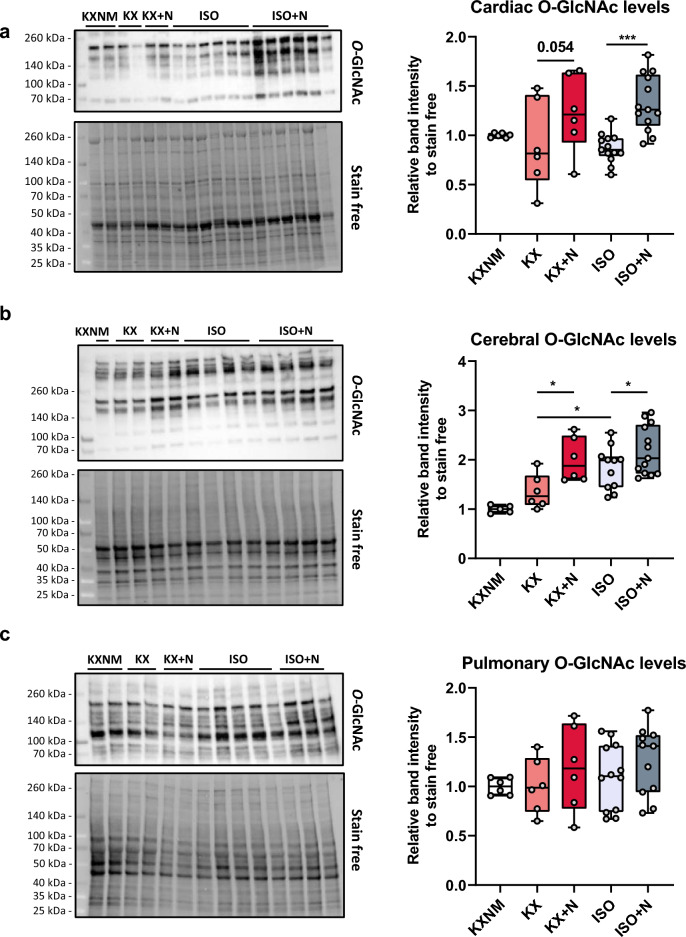 Figure 1
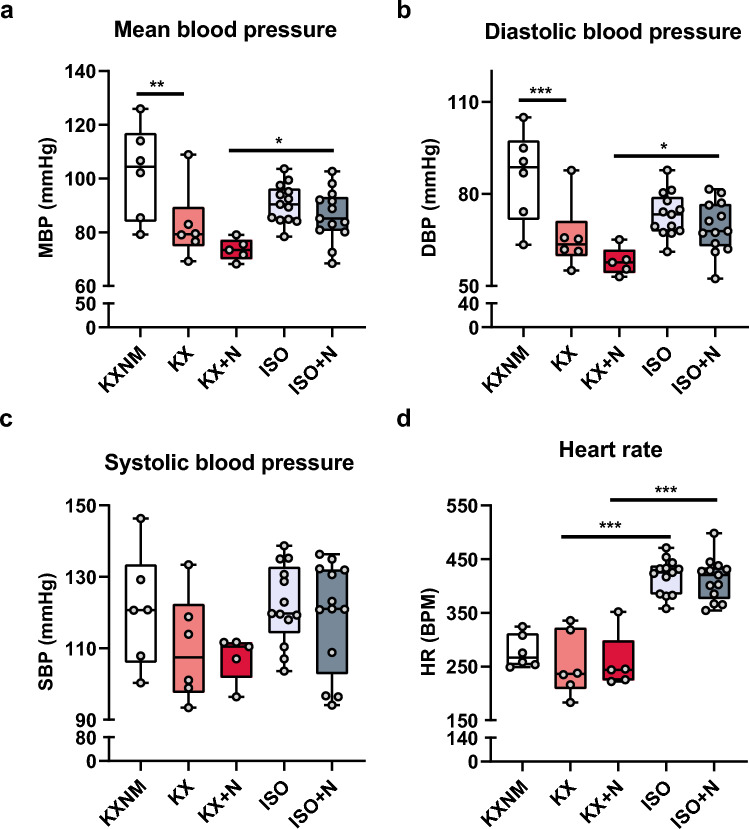 Figure 2
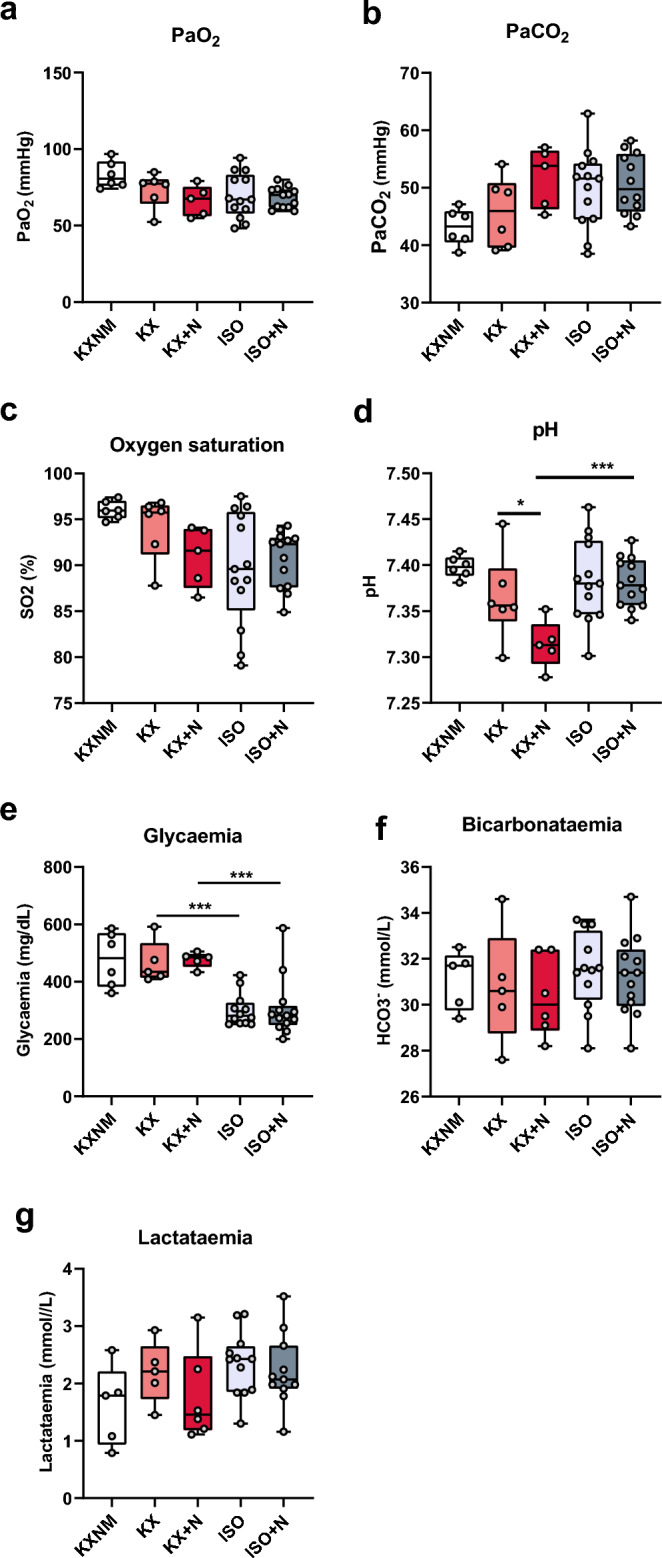 Figure 3
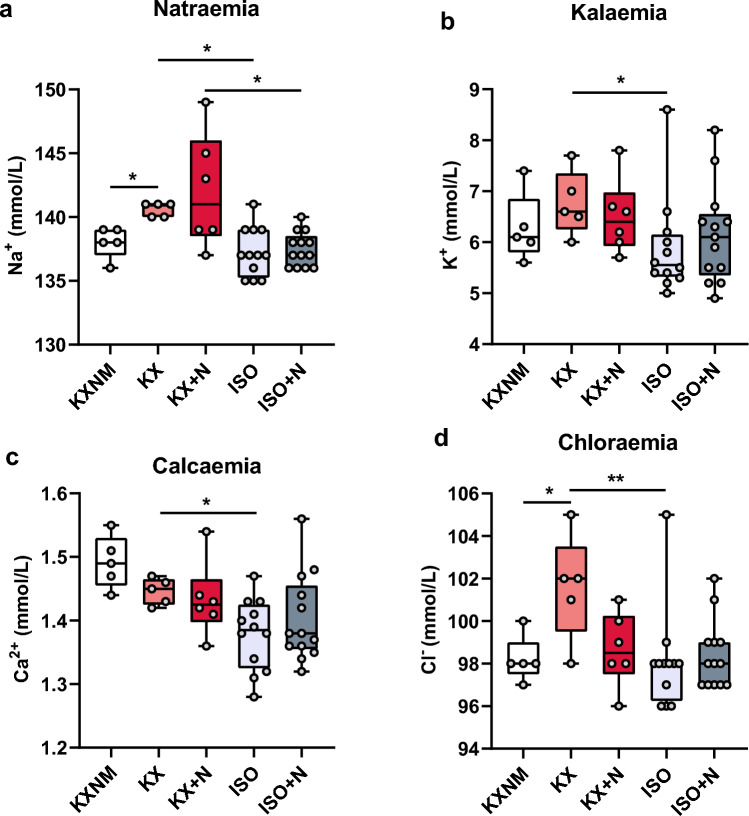 Figure 4
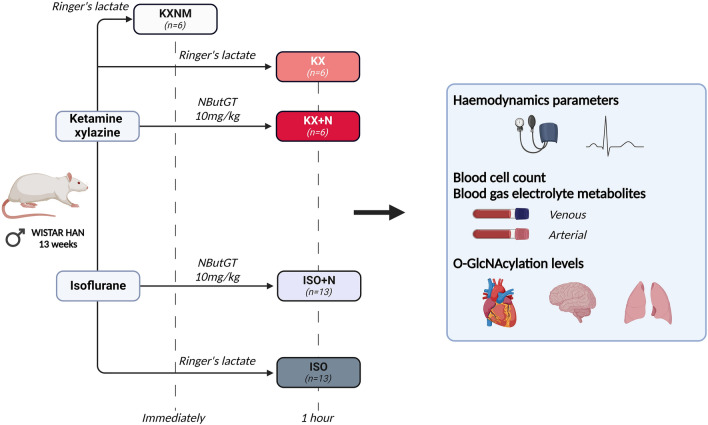 Figure 5
Peer Reviews
No public reviews on file for this paper yet. If you reviewed it on a platform where reviews are public (OpenReview, ICLR, NeurIPS, ICML), you can paste yours below so the community can read it here.
Videos
No videos yet. Explain this paper in a talk, walkthrough, or lecture? Add one.
Taxonomy
TopicsGlycosylation and Glycoproteins Research · Neuropeptides and Animal Physiology · Chemokine receptors and signaling