
TL;DR
This paper explores how gut microbiota imbalances contribute to inflammatory bowel disease and how treatments might work in a mouse model.
Contribution
The study provides new insights into the mechanisms of gut microbiota interactions and treatment effects in ulcerative colitis.
Findings
Microbiota dysbiosis increases host vulnerability to pathogenic gut microbiota.
Reduced gut microbiota diversity is linked to inflammatory bowel disease progression.
Potential treatment mechanisms are suggested for ulcerative colitis.
Abstract
The cover image is based on the article ‘New insights into the interactions between the gut microbiota and the inflammatory response to ulcerative colitis in a mouse model of dextran sodium sulfate and possible mechanisms of action for treatment with PE & AFWE’ (DOI: 10.1002/ame2.12405) reported by Qianhui Fu, Xiaoqin Ma, et al. The association between microbiota dysbiosis and the pathgenesis of IBD is complex and dynamic. When the intestinal ecosystem is in dysbiosis, the reduced abundance and diversity of intestinal gut microbiota make the host more vulnerable to the attack of exogenous and endogenous pathogenic gut microbiota.
Genes, proteins, chemicals, diseases, species, mutations and cell lines named across the full text — each resolved to its canonical identifier and authoritative record.
Click any figure to enlarge with its caption.
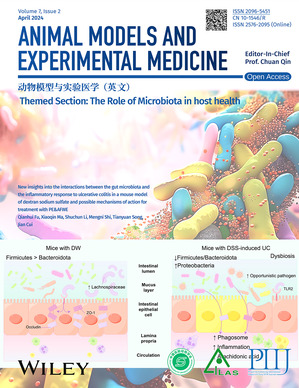 Figure 1
Peer Reviews
No public reviews on file for this paper yet. If you reviewed it on a platform where reviews are public (OpenReview, ICLR, NeurIPS, ICML), you can paste yours below so the community can read it here.
Videos
No videos yet. Explain this paper in a talk, walkthrough, or lecture? Add one.
Taxonomy
TopicsGut microbiota and health · Inflammatory Bowel Disease · Clostridium difficile and Clostridium perfringens research