Applications of three-dimensional printing in percutaneous closure of aortic-to-right ventricle fistula after transcatheter aortic valve replacement: a case report
Julio Echarte-Morales, Irene Toribio-García, Alfredo Redondo Diéguez, Armando Pérez de Prado, Felipe Fernández-Vázquez

TL;DR
3D printing helped guide a minimally invasive procedure to close a heart defect after a valve replacement in a high-risk patient.
Contribution
Demonstrates the use of 3D printing for pre-procedural planning in percutaneous closure of a rare TAVR-related complication.
Findings
3D printing enhanced understanding of complex anatomy for ARV fistula closure planning.
Successful percutaneous closure was achieved using an Amplatzer atrial septal occluder.
The case highlights the potential of 3D printing in enabling patient-specific treatment strategies.
Abstract
Percutaneous closure of aortic-to-right ventricle (ARV) fistula has emerged as an alternative to surgical management in selected cases. The use of three-dimensional (3D) printing in interventional planning for structural heart disease provides a concrete understanding, and it is useful in diagnostic assessment and to guide treatment approaches and to simulate procedures. We report a case of a 70-year-old male presenting in cardiogenic shock due to severe aortic stenosis and reduced left ventricular ejection fraction. The patient had several comorbidities and was deemed not eligible for cardiac surgery. After transcatheter aortic valve replacement (TAVR), an ARV fistula was discovered on the TTE. Due to complex anatomical considerations, a 3D printed model of the patient’s anatomy was employed to supplement the decision-making process and technical planning of percutaneous ARV closure.…
Genes, proteins, chemicals, diseases, species, mutations and cell lines named across the full text — each resolved to its canonical identifier and authoritative record.
Click any figure to enlarge with its caption.
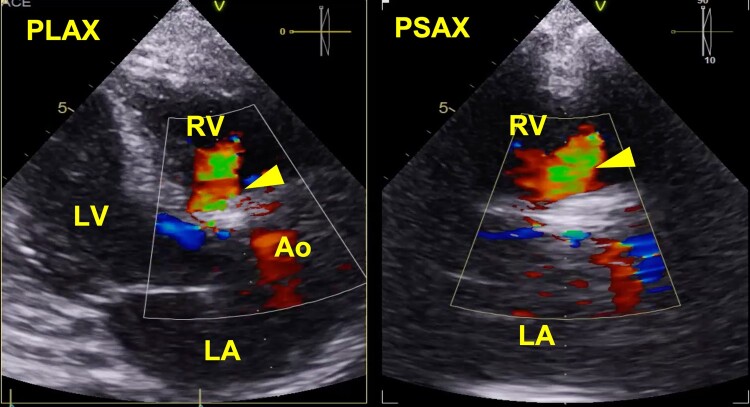 Figure 1
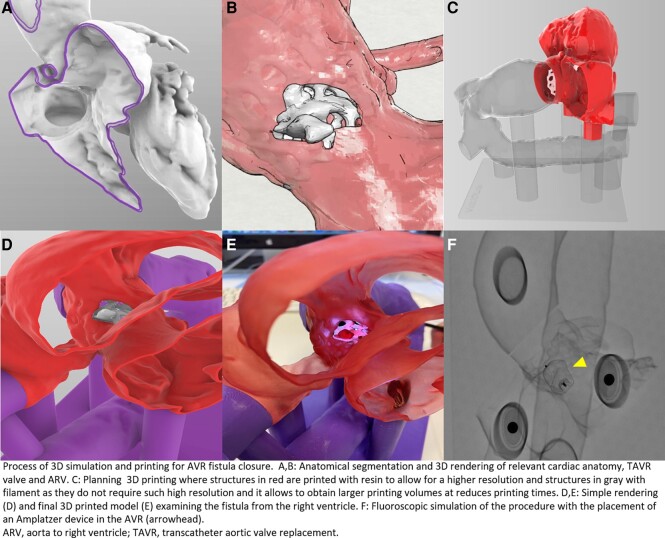 Figure 2
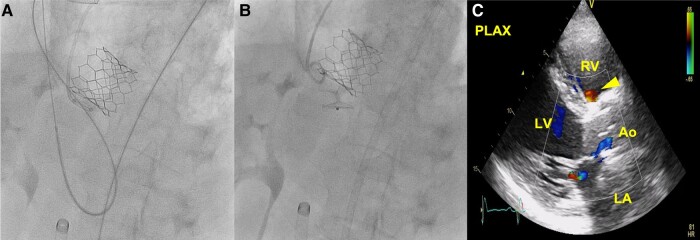 Figure 3
 Figure 4
Peer Reviews
No public reviews on file for this paper yet. If you reviewed it on a platform where reviews are public (OpenReview, ICLR, NeurIPS, ICML), you can paste yours below so the community can read it here.
Videos
No videos yet. Explain this paper in a talk, walkthrough, or lecture? Add one.
Taxonomy
TopicsCardiac Valve Diseases and Treatments · Aortic Disease and Treatment Approaches · Cardiac and Coronary Surgery Techniques