Circulating HMGB1 in acute ischemic stroke and its association with post-stroke cognitive impairment
Zhenbao Liu, Weixia Yang, Jianxin Chen, Qian Wang

TL;DR
High levels of HMGB1 in the blood shortly after a stroke predict cognitive decline three months later, suggesting it could help identify patients at risk.
Contribution
Circulating HMGB1 is identified as a novel independent biomarker for predicting post-stroke cognitive impairment.
Findings
Patients with PSCI had significantly higher HMGB1 levels compared to those without cognitive impairment.
Higher HMGB1 quartiles correlated with increased PSCI prevalence in a dose-dependent manner.
HMGB1 remained a significant predictor of PSCI after adjusting for confounding factors.
Abstract
Ischemic stroke frequently leads to a condition known as post-stroke cognitive impairment (PSCI). Timely recognition of individuals susceptible to developing PSCI could facilitate the implementation of personalized strategies to mitigate cognitive deterioration. High mobility group box 1 (HMGB1) is a protein released by ischemic neurons and implicated in inflammation after stroke. Circulating levels of HMGB1 could potentially serve as a prognostic indicator for the onset of cognitive impairment following ischemic stroke. To investigate the predictive value of circulating HMGB1 concentrations in the acute phase of ischemic stroke for the development of cognitive dysfunction at the 3-month follow-up. A total of 192 individuals experiencing their initial episode of acute cerebral infarction were prospectively recruited for this longitudinal investigation. Concentrations of circulating…
Genes, proteins, chemicals, diseases, species, mutations and cell lines named across the full text — each resolved to its canonical identifier and authoritative record.
Click any figure to enlarge with its caption.
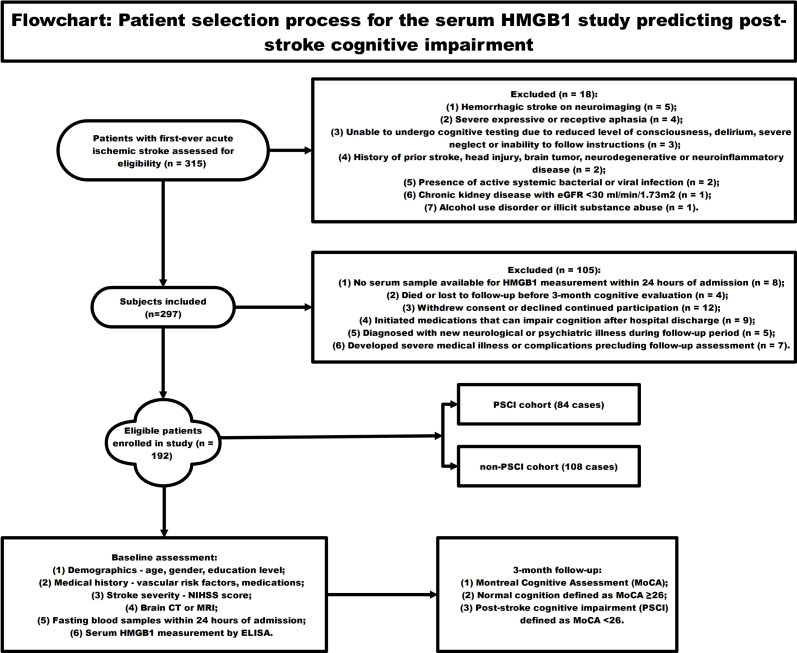 Figure 1
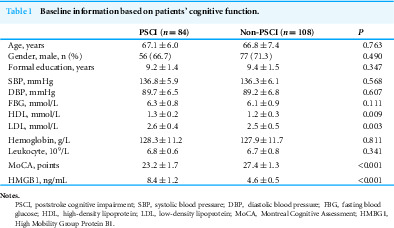 Figure 2
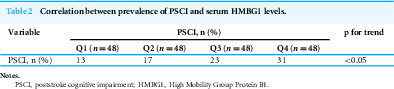 Figure 3
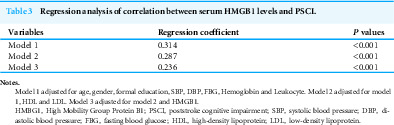 Figure 4
Peer Reviews
No public reviews on file for this paper yet. If you reviewed it on a platform where reviews are public (OpenReview, ICLR, NeurIPS, ICML), you can paste yours below so the community can read it here.
Videos
No videos yet. Explain this paper in a talk, walkthrough, or lecture? Add one.
Taxonomy
TopicsAdvanced Glycation End Products research · Neurological Disorders and Treatments · Neurological Disease Mechanisms and Treatments