The representation of contextual cue is stimulus-specific yet its expression is flexible
Xiaoyu Chen, Shuliang Bai, Qidan Ren, Yi Chen, Fangfang Long, Ying Jiang

TL;DR
This paper shows that contextual cues are specific to the stimuli used during learning but can be flexibly expressed during retrieval.
Contribution
The paper proposes and validates that contextual cue representations are stimulus-specific but their expression is flexible.
Findings
Contextual cue learning was significantly better when distractor identities were consistent.
Contextual cue effects were similar under load and no-load conditions, showing flexible expression.
Changing distractor identities impaired learning, confirming stimulus specificity.
Abstract
Contextual cueing refers to the phenomenon in which individuals utilize frequently encountered environmental contexts, comprised of distractors, as cues to expedite a target search. Due to the conflict between the widespread occurrence of contextual cue transfer and the observed impact of changing the identity of distractors on contextual cue learning, the content of contextual cue representations remains contentious. Considering the independent nature of contextual cue learning and expression, our proposition is twofold: (1) Contextual cue representations are stimulus-specific, and (2) their expression is highly flexible. To validate the model, two experiments were conducted. Experiment 1 aimed to confirm the hypothesis that contextual cue representations are stimulus-specific. We manipulated the identity consistency of distractors within repeated scenes during contextual cue…
Genes, proteins, chemicals, diseases, species, mutations and cell lines named across the full text — each resolved to its canonical identifier and authoritative record.
Click any figure to enlarge with its caption.
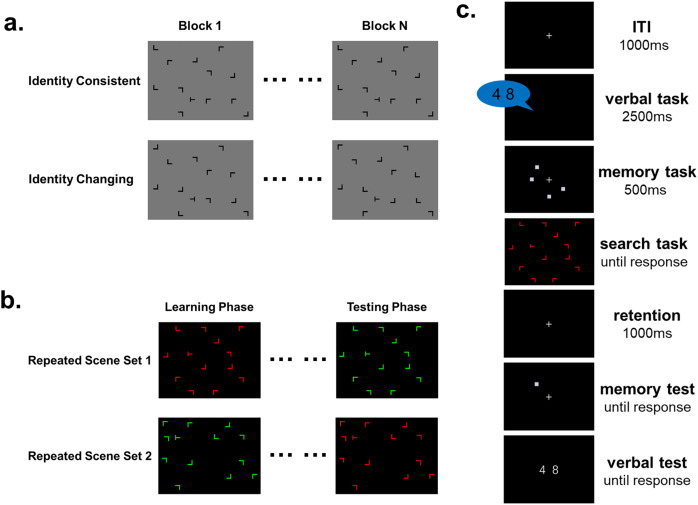 Figure 1
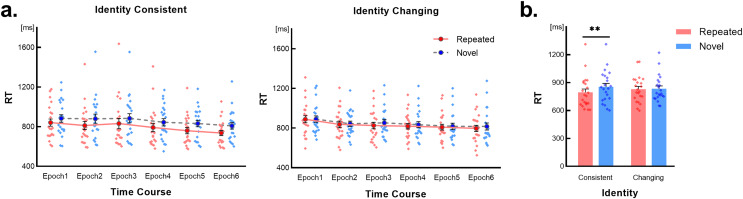 Figure 2
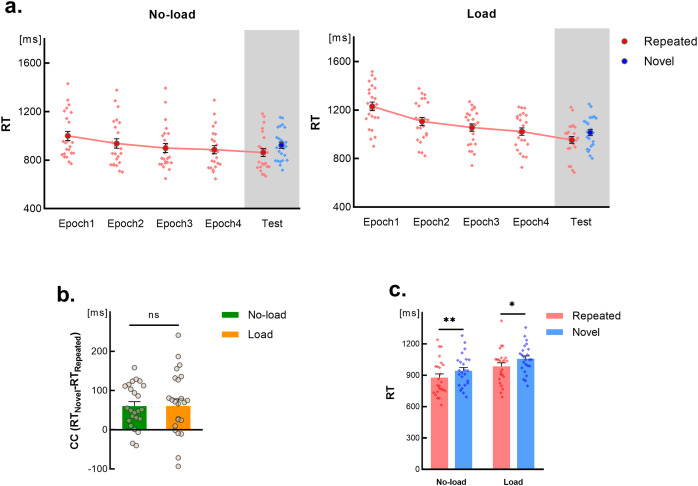 Figure 3
Peer Reviews
No public reviews on file for this paper yet. If you reviewed it on a platform where reviews are public (OpenReview, ICLR, NeurIPS, ICML), you can paste yours below so the community can read it here.
Videos
No videos yet. Explain this paper in a talk, walkthrough, or lecture? Add one.
Taxonomy
TopicsNeural and Behavioral Psychology Studies · Memory and Neural Mechanisms · Child and Animal Learning Development