Tissue-specific transcriptional programming of macrophages controls the microRNA transcriptome targeting multiple functional pathways
Magdalena A. Czubala, Robert H. Jenkins, Mark Gurney, Leah Wallace, Benjamin Cossins, James Dennis, Marcela Rosas, Robert Andrews, Donald Fraser, Philip R. Taylor

TL;DR
This paper shows how tissue-specific programming of macrophages, especially through GATA6, controls microRNA expression, which in turn affects immune and cell cycle functions.
Contribution
The study reveals that GATA6 regulates specific microRNAs in macrophages, impacting their functional specialization and response to stimuli.
Findings
GATA6 deficiency in macrophages leads to altered microRNA expression, including miR-146a, miR-223, and miR-203.
miR-708 is significantly dysregulated in GATA6-deficient macrophages, affecting immune and cell cycle pathways.
Overexpression of miR-708 in macrophages alters 167 mRNAs, demonstrating functional downregulation of key targets.
Abstract
Recent interest in the biology and function of peritoneal tissue resident macrophages (pMΦ) has led to a better understanding of their cellular origin, programming, and renewal. The programming of pMΦ is dependent on microenvironmental cues and tissue-specific transcription factors, including GATA6. However, the contribution of microRNAs remains poorly defined. We conducted a detailed analysis of the impact of GATA6 deficiency on microRNA expression in mouse pMΦ. Our data suggest that for many of the pMΦ, microRNA composition may be established during tissue specialization and that the effect of GATA6 knockout is largely unable to be rescued in the adult by exogenous GATA6. The data are consistent with GATA6 modulating the expression pattern of specific microRNAs, directly or indirectly, and including miR-146a, miR-223, and miR-203 established by the lineage-determining transcription…
Genes, proteins, chemicals, diseases, species, mutations and cell lines named across the full text — each resolved to its canonical identifier and authoritative record.
Click any figure to enlarge with its caption.
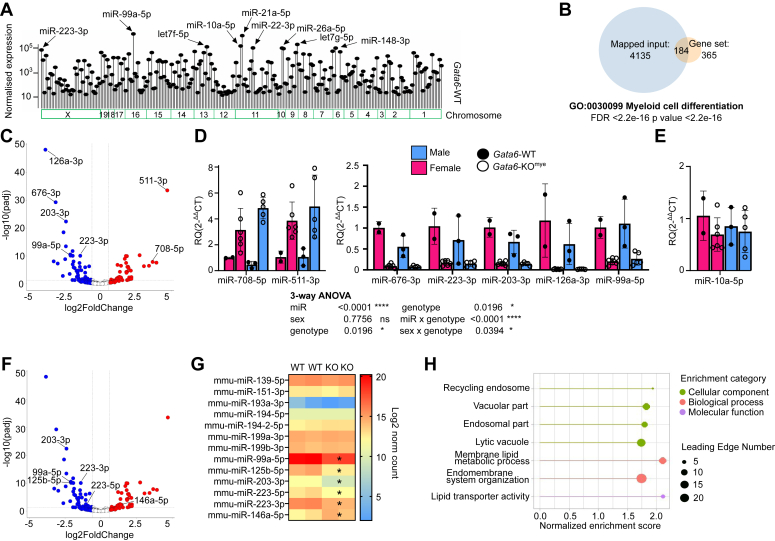 Figure 1
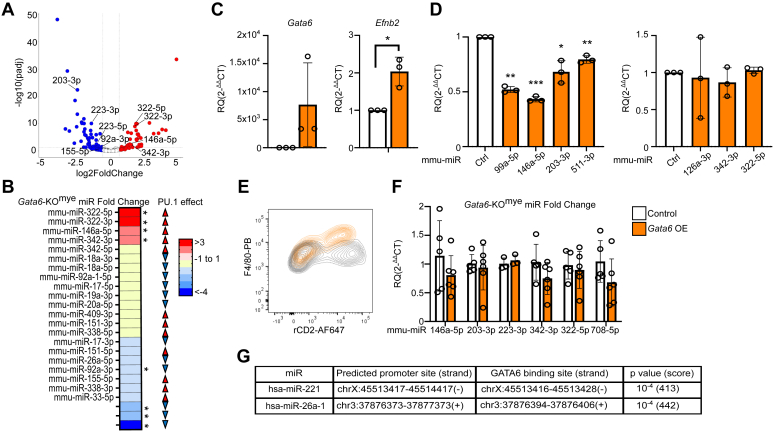 Figure 2
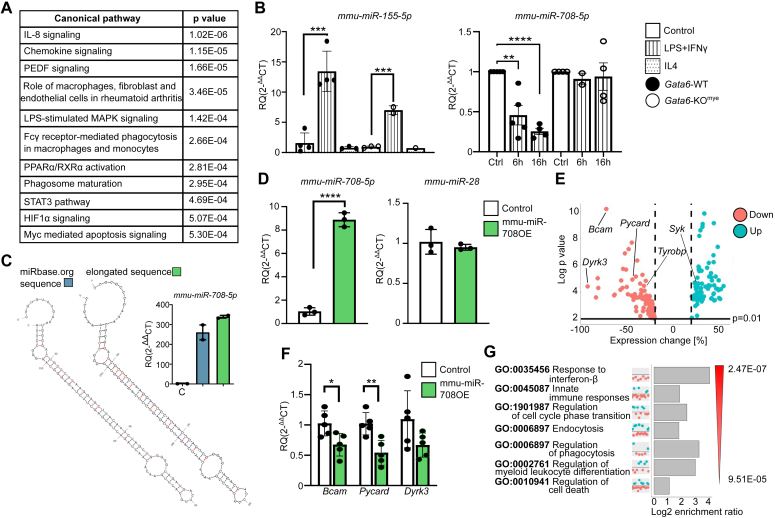 Figure 3
Peer Reviews
No public reviews on file for this paper yet. If you reviewed it on a platform where reviews are public (OpenReview, ICLR, NeurIPS, ICML), you can paste yours below so the community can read it here.
Videos
No videos yet. Explain this paper in a talk, walkthrough, or lecture? Add one.
Taxonomy
TopicsMicroRNA in disease regulation · Circular RNAs in diseases · Immune cells in cancer