mbDecoda: a debiased approach to compositional data analysis for microbiome surveys
Yuxuan Zong, Hongyu Zhao, Tao Wang

TL;DR
mbDecoda is a new method for analyzing microbiome data that corrects for biases in relative abundance measurements to better identify microbes linked to health or disease.
Contribution
mbDecoda introduces a model-based debiasing approach for microbiome compositional data using a zero-inflated negative binomial model and an EM algorithm.
Findings
mbDecoda outperforms existing methods in simulation studies and real-world data analysis.
The method effectively adjusts for confounding factors and corrects compositional bias.
It enables accurate absolute abundance analysis despite sparse and over-dispersed data.
Abstract
Potentially pathogenic or probiotic microbes can be identified by comparing their abundance levels between healthy and diseased populations, or more broadly, by linking microbiome composition with clinical phenotypes or environmental factors. However, in microbiome studies, feature tables provide relative rather than absolute abundance of each feature in each sample, as the microbial loads of the samples and the ratios of sequencing depth to microbial load are both unknown and subject to considerable variation. Moreover, microbiome abundance data are count-valued, often over-dispersed and contain a substantial proportion of zeros. To carry out differential abundance analysis while addressing these challenges, we introduce mbDecoda, a model-based approach for debiased analysis of sparse compositions of microbiomes. mbDecoda employs a zero-inflated negative binomial model, linking mean…
Genes, proteins, chemicals, diseases, species, mutations and cell lines named across the full text — each resolved to its canonical identifier and authoritative record.
Click any figure to enlarge with its caption.
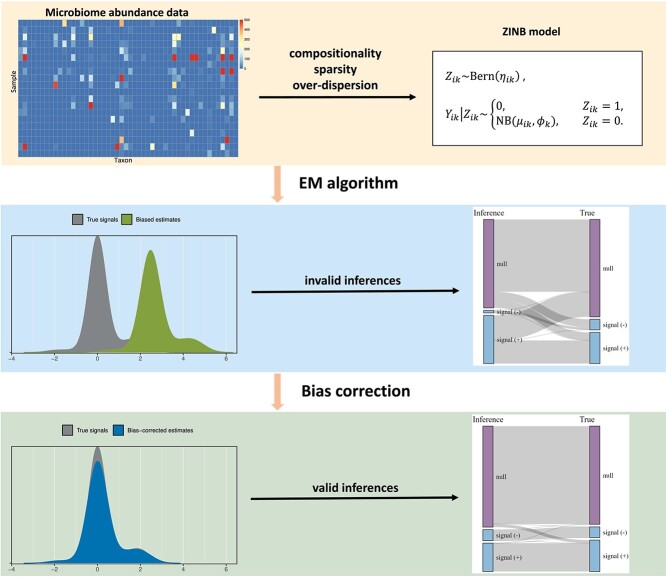 Figure 1
 Figure 2
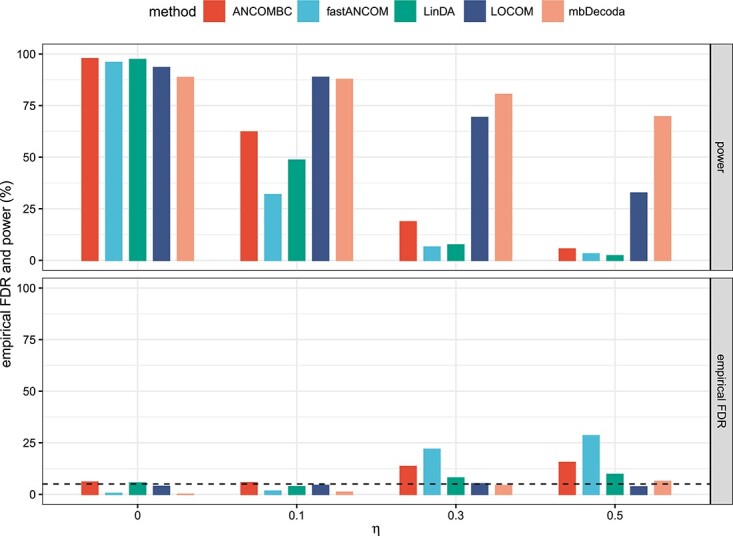 Figure 3
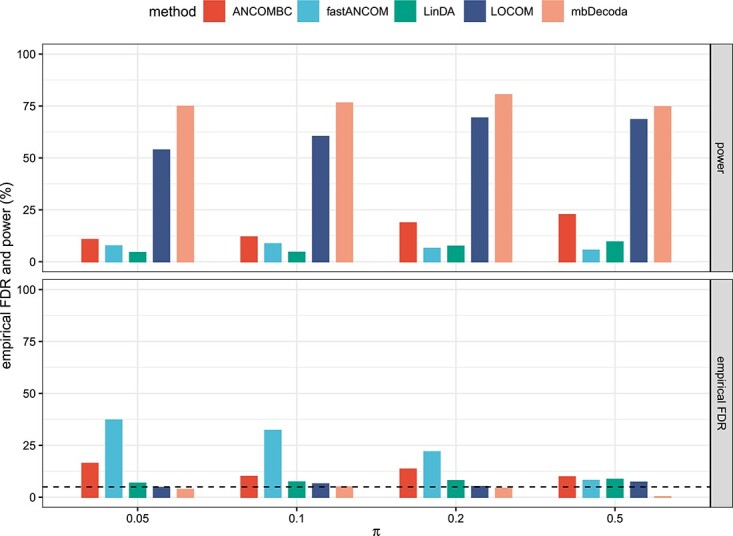 Figure 4
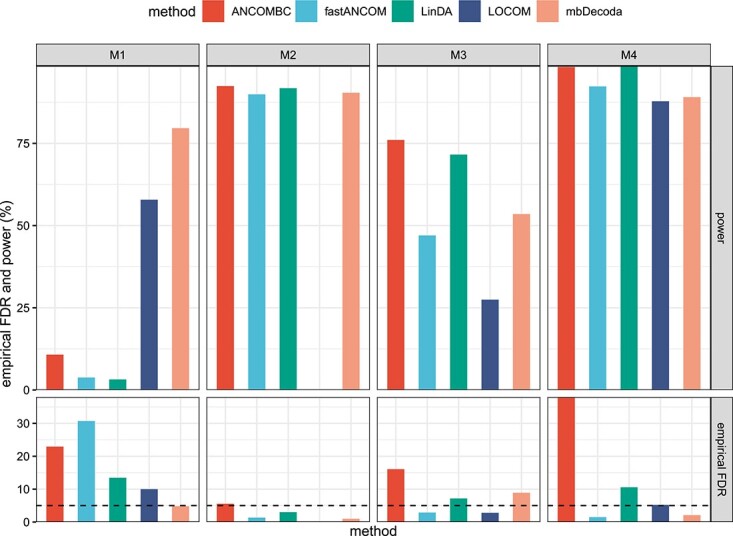 Figure 5
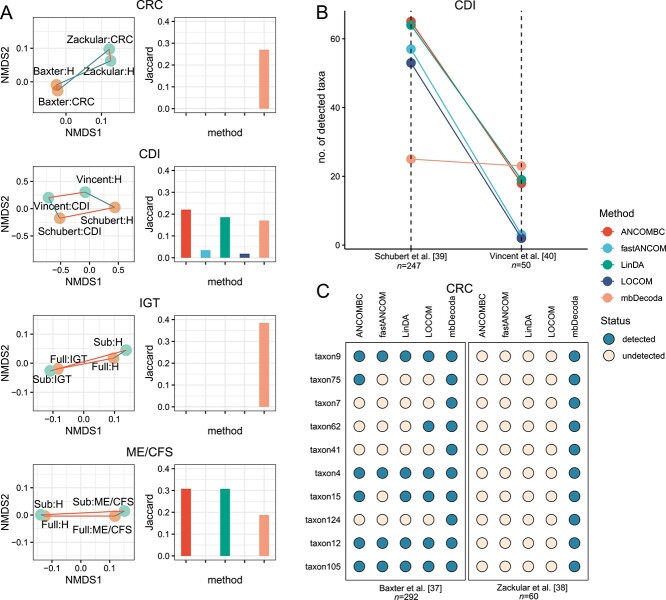 Figure 6
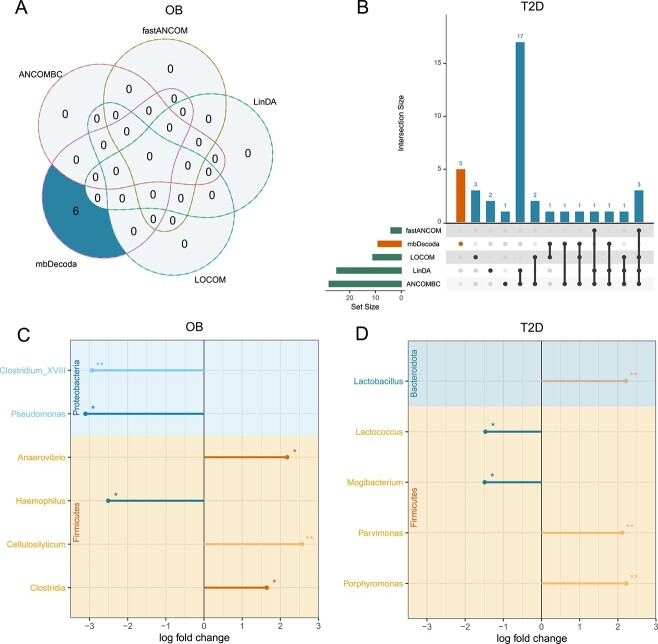 Figure 7
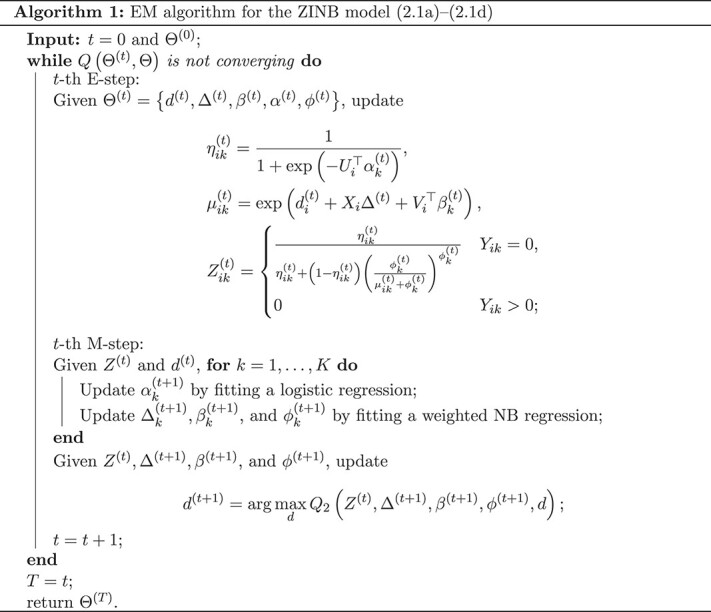 Figure 8
Peer Reviews
No public reviews on file for this paper yet. If you reviewed it on a platform where reviews are public (OpenReview, ICLR, NeurIPS, ICML), you can paste yours below so the community can read it here.
Videos
No videos yet. Explain this paper in a talk, walkthrough, or lecture? Add one.
Taxonomy
TopicsGut microbiota and health · Metabolomics and Mass Spectrometry Studies · Oral microbiology and periodontitis research