Management Approaches and Patient Outcomes for Giant Pituitary Neuroendocrine Tumors Classified as Knosp Grade 3 and 4
Kenta Nakase, Fumihiko Nishimura, Shohei Yokoyama, Miho Kakutani, Taekyun Kim, Ryosuke Matsuda, Yasuhiro Takeshima, Shuichi Yamada, Young-Soo Park, Ichiro Nakagawa

TL;DR
This study examines surgical outcomes and management strategies for large pituitary tumors, highlighting challenges and the need for personalized treatment approaches.
Contribution
The study provides insights into the surgical management and outcomes of giant pituitary neuroendocrine tumors classified as Knosp grade 3 and 4.
Findings
Gross total resection was achieved in 24% of patients, with tumors invading the middle fossa negatively affecting resection extent.
Postoperative vision improved or normalized in 64% of patients, while 28% experienced new hormonal deficits.
Complications included cerebrospinal fluid leakage, diabetes insipidus, and oculomotor nerve palsy in a small percentage of cases.
Abstract
Background Treatment of patients with a giant pituitary neuroendocrine tumor (GPitNET) is challenging. Here, we present the methods used for the clinical management of patients who underwent GPitNET resection mainly via endoscopic endonasal surgery along with multimodal support to avoid surgical complications, which can affect the outcomes. Methodology The medical records of 25 patients with a GPitNET who underwent endonasal endoscopic surgery were retrospectively reviewed. Complications were analyzed and factors affecting the extent of resection were evaluated. Results Gross total resection was achieved in six (24%), near-total resection (>90%) in nine (36%), and partial resection in 10 (40%) patients. Multivariate analyses revealed that tumors invading the middle fossa had negative effects on the extent of resection (odds ratio = 0.092, p = 0.047). Postoperative vision improved…
Genes, proteins, chemicals, diseases, species, mutations and cell lines named across the full text — each resolved to its canonical identifier and authoritative record.
Click any figure to enlarge with its caption.
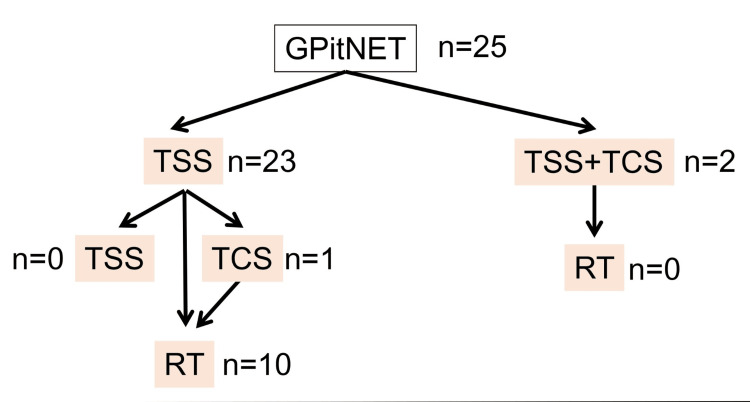 Figure 1
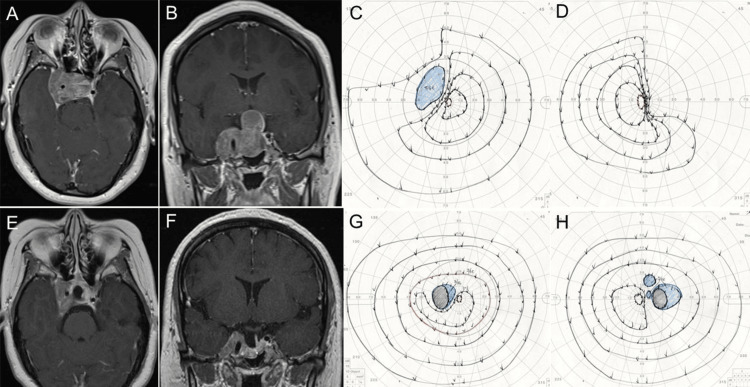 Figure 2
Peer Reviews
No public reviews on file for this paper yet. If you reviewed it on a platform where reviews are public (OpenReview, ICLR, NeurIPS, ICML), you can paste yours below so the community can read it here.
Videos
No videos yet. Explain this paper in a talk, walkthrough, or lecture? Add one.
Taxonomy
TopicsPituitary Gland Disorders and Treatments · Adrenal and Paraganglionic Tumors · Glioma Diagnosis and Treatment