Genome assembly of the milky mangrove Excoecaria agallocha
Jerome H. L. Hui, Jerome H. L. Hui, Ting Fung Chan, Leo Lai Chan, Siu Gin Cheung, Chi Chiu Cheang, James Kar-Hei Fang, Juan Diego Gaitan-Espitia, Stanley Chun Kwan Lau, Yik Hei Sung, Chris Kong Chu Wong, Kevin Yuk-Lap Yip, Yingying Wei, Sean Tsz Sum Law, Wai Lok So, Wenyan Nong

TL;DR
This paper presents a high-quality genome assembly of the milky mangrove Excoecaria agallocha, which could help study its valuable phytochemicals.
Contribution
The study provides the first chromosomal-level genome assembly of Excoecaria agallocha using PacBio and Omni-C data.
Findings
The genome assembly is 1,332.45 Mb with a scaffold N50 of 58.9 Mb and a BUSCO score of 98.4%.
73,740 protein-coding genes were predicted in the genome.
86.08% of the sequences were anchored to 18 pseudomolecules, indicating high contiguity.
Abstract
The milky mangrove Excoecaria agallocha is a latex-secreting mangrove that are distributed in tropical and subtropical regions. While its poisonous latex is regarded as a potential source of phytochemicals for biomedical applications, the genomic resources of E. agallocha remains limited. Here, we present a chromosomal level genome of E. agallocha, assembled from the combination of PacBio long-read sequencing and Omni-C data. The resulting assembly size is 1,332.45 Mb and has high contiguity and completeness with a scaffold N50 of 58.9 Mb and a BUSCO score of 98.4%, with 86.08% of sequences anchored to 18 pseudomolecules. 73,740 protein-coding genes were also predicted. The milky mangrove genome provides a useful resource for further understanding the biosynthesis of phytochemical compounds in E. agallocha.
Genes, proteins, chemicals, diseases, species, mutations and cell lines named across the full text — each resolved to its canonical identifier and authoritative record.
Click any figure to enlarge with its caption.
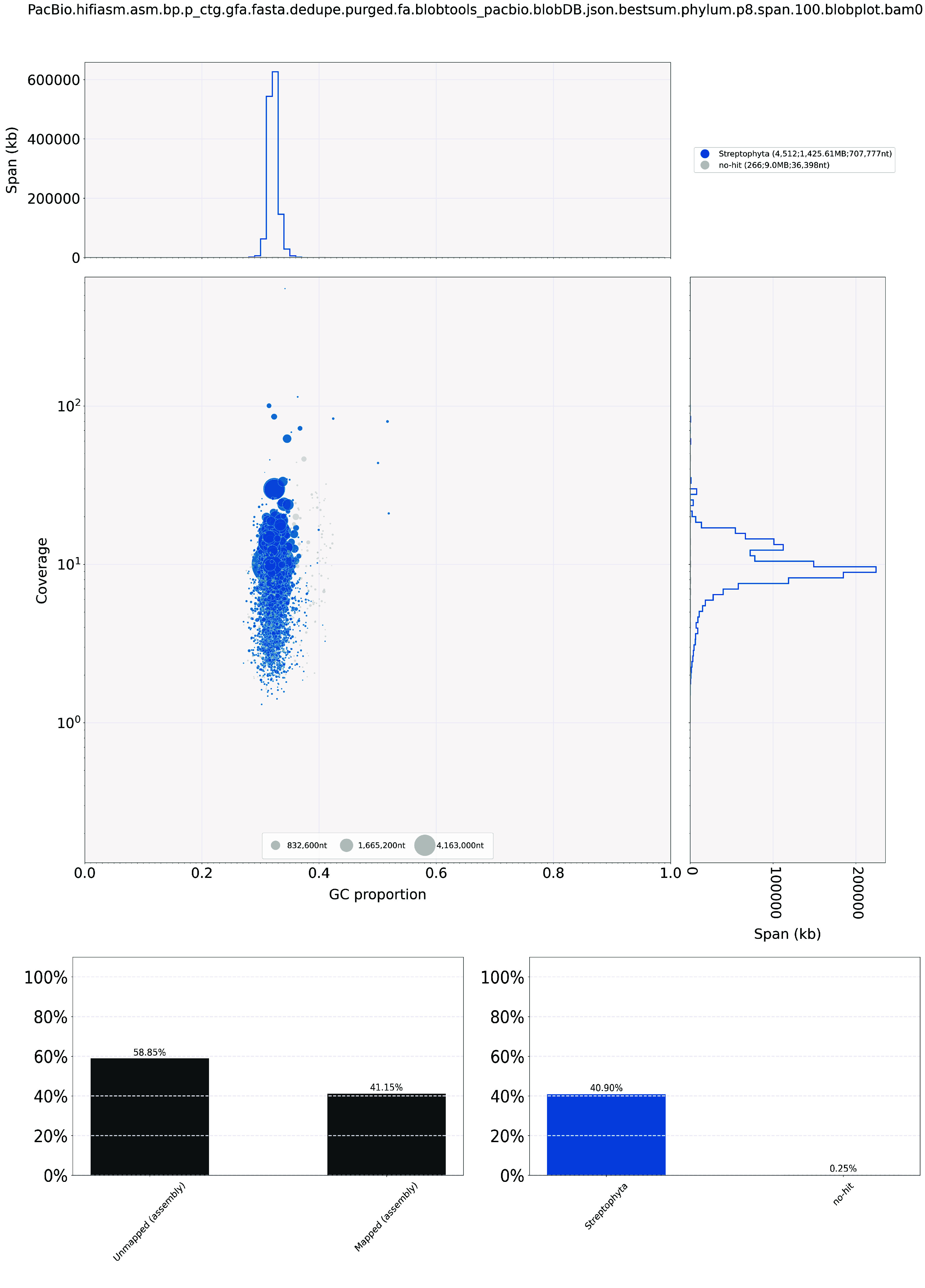 Figure 1
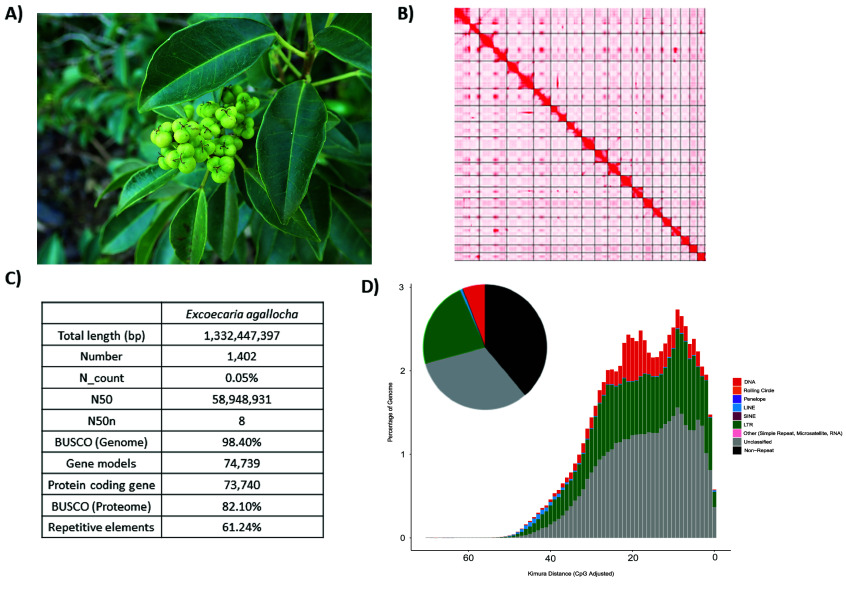 Figure 2
Peer Reviews
No public reviews on file for this paper yet. If you reviewed it on a platform where reviews are public (OpenReview, ICLR, NeurIPS, ICML), you can paste yours below so the community can read it here.
Videos
No videos yet. Explain this paper in a talk, walkthrough, or lecture? Add one.
Taxonomy
TopicsGenomics and Phylogenetic Studies · Cassava research and cyanide · Marine Sponges and Natural Products