Genome assembly of the edible jelly fungus Dacryopinax spathularia (Dacrymycetaceae)
Jerome H. L. Hui, Jerome H. L. Hui, Ting Fung Chan, Leo Lai Chan, Siu Gin Cheung, Chi Chiu Cheang, James Kar-Hei Fang, Juan Diego Gaitan-Espitia, Stanley Chun Kwan Lau, Yik Hei Sung, Chris Kong Chu Wong, Kevin Yuk-Lap Yip, Yingying Wei, Tze Kiu Chong, Sean Tsz Sum Law

TL;DR
This paper presents the genome assembly of the edible jelly fungus Dacryopinax spathularia, offering insights into its biology and potential food industry applications.
Contribution
The study provides a high-quality, complete genome assembly of Dacryopinax spathularia using advanced sequencing technologies.
Findings
The genome size is 29.2 Mb with a scaffold N50 of 1.925 Mb and 92.0% completeness.
A total of 11,510 protein-coding genes and 474.7 kb of repeats were identified.
The assembly supports research into the fungus's wood-decaying ability and food industry applications.
Abstract
The edible jelly fungus Dacryopinax spathularia (Dacrymycetaceae) is wood-decaying and can be commonly found worldwide. It has found application in food additives, given its ability to synthesize long-chain glycolipids, among other uses. In this study, we present the genome assembly of D. spathularia using a combination of PacBio HiFi reads and Omni-C data. The genome size is 29.2 Mb. It has high sequence contiguity and completeness, with a scaffold N50 of 1.925 Mb and a 92.0% BUSCO score. A total of 11,510 protein-coding genes and 474.7 kb repeats (accounting for 1.62% of the genome) were predicted. The D. spathularia genome assembly generated in this study provides a valuable resource for understanding their ecology, such as their wood-decaying capability, their evolutionary relationships with other fungi, and their unique biology and applications in the food industry.
Genes, proteins, chemicals, diseases, species, mutations and cell lines named across the full text — each resolved to its canonical identifier and authoritative record.
Click any figure to enlarge with its caption.
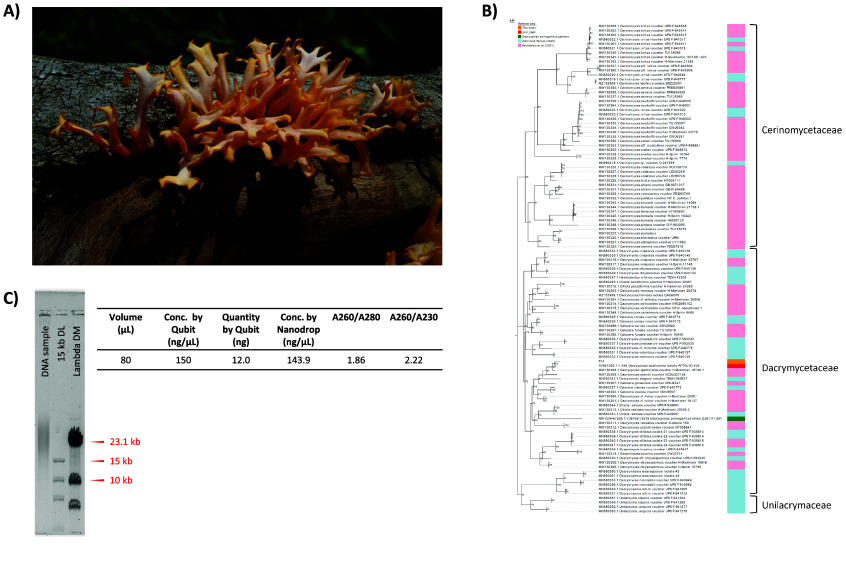 Figure 1
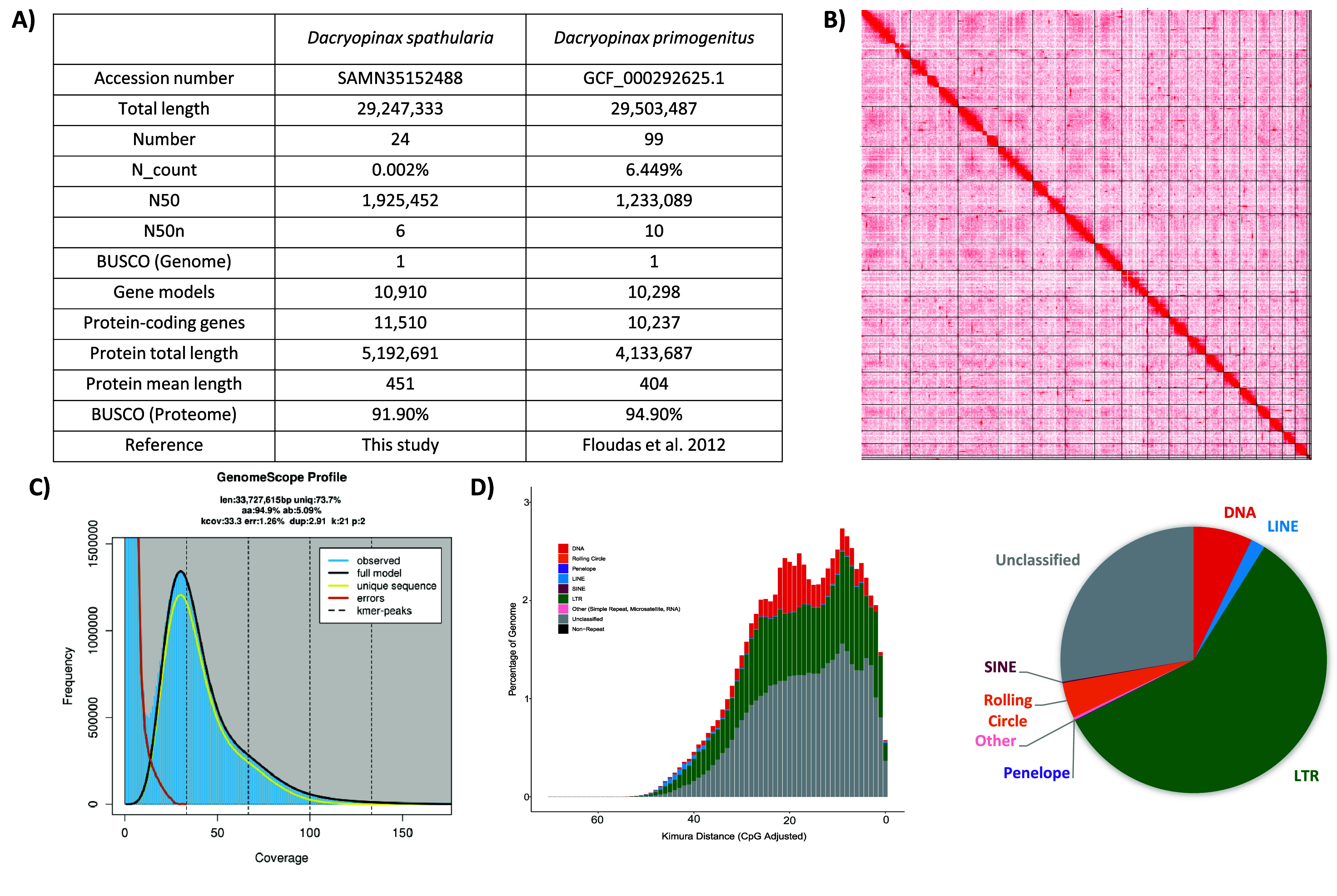 Figure 2
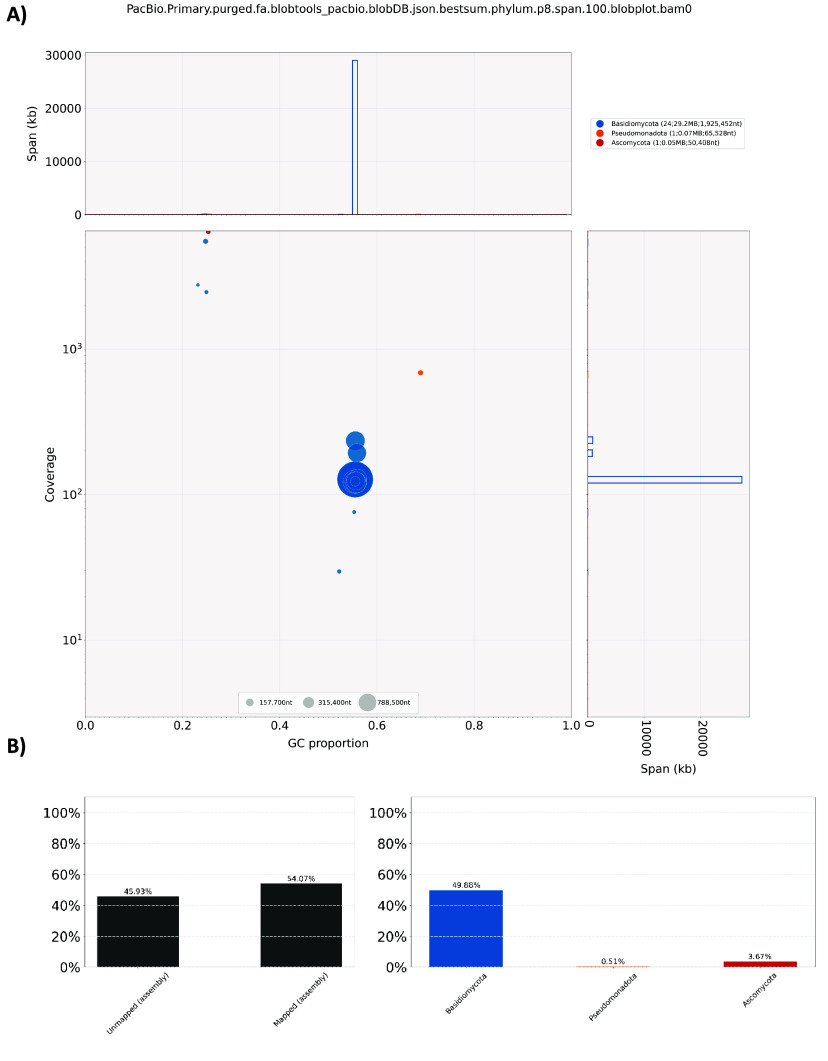 Figure 3
Peer Reviews
No public reviews on file for this paper yet. If you reviewed it on a platform where reviews are public (OpenReview, ICLR, NeurIPS, ICML), you can paste yours below so the community can read it here.
Videos
No videos yet. Explain this paper in a talk, walkthrough, or lecture? Add one.
Taxonomy
TopicsMycorrhizal Fungi and Plant Interactions · Plant Pathogens and Fungal Diseases · Fungal Biology and Applications