Three-dimensional fusion imaging to assess apposition of low-profile visualized intraluminal support stent for intracranial aneurysm coiling
Naoki Kato, Toshihiro Ishibashi, Katharina Otani, Yukiko Abe, Tohru Sano, Gota Nagayama, Michiyasu Fuga, Shunsuke Hataoka, Issei Kan, Yuichi Murayama

TL;DR
This study shows that 3D fusion imaging can clearly visualize stent placement in brain aneurysms and detect malapposition with high reliability.
Contribution
The novel use of 3D fusion imaging to assess stent apposition in intracranial aneurysms is demonstrated with high inter-rater reliability.
Findings
3D fusion imaging successfully visualized LVIS stent structures in all 40 patients.
Edge malapposition was observed in 47.5% of patients, while crescent sign was observed in 27.5%.
Inter-rater agreement was almost perfect for crescent signs and substantial for edge appositions.
Abstract
To investigate on three-dimensional (3D) fusion images the apposition of low-profile visualized intraluminal support (LVIS) stents in intracranial aneurysms after treatment and assess inter-rater reliability. Records of all patients with unruptured intracranial aneurysms who were treated with the LVIS stent were retrospectively accessed and included in this study. Two neurosurgeons evaluated the presence of malapposition between the vessel walls and the stent trunk (crescent sign) and the vessel wall and the stent edges (edge malappostion) on 3D fusion images. These images were high-resolution cone-beam computed tomography images of the LVIS stent fused with 3D-digital subtraction angiography images of the vessels. Associations between malapposition and aneurysm location were assessed by Fisher's exact test, and inter-rater agreement was estimated using Cohen's kappa statistic. Forty…
Genes, proteins, chemicals, diseases, species, mutations and cell lines named across the full text — each resolved to its canonical identifier and authoritative record.
Click any figure to enlarge with its caption.
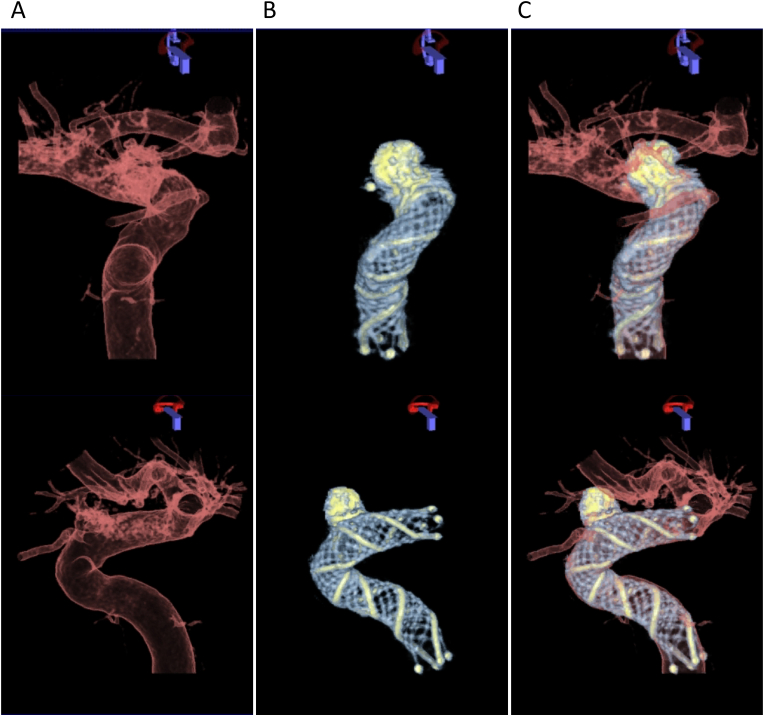 Figure 1
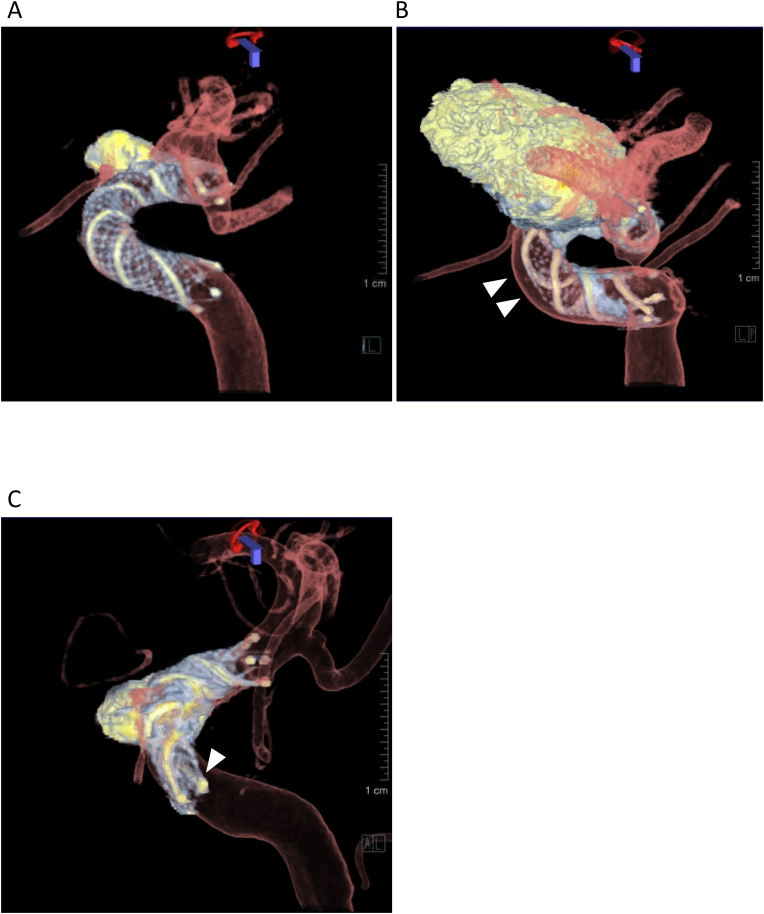 Figure 2
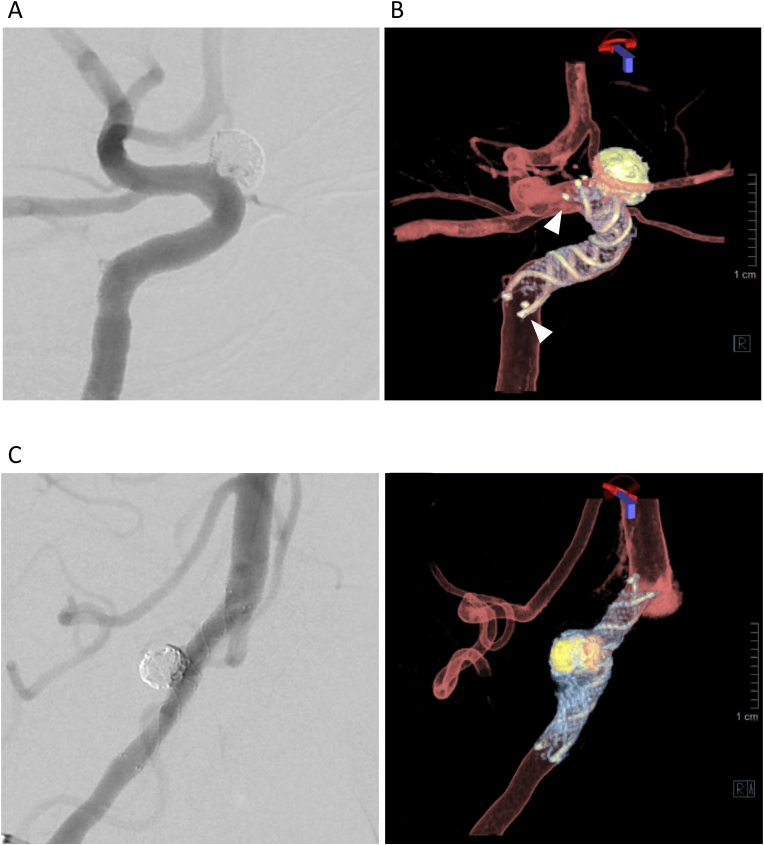 Figure 3
Peer Reviews
No public reviews on file for this paper yet. If you reviewed it on a platform where reviews are public (OpenReview, ICLR, NeurIPS, ICML), you can paste yours below so the community can read it here.
Videos
No videos yet. Explain this paper in a talk, walkthrough, or lecture? Add one.
Taxonomy
TopicsHistorical Art and Culture Studies