A porcine large animal model of radiofrequency ablation-induced left bundle branch block
Felix Wiedmann, Max Jamros, Valerie Herlt, Amelie Paasche, Manuel Kraft, Moritz Beck, Merten Prüser, Atilla Erkal, Maren Harder, Marcin Zaradzki, Jasmin Soethoff, Matthias Karck, Norbert Frey, Constanze Schmidt

TL;DR
This study creates a pig model of heart block to better understand and treat heart failure patients with abnormal heart rhythms.
Contribution
A reproducible porcine model of radiofrequency ablation-induced left bundle branch block is developed for translational research.
Findings
Radiofrequency ablation in pigs successfully induced left bundle branch block with ECG and echocardiographic features similar to human patients.
Cardiac resynchronization therapy in the model reduced QRS duration, showing potential for therapeutic testing.
The model demonstrates persistent electrical and mechanical dyssynchrony for up to three weeks.
Abstract
Electrocardiographic (ECG) features of left bundle branch (LBB) block (LBBB) can be observed in up to 20%–30% of patients suffering from heart failure with reduced ejection fraction. However, predicting which LBBB patients will benefit from cardiac resynchronization therapy (CRT) or conduction system pacing remains challenging. This study aimed to establish a translational model of LBBB to enhance our understanding of its pathophysiology and improve therapeutic approaches. Fourteen male pigs underwent radiofrequency catheter ablation of the proximal LBB under fluoroscopy and ECG guidance. Comprehensive clinical assessments (12-lead ECG, bloodsampling, echocardiography, electroanatomical mapping) were conducted before LBBB induction, after 7, and 21 days. Three pigs received CRT pacemakers 7 days after LBB ablation to assess resynchronization feasibility. Following proximal LBB…
Genes, proteins, chemicals, diseases, species, mutations and cell lines named across the full text — each resolved to its canonical identifier and authoritative record.
Click any figure to enlarge with its caption.
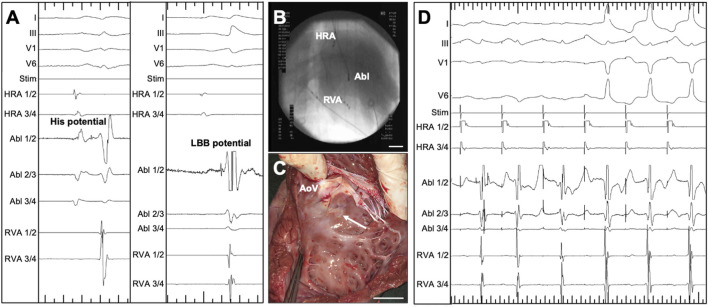 Figure 1
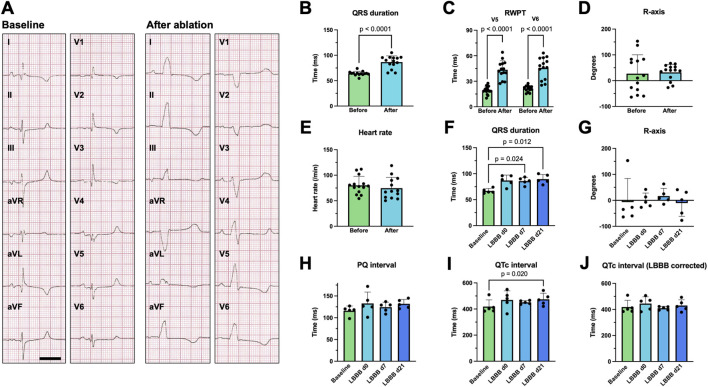 Figure 2
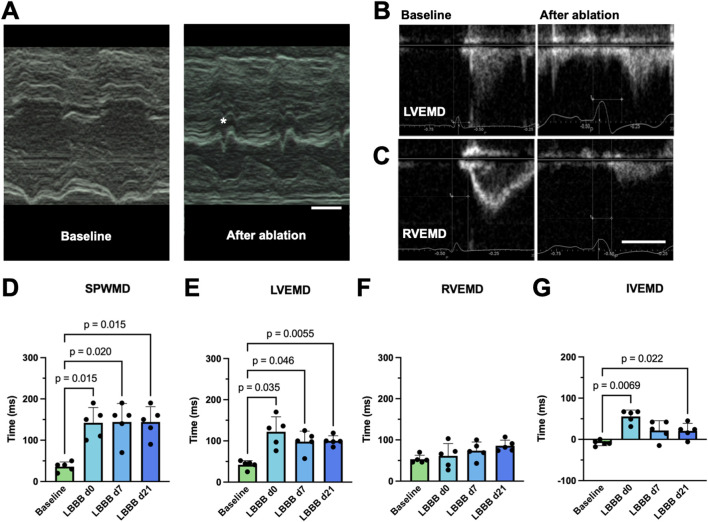 Figure 3
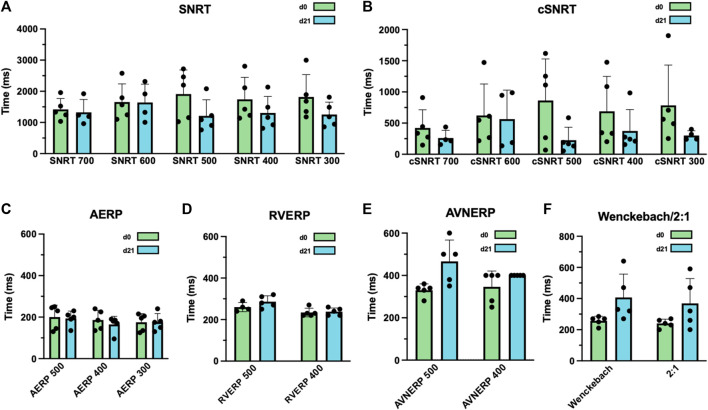 Figure 4
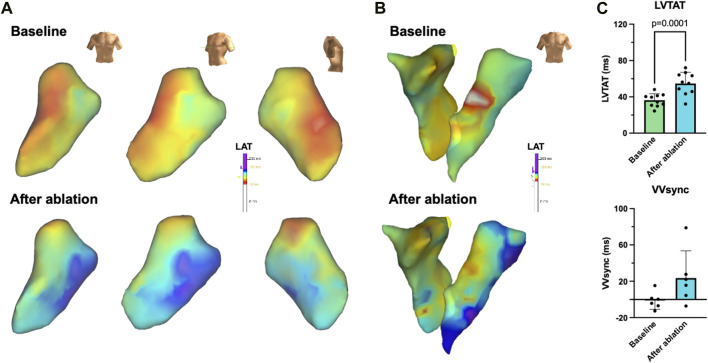 Figure 5
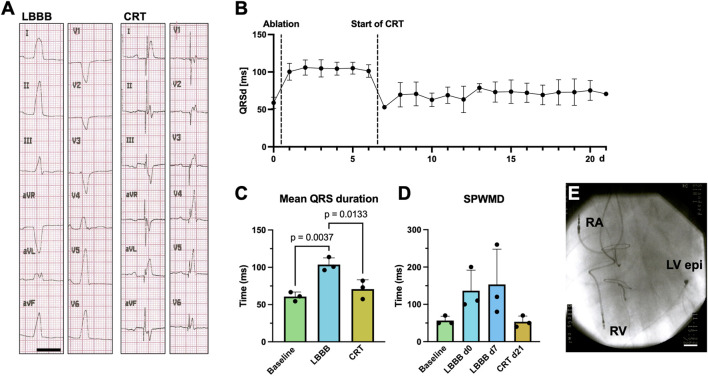 Figure 6
Peer Reviews
No public reviews on file for this paper yet. If you reviewed it on a platform where reviews are public (OpenReview, ICLR, NeurIPS, ICML), you can paste yours below so the community can read it here.
Videos
No videos yet. Explain this paper in a talk, walkthrough, or lecture? Add one.
Taxonomy
TopicsCardiac Arrhythmias and Treatments · Cardiac pacing and defibrillation studies · Cardiovascular Syncope and Autonomic Disorders