The Shehata technique for undescended testes that cannot be brought into the scrotum in one operation—a case series and meta-analysis
Zhenying Lin, Zhongjing Yu, Huanyuan Li, Letu Wu ri ni, Baoxin Zhang

TL;DR
This paper compares the Shehata technique with the Fowler–Stephens method for treating undescended testes and finds that the Shehata technique has a lower risk of testicular atrophy.
Contribution
The study introduces the Shehata technique as a safer alternative with reduced testicular atrophy compared to the Fowler–Stephens orchiopexy.
Findings
The Shehata technique preserved testicular blood supply and prevented atrophy in 20 patients.
Postoperative testicular volume was significantly greater than preoperative volume.
Meta-analysis confirmed lower atrophy rates with the Shehata technique compared to Fowler–Stephens.
Abstract
Fowler–Stephens orchiopexy is commonly used for testes that cannot be brought into the scrotum in one operation. However, this surgical technique may result in a higher rate of testicular atrophy postoperatively. During the period between 2019 and 2023, we analyzed the cases of 20 patients in whom the Shehata technique was applied for testes that could not be brought into the scrotum in one operation, and we conducted a meta-analysis to explore the incidence of testicular atrophy vis-à-vis the Shehata technique and Fowler–Stephens orchiopexy. The average age of the 20 patients was 3.78 (0.76–11.42) years. The blood supply to the testes was satisfactory, with the absence of atrophy, and the testes could be brought into the scrotum in stage II surgery. A postoperative reexamination with ultrasound revealed that the testes were securely positioned within the scrotum, with good blood…
Genes, proteins, chemicals, diseases, species, mutations and cell lines named across the full text — each resolved to its canonical identifier and authoritative record.
Click any figure to enlarge with its caption.
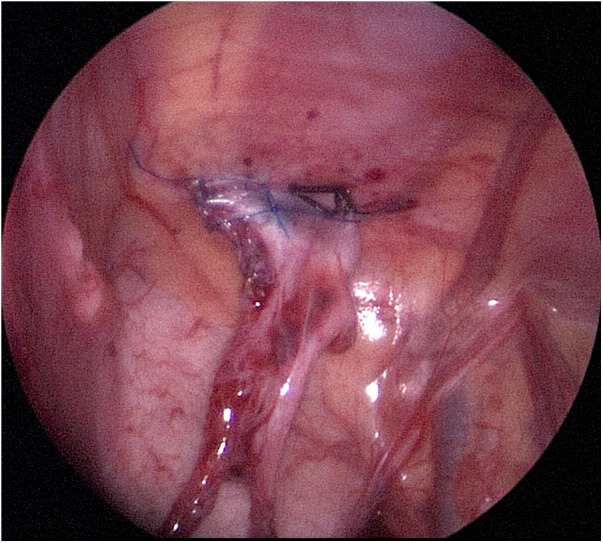 Figure 1
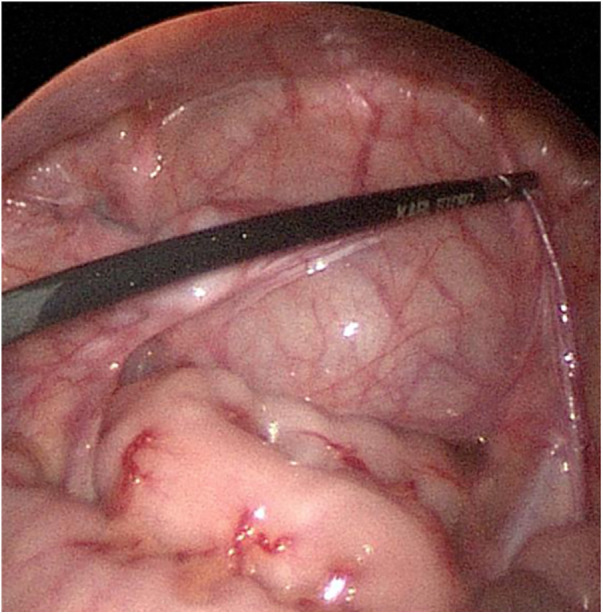 Figure 2
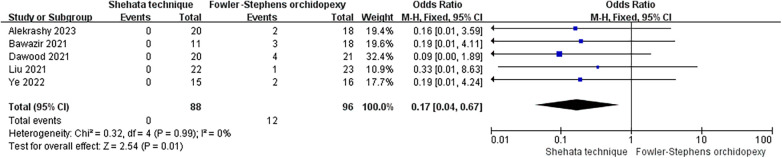 Figure 3
Peer Reviews
No public reviews on file for this paper yet. If you reviewed it on a platform where reviews are public (OpenReview, ICLR, NeurIPS, ICML), you can paste yours below so the community can read it here.
Videos
No videos yet. Explain this paper in a talk, walkthrough, or lecture? Add one.
Taxonomy
TopicsTesticular diseases and treatments · Genital Health and Disease · Sexual Differentiation and Disorders