Vaporization of perfluorocarbon attenuates sea-water-drowning-induced acute lung injury by deactivating the NLRP3 inflammasomes in canines
Cheng-Cheng Su, Zhao-Rui Zhang, Jin-Xia Liu, Ji-Guang Meng, Xiu-Qing Ma, Zhen-Fei Mo, Jia-Bo Ren, Zhi-Xin Liang, Zhen Yang, Chun-Sun Li, Liang-An Chen

TL;DR
Vaporizing perfluorocarbons reduces seawater-drowning lung injury in dogs by deactivating a key inflammation pathway.
Contribution
Demonstrates that PFC vaporization attenuates SD-ALI by deactivating NLRP3 inflammasomes via the HO-1/NRF1 pathway in canines.
Findings
PFC treatment reversed lung injury scores, W/D ratios, and VAI in seawater-drowned dogs.
PFCs reduced inflammation by deactivating NLRP3 inflammasomes and increasing HO-1 and NRF1 expression.
PFCs decreased caspase-1, IL-1β, and IL-18 release in SD-ALI canine models.
Abstract
Seawater-drowning-induced acute lung injury (SD-ALI) is a life-threatening disorder characterized by increased alveolar–capillary permeability, an excessive inflammatory response, and refractory hypoxemia. Perfluorocarbons (PFCs) are biocompatible compounds that are chemically and biologically inert and lack toxicity as oxygen carriers, which could reduce lung injury in vitro and in vivo. The aim of our study was to explore whether the vaporization of PFCs could reduce the severity of SD-ALI in canines and investigate the underlying mechanisms. Eighteen beagle dogs were randomly divided into three groups: the seawater drowning (SW), perfluorocarbon (PFC), and control groups. The dogs in the SW group were intratracheally administered seawater to establish the animal model. The dogs in the PFC group were treated with vaporized PFCs. Probe-based confocal laser endomicroscopy (pCLE) was…
Genes, proteins, chemicals, diseases, species, mutations and cell lines named across the full text — each resolved to its canonical identifier and authoritative record.
Click any figure to enlarge with its caption.
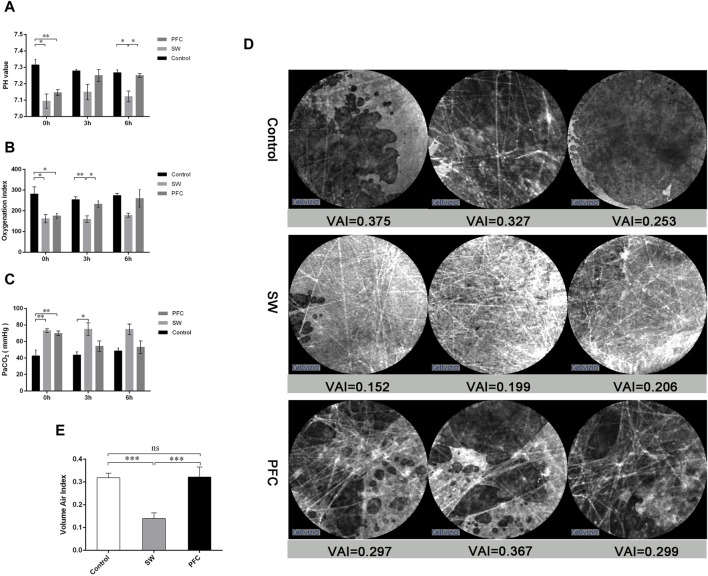 Figure 1
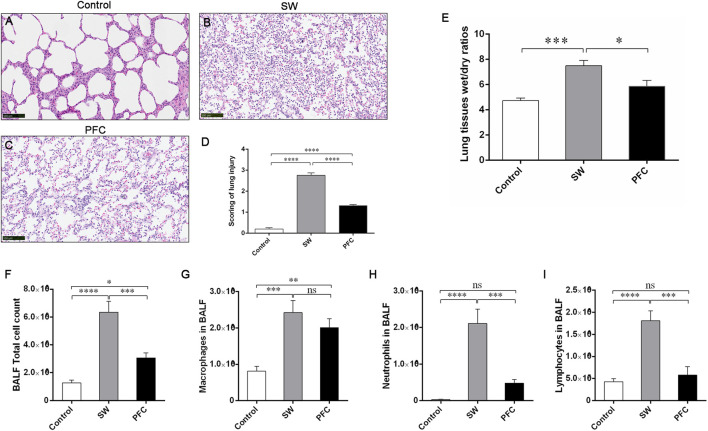 Figure 2
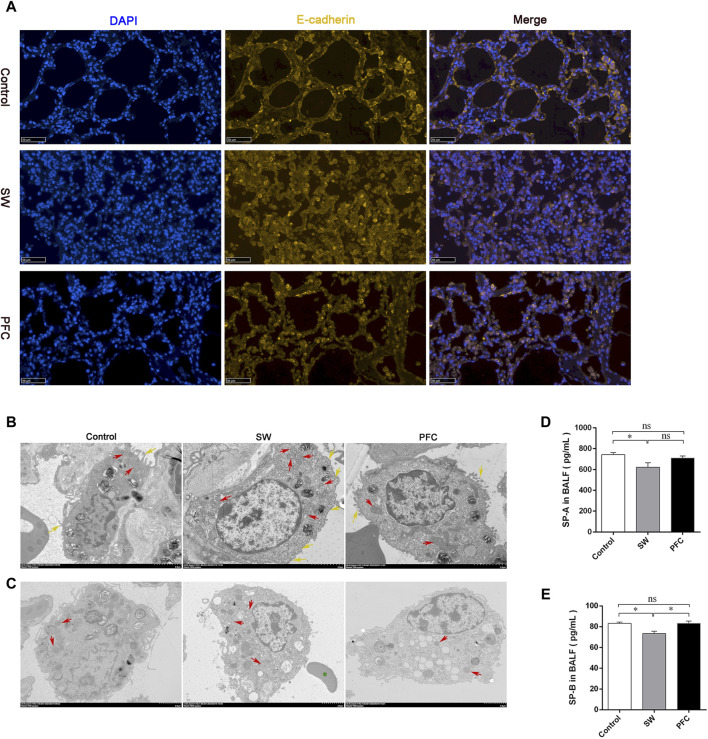 Figure 3
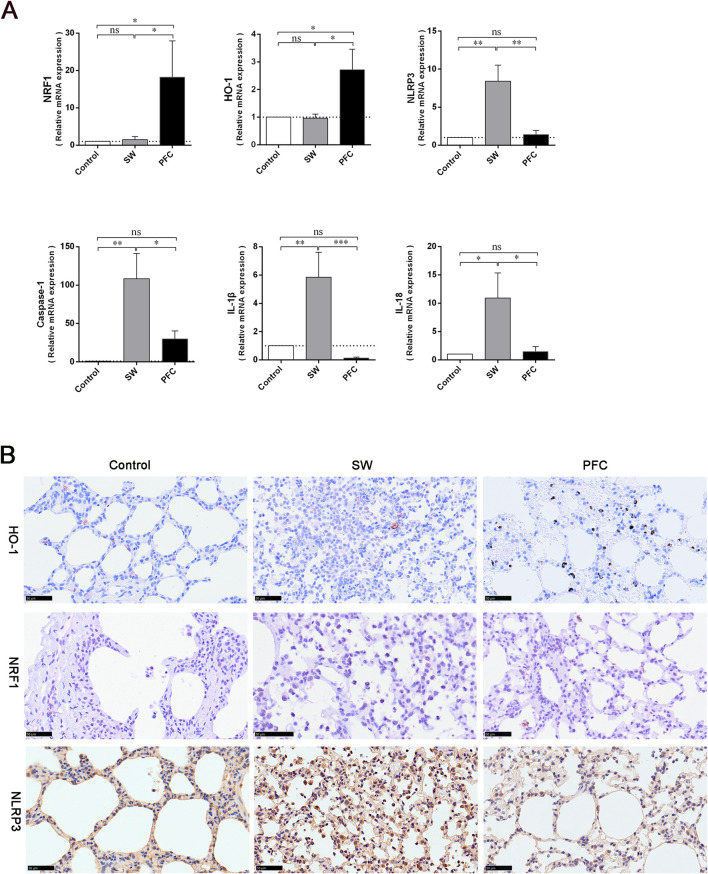 Figure 4
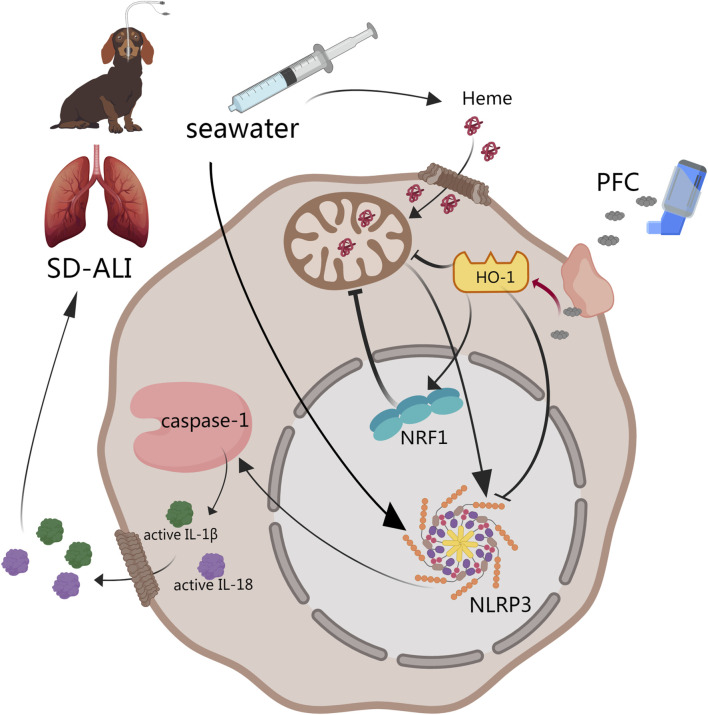 Figure 5
Peer Reviews
No public reviews on file for this paper yet. If you reviewed it on a platform where reviews are public (OpenReview, ICLR, NeurIPS, ICML), you can paste yours below so the community can read it here.
Videos
No videos yet. Explain this paper in a talk, walkthrough, or lecture? Add one.
Taxonomy
TopicsNeonatal Respiratory Health Research · Respiratory Support and Mechanisms · Cardiovascular and Diving-Related Complications